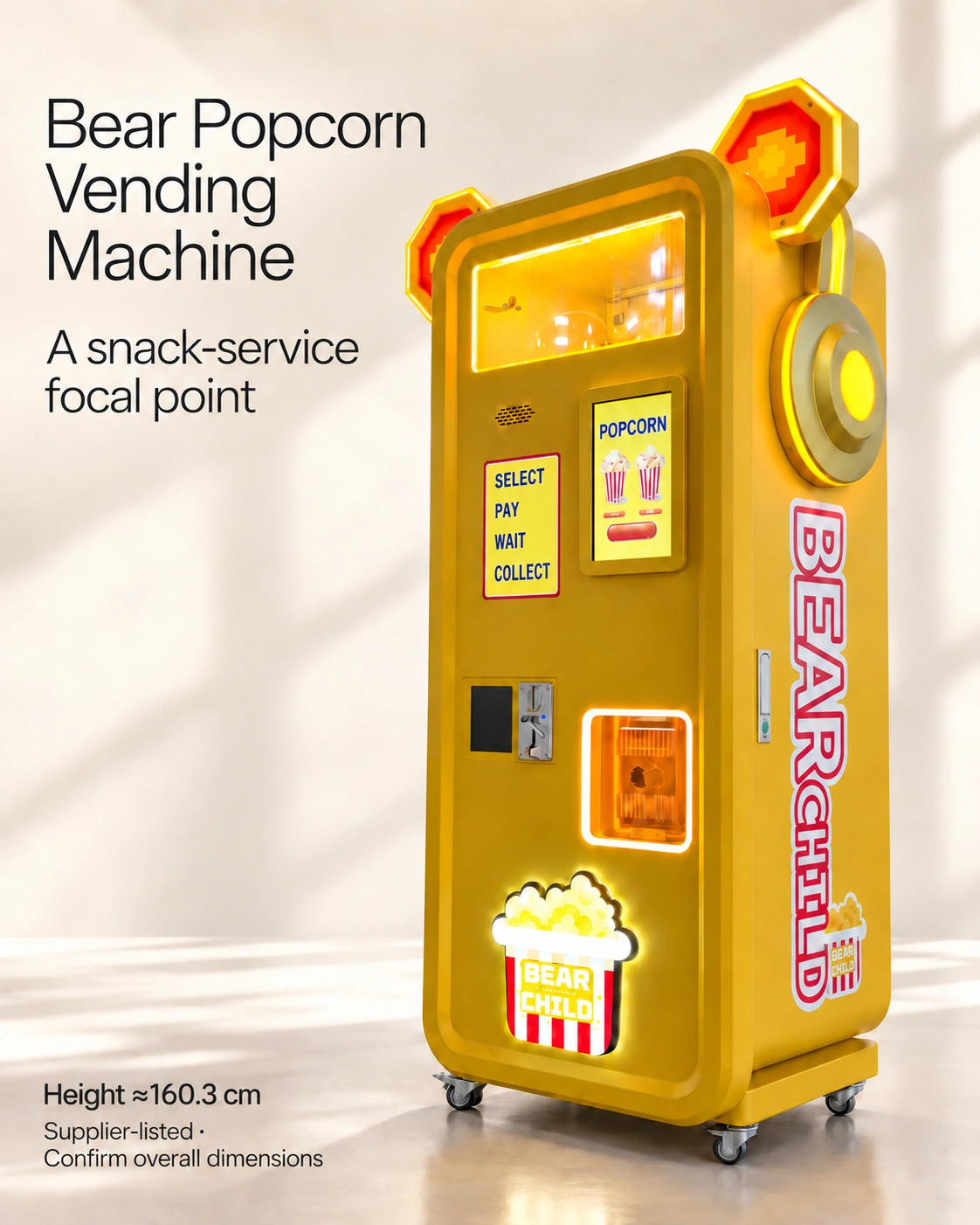
popcorn-vending
Popcorn Vending Cup Dispensers: Compatibility and Acceptance Tests
Check cup fit, single-cup release and fault handling before accepting an automatic popcorn vending machine or changing its consumables.
Make the cup part of the machine specification
A popcorn vending machine needs the correct container at the correct point in the cycle. That makes cup compatibility a purchasing requirement. Specify the cups you intend to replenish with and ask the supplier to test that exact consumable, rather than relying on a general statement that the machine dispenses cups.
The supplied demonstration shows a vertical cup stack and the release assembly at approximately 02:04–02:49. The presenter describes a belt and pulley arrangement and discusses detection of cup release or faults. The video does not provide the permitted cup dimensions, material tolerances or a complete fault-response demonstration.
A similar-looking cup is not a confirmed substitute
Request a cup drawing or approved consumable specification. It should identify the dimensions and material characteristics the supplier requires, together with the permitted variation. Ask for an actual approved sample and retain it with the machine documents.
If you plan to buy printed cups from a local supplier, send production samples for testing. Record the cup supplier and sample version. A different rim, wall or stacking profile may need evaluation even if the printed design and nominal serving description look the same. The demonstration does not establish adjustable cup-size limits.
Use a repeatable acceptance sequence
Swipe across to compare all columns.
| Test | What to observe | What to retain |
|---|---|---|
| Normal load | Approved cups loaded using the documented method | Cup sample identifier and loading instructions |
| Single release | One intended cup reaches its intended position during each observed cycle | Cycle log and continuous demonstration footage |
| Different stack levels | Agreed tests with a fuller and a nearly depleted stack | Stack conditions and results |
| No cup or failed release | Supplier demonstrates the designed response using its approved test method | Displayed error, vending/payment behavior and recovery steps |
| Return to service | Authorized operator or technician follows the recovery procedure | Tools, access and successful follow-up check |
Agree sample size and pass criteria before inspection. This is a proposed buyer test plan, not a test already passed by the demonstrated machine.
Check the response to a fault, not only the release mechanism
Ask the supplier to demonstrate what happens if no cup is available or a release is not confirmed. Establish whether the machine stops the next stage, displays an instruction, records a fault or requires operator intervention. Confirm payment and refund behavior for the actual payment configuration.
The presenter’s explanation of monitoring does not prove every part of that sequence. Do not test by reaching into a moving mechanism or deliberately jamming it; have the supplier use its approved inspection procedure. Keep any operator troubleshooting steps separate from technician work.
Request the parts and service information together
Obtain the dispenser assembly reference, compatible consumables, relevant spare parts and the manufacturer’s service procedure. If a belt, pulley, sensor or control component is replaceable, have the supplier identify it in the parts documentation. A clear internal photo is useful, but it is not a part number.
Ask what can be checked locally and what requires remote support. Keep the cabinet version, cup sample and fault description together in a support request. This makes a diagnosis more specific than a general report that “the machine is not working.”
How to interpret the patent and reliability claims
At approximately 02:16–02:23, the presenter refers to a patent for the cup dispensing arrangement. The exact patent type is not clear enough from the narration to classify, and no patent number or certificate is shown. At approximately 02:52–03:03, the presenter describes market use and low failure rates without supplying a dataset.
A buyer who needs either claim should request the patent identifier and the reliability evidence. These claims should not be turned into a verified failure-rate percentage, an exclusivity promise or a warranty. The acceptance test remains necessary regardless of the marketing description.
What information makes a cup-related inquiry useful
Send the destination, planned quantity and whether you intend to use the supplier’s cups or your own. If using your own, provide samples or a dimensioned drawing and material specification. Ask for a compatibility confirmation and a recorded acceptance test tied to those samples. That is a concrete basis for evaluating the dispenser option.
PUT THE GUIDE TO WORK
Check cup compatibility before ordering
Tell us your destination country, planned quantity and the configuration you need. Include your venue or operating requirements so we can identify the details that need confirmation before a quotation.
Build my equipment brief