Claw & prize machines
Buy Prize Machines or Host an Operator? Define the Ownership and Service Scope
Compare prize-machine ownership and operator placement. Define service duties, settlement and exit terms, then request a model, quantity and destination quote.
Choose equipment purchase or an operating service
A venue considering prize machines first needs to decide what it wants to buy: equipment it will operate, or an operating service delivered by another company. That choice changes the quotation, the people who need to approve it and the responsibilities that remain at the venue.
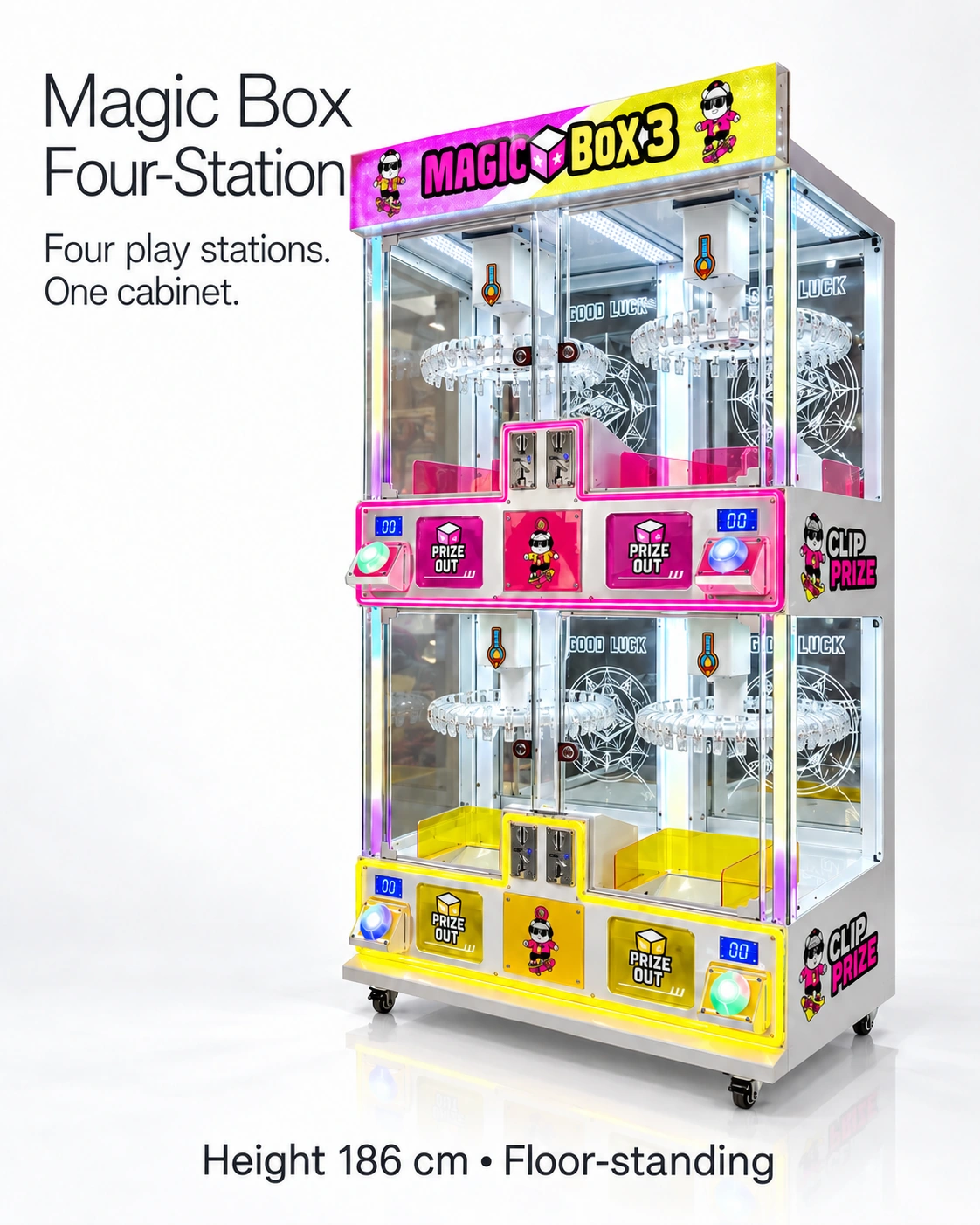
Use the Magic Box Four-Station Clip Prize Machine as an equipment reference if it is on your shortlist. Its product name does not establish a placement agreement, revenue share, maintenance service or income forecast. Define those commercial arrangements separately from the machine configuration.
1. Identify the buyer and the equipment owner
Write down whether your business is purchasing for its own venue, purchasing machines for a route placed at other venues, or inviting an operator to supply equipment it continues to own. A venue and a route operator can both buy the same category of equipment, but they need different operating arrangements.
For a real example of the third approach, Amuze describes a program in which it owns the equipment and the venue participates in the resulting income. Its explanation is evidence of its own service model; it does not establish terms available from Arcade Supply Hub or another provider.
Keep the equipment supplier, equipment owner, venue host and service provider separately identified, even when one company performs several roles.
2. Compare proposals against the same operating scenario
Describe the intended location, opening pattern, prize assortment and people available on site. Use that same scenario when asking for an equipment quotation and when evaluating a placement proposal.
For a purchase, ask what the equipment offer includes and decide how you will arrange the remaining work. For placement, ask which work the operator undertakes and which tasks it expects the venue to perform. A promise to maintain a machine should be expanded into who receives fault reports, who authorizes intervention and who restores the machine to service.
Record responsibility for purchasing prizes, approving replacements, replenishing displays, collecting money, handling guest problems and arranging repairs. Each row needs an accountable party. An unanswered row remains a question; it is not a service included at no cost.
3. Define the amount being shared
A percentage is not enough to compare a placement offer. Ask what amount the percentage applies to, which deductions are permitted, how refunds are treated and when the venue receives its statement and payment. Do not use revenue and profit as interchangeable labels.
Request a worked settlement example using hypothetical figures supplied for the proposed agreement. It should show the starting collections, each agreed deduction and each party's amount. Check that prize expenditure, payment charges and service costs are not counted twice.
For an equipment purchase, build your own operating plan alongside the acquisition cost. Keep assumptions about future sales separate from quoted equipment and service charges. Neither a cabinet quotation nor another venue's revenue-share percentage predicts the result at your location.
4. Agree who can change the operation
Decide who may move a machine, change its prize assortment, alter prices or approve a replacement. Those decisions affect the venue experience and the operator's work, so the approval route should be clear before installation.
For any proposed change, record who requests it, who approves it and who pays for it. This separates ownership decisions from day-to-day operation.
5. Describe the end of the arrangement
Ask what happens when the venue changes layout, the operating relationship ends or a machine needs replacing. Identify responsibility for removal, remaining prize stock, outstanding settlements and return of keys or other access credentials.
Confirm whether a placement proposal restricts other equipment at the venue and who must approve additions. Keep any proposed notice period, removal charges and final reconciliation procedure with that proposal. Do not borrow these terms from a different operator's website.
6. Send a purchase brief that matches your role
If you intend to buy equipment, send the Magic Box Four-Station Clip Prize Machine model link, quantity and destination through our equipment inquiry page. State whether you will operate the machines at your own venue or place them on a route, and who will handle prizes and service.
Ask for the offered configuration, equipment scope and delivery arrangements to be confirmed in the quotation. Describe any branding or functional changes separately so their feasibility and scope can be reviewed. This equipment inquiry does not create a revenue-sharing or venue-management agreement.
CHECK THE REFERENCES
Sources
- Amuze: its own arcade revenue-sharing service
Operator's own equipment-ownership arrangement; not Arcade Supply Hub terms, service, split or income evidence.
- Prize-machine total purchase cost worksheet
Existing Arcade Supply Hub guide to equipment-purchase scope; not independent evidence of placement performance.
- Prepare a comparable equipment quotation request
Existing Arcade Supply Hub equipment quotation guide.
PUT THE GUIDE TO WORK
Request an equipment configuration quote
Send the Magic Box Four-Station Clip Prize Machine model link, quantity and destination. State whether you will operate at your own venue or on a route, who will handle prizes and service, and any requested branding or functional changes. This is an equipment configuration inquiry, not a revenue-sharing or venue-management agreement.
Build my equipment brief