popcorn-vending
Popcorn Vending Machines for Export: Cabinet and Service Checks
Review cabinet construction, service access, blower evidence and packing requirements before importing a popcorn vending machine.
Review the structure and the service route together
A cabinet must fit its site, travel in its packing and allow the operator to refill and service it. Comparing only the exterior finish misses the access and documentation needed after installation. Start with the exact ordered configuration and review it with the person who will maintain the machine.
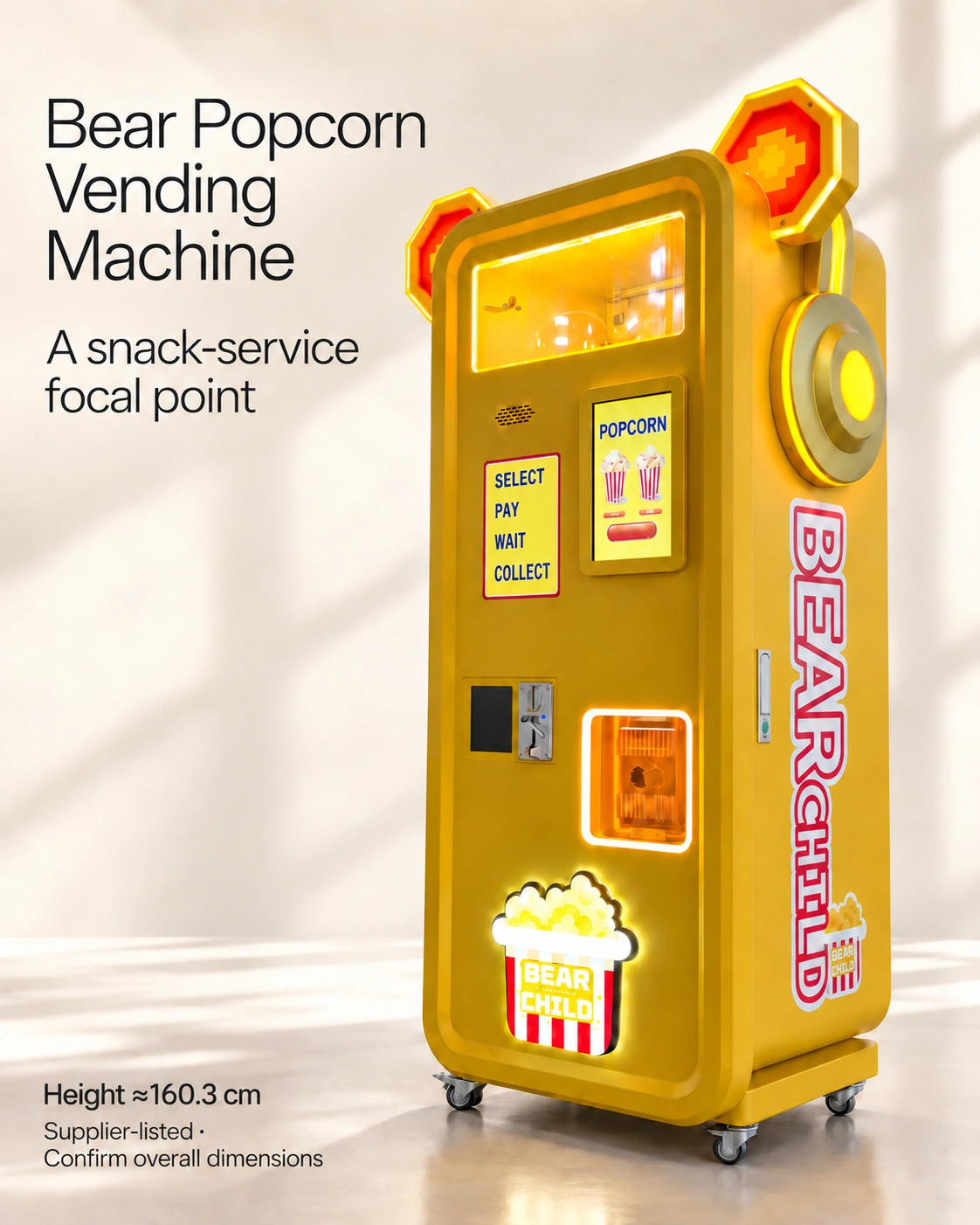
The supplied demonstration presents a yellow bear-themed popcorn vending cabinet, opens its front door and shows ingredient containers, the cup assembly and the lower interior. The presenter also discusses sheet metal, a blower and motors. The walkthrough helps identify questions; it does not establish the shipping specification or electrical requirements of an order.
How to verify the stated sheet thickness
At approximately 00:18–00:31, the presenter describes a sheet-metal structure and uses the Chinese thickness expression “1.5 li.” The recording does not confirm the unit in millimeters or show a measurement. Ask for written thicknesses in millimeters, the material grade and the panels to which each value applies before comparing offers.
The presenter links construction to sturdiness and overseas transport. Thickness alone is not evidence of transport performance. Request the cabinet construction specification, packing design and acceptance checks for the shipped configuration. Do not convert the video into a guarantee against shipping damage or assume every competing machine has thinner panels.
Measure the service envelope, not just the closed cabinet
Obtain the width, depth, height and weight for the ordered version, plus the space needed to open the door and reach replenishment and service points. Compare those requirements with the access route and the proposed position at the venue.
The demonstration visibly opens the front door and exposes the ingredient and cup assemblies. It does not supply a dimensioned service drawing. Ask how an operator removes or refills consumables and which components require additional clearance. A cabinet that fits in a floor plan still needs a workable service position.
Ask for measurable blower information
At approximately 03:09–03:31, the presenter points to the blower area, describes a component associated with medical or ventilator use, and claims low noise and long life. No model number, noise measurement or component datasheet is shown. This does not establish medical certification of the vending machine.
Request the actual component reference and the performance information relevant to your site. If noise matters, agree how the machine will be measured under a normal operating cycle and document the test conditions. “Quiet” is not a comparable specification without a measurement context.
Turn motor sourcing into a replacement plan
The presenter says the motors are sourced from a listed company, but the clip does not identify the manufacturer or part number. Ask for the bill-of-materials reference applicable to the unit being supplied and the replacement procedure.
Clarify whether the service kit includes the components you would reasonably need during a pilot, and obtain their prices and lead times. Supplier reputation, component origin and warranty are different pieces of information; one should not be used as a substitute for the others.
Agree the export handover before packing
Swipe across to compare all columns.
| Item | What to confirm |
|---|---|
| Ordered version | Configuration identifier, approved photos and final option list |
| Electrical setup | Nameplate, supply requirements and the configuration for the destination |
| Dimensions and packing | Cabinet and packed dimensions, net/gross weights and access requirements |
| Packing method | Protection of the cabinet and internal assemblies, plus handling instructions |
| Operation and service | Approved ingredients/cups, cleaning instructions, parts list and fault recovery |
| Commercial terms | Written price, lead time, warranty coverage and responsibility for replacement shipping |
Close the loop at arrival
Agree the inspection steps for unpacking, identifying visible damage, verifying the configuration and completing the supplier’s commissioning procedure. Retain dated photographs and the packing record. If a discrepancy appears, keep it separate from normal adjustment or operator training so the remedy is clear.
For a configuration review, send the destination, quantity, venue access constraints and service arrangements. Request the missing technical information before committing to the order. The linked pilot guide covers the wider business decision; this article focuses on the physical and service evidence needed for an export purchase.
PUT THE GUIDE TO WORK
Review your export and service requirements
Tell us your destination country, planned quantity and the configuration you need. Include your venue or operating requirements so we can identify the details that need confirmation before a quotation.
Build my equipment brief