Claw & prize machines
Claw Machine Business Pilot: Decide Whether to Add More Machines
Evaluate a claw or clip machine pilot using available hours, stock movement, access, payment issues, staff work and documented reorder criteria.
Test a defined uncertainty before committing to more units
A claw machine business pilot should answer whether the chosen prizes, payment, access and staff routine work together at the proposed location before more units are ordered. Set the decision criteria first. Compare available operating hours, physical stock movement, costs and staff work; raw cash or prize counts alone can hide stockouts, payment downtime and opening promotions.
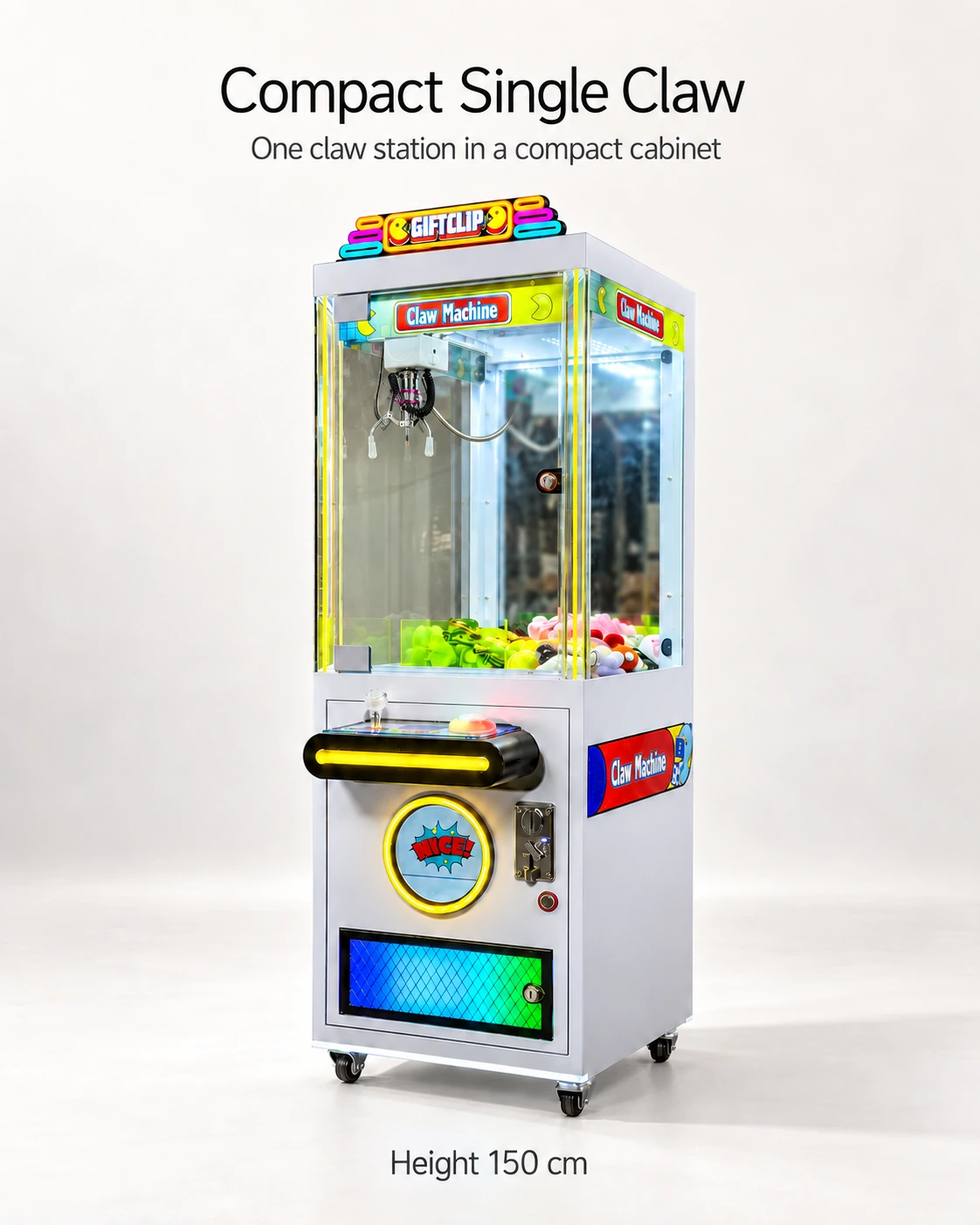
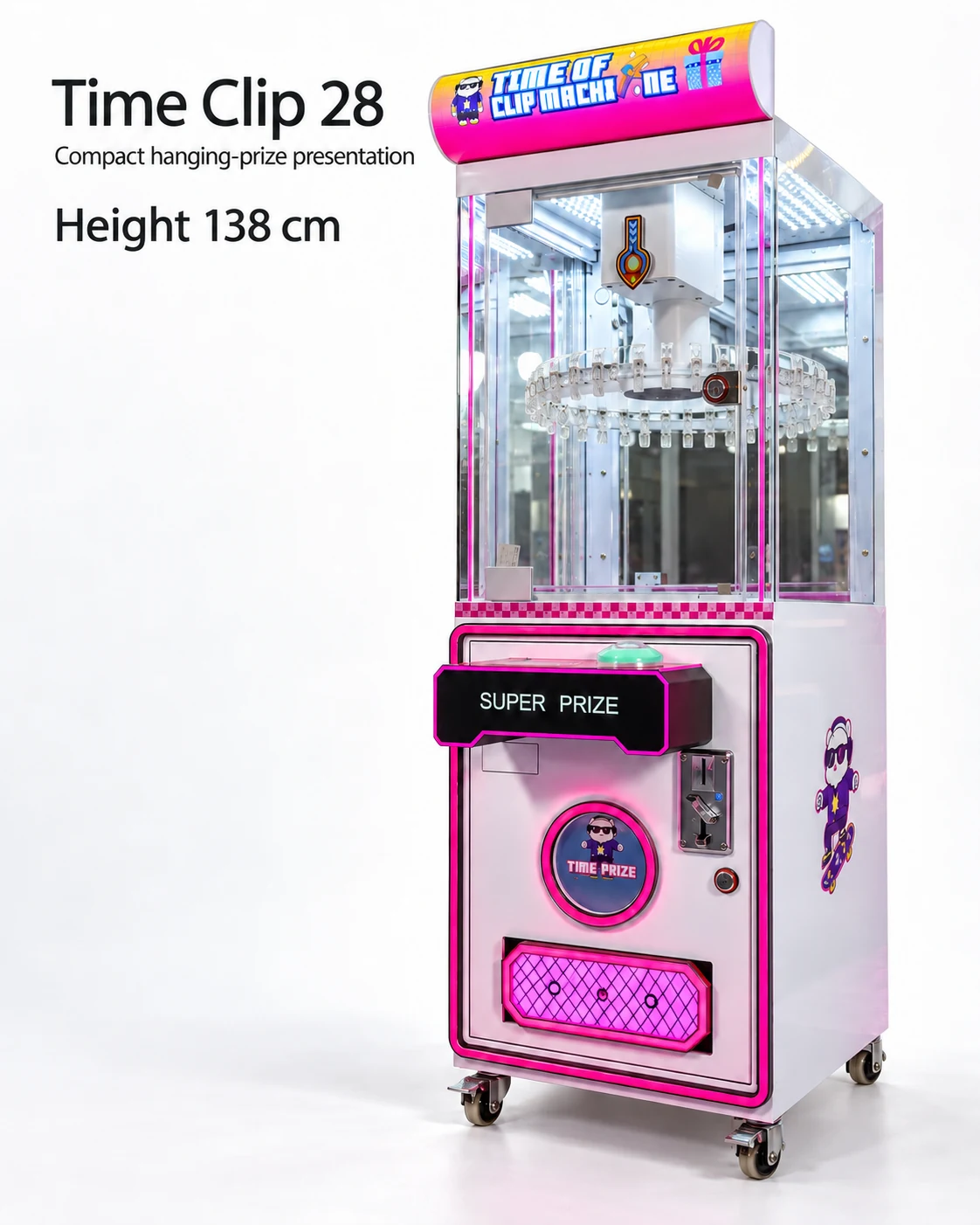
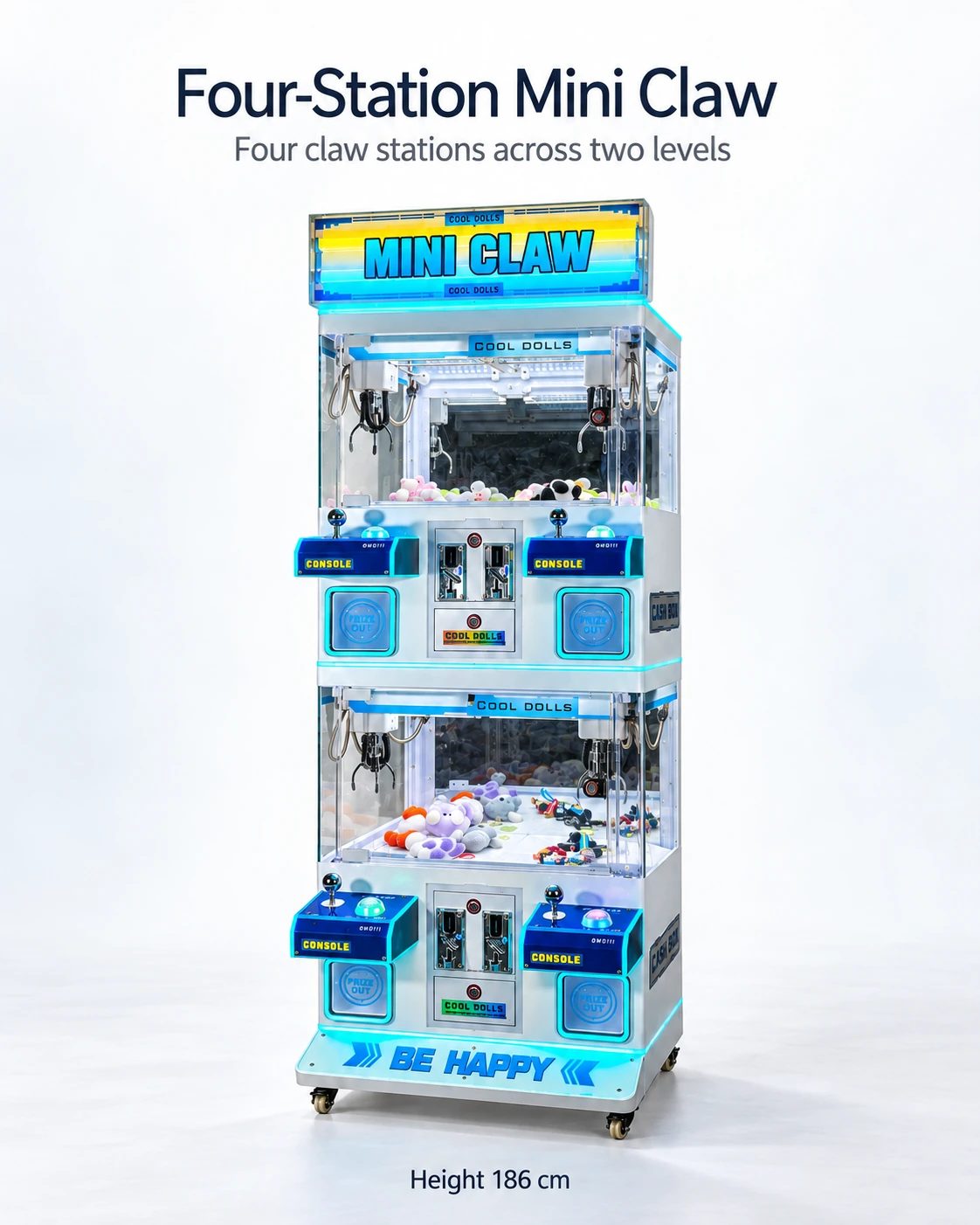
Consider the Compact Single Claw for a one-station location, the Compact 28-Clip for a hanging display, or the Blue Four-Station Mini Claw to assess shared access and workload. Choose the pilot around the uncertainty, then resolve the selected unit's sample, payment and venue requirements before opening the trial.
Use a pilot observations and reorder log
Give each unit and station a separate identity. Keep the same definitions throughout the observation period. A staff member should be able to tell whether a blank entry means zero events, no observation or a machine that was unavailable.
- Exposure: planned operating hours, available hours, empty-stock time and out-of-service reasons.
- Customer task: observed approach, ability to identify controls, completed plays and documented assistance requests.
- Stock: approved family, opening count, additions, physical prizes delivered and removals.
- Work: refill and cleaning duration, support incidents and staff actions.
- Conditions: position, price, settings, promotion, day type and other changes.
- Decision: reorder, revise and observe again, stop that configuration or remain unresolved, with supporting evidence.
Compare availability before comparing movement
Two stations with different open hours or stockouts cannot be fairly compared using raw prize movement alone. Keep unavailable periods visible and explain why they occurred. If a payment reader was offline or a station blocked by a queue, the observation says something about the configuration or location rather than simply the popularity of the prize.
Reconcile physical stock with the definitions of payment and machine counters where those records are available. Record a collected prize, machine event and credit under their own fields so differences can be investigated. Keep customer details within the operator's approved records.
A hypothetical pilot interpretation
Assume two stations each deliver twenty prizes during a planned week. Station A is available for forty hours, while B is available for twenty because of a documented payment issue. Their identical counts do not demonstrate equivalent performance. The buyer first needs to resolve B’s payment problem and observe a comparable operating period before using the result to choose between configurations.
Use the hypothetical comparison above to identify the next task: resolve the payment issue, then observe comparable available time. Similarly, an obstructed lower position on a four-station cabinet calls for a layout revision and another observation period.
Set reorder criteria around the buyer’s constraints
Set reorder conditions before reviewing results. Include compatible prize delivery, staff workload, payment mapping and usable venue access. Add actual operating costs and the buyer's margin assumptions to the commercial criteria.
Choose and record an observation period suited to the venue. Include normal and busy conditions where practical, then carry seasonality, promotions, wear and changing footfall into the decision. If a criterion remains open, extend or revise the trial to answer that specific question.
Match the repeat order to the pilot configuration
Keep controller, reader, prize family, settings and layout with the reorder decision. Match the repeat-order proposal to that configuration and retest affected tasks if components change. Add quantity, packing, destination and spare requirements for the next batch.
Attach the log and specific reorder questions to the buying brief. State the observed conditions, remaining uncertainty and reason for the next quantity. That gives the supplier a defined repeat configuration and the operator a clear basis for expanding or revising the plan.
CHECK THE REFERENCES
Sources
- Compact Single Claw Machine reference configuration
Supplier catalogue configuration reference.
- Compact Clip Prize Machine — 28 Clips reference configuration
Supplier catalogue configuration reference.
- Blue Four-Station Mini Claw Machine reference configuration
Supplier catalogue configuration reference.
PUT THE GUIDE TO WORK
Choose a focused pilot configuration
Describe the venue, prizes, payment plan and question the trial needs to answer, then define an initial configuration and acceptance scope around that question.
Build my equipment brief