Token equipment
Credit Card Token Dispenser Setup: Hardware, Protocol and Settlement
Review the card reader, controller protocol, merchant account and settlement path before approving card-to-token equipment.
Separate a visible interface from an approved payment path
A credit card token dispenser needs an identified reader, controller interface, currency and merchant account. Review the full path from package selection through payment and counted token output to the account’s records and settlement.
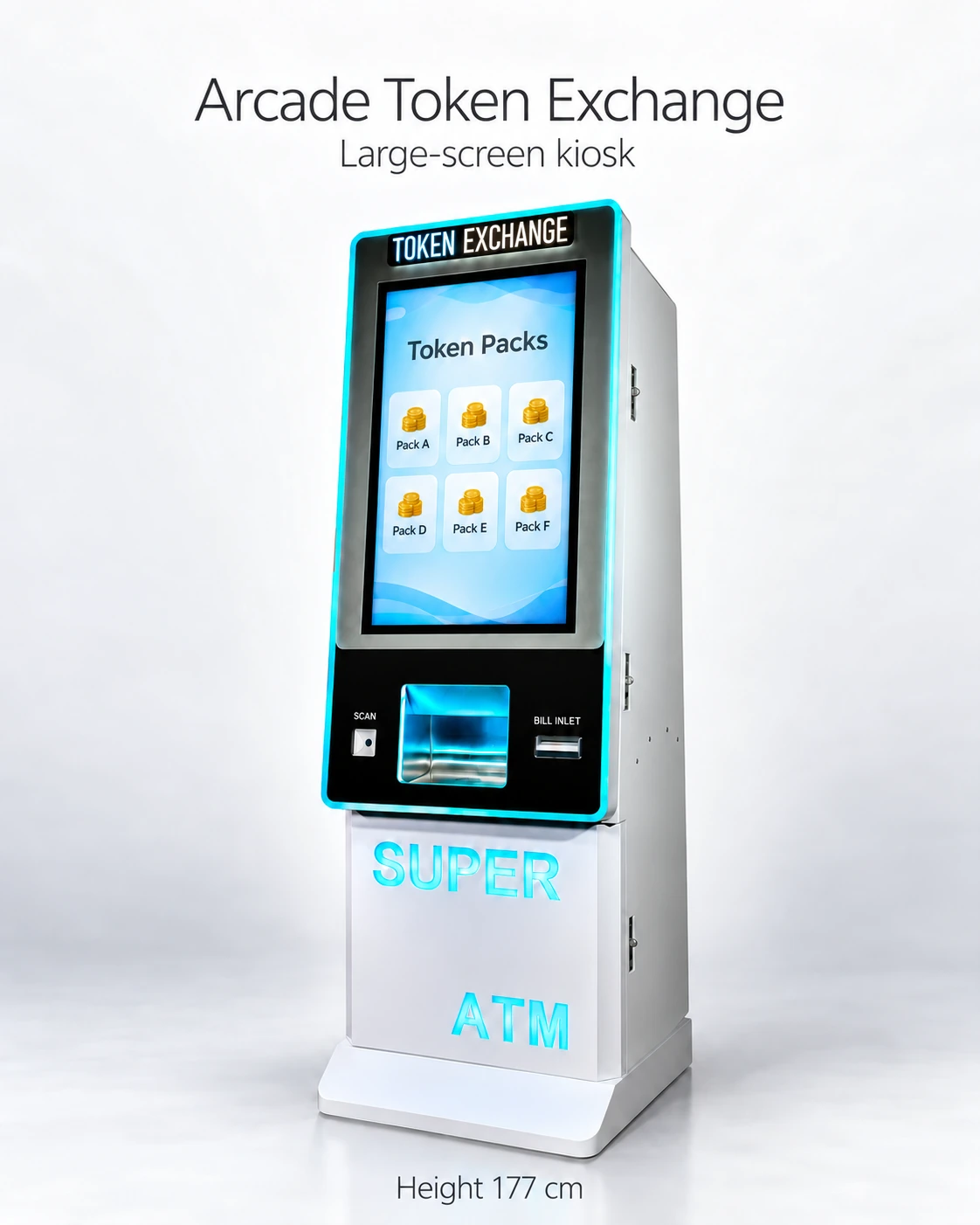
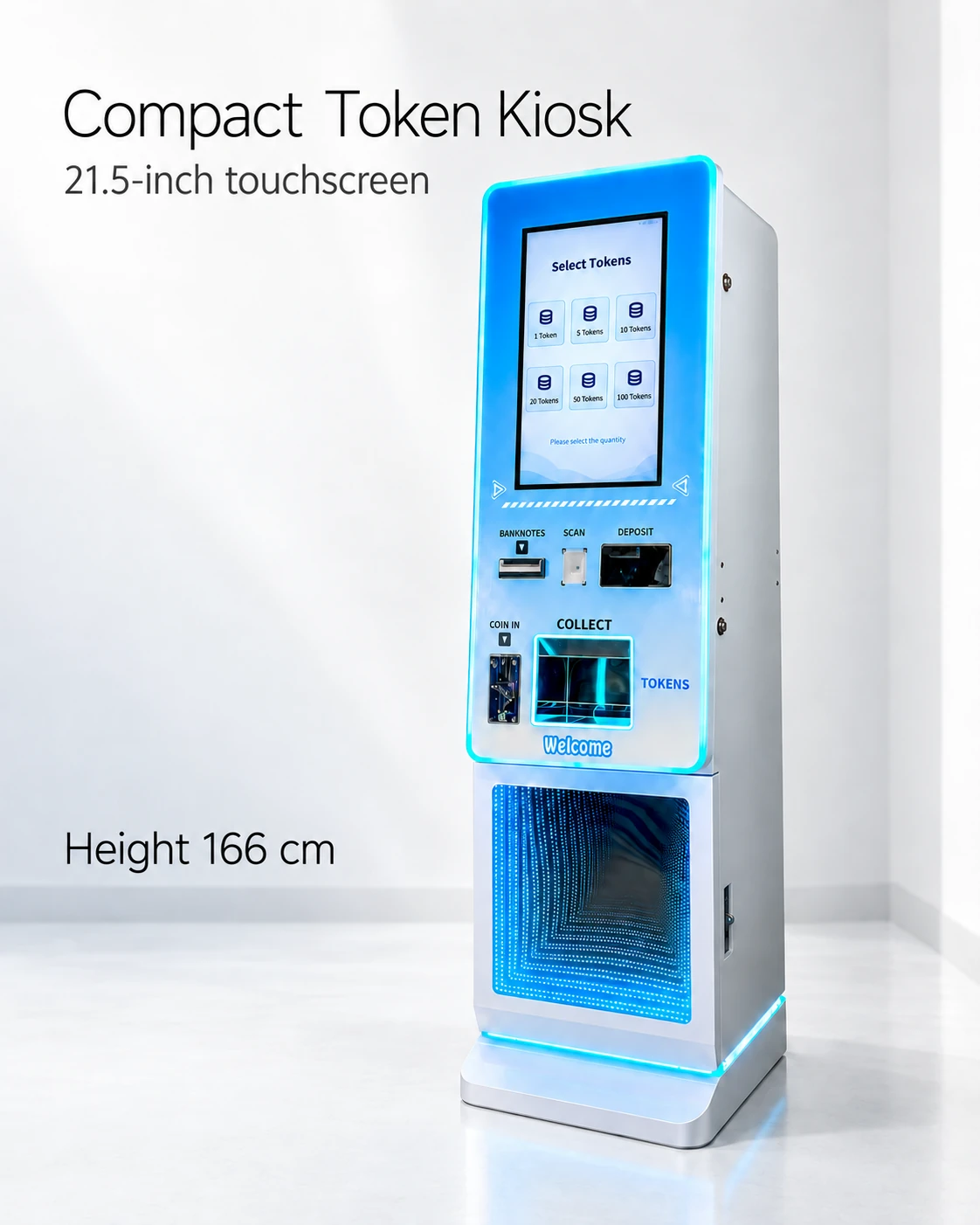
The reference sheets show source-market QR, banknote and coin/payment labels, with voucher features on the larger model. Destination providers, currencies and installed components remain unconfirmed. ATM lettering does not imply banking or cash withdrawal.
Write a device and account approval brief
Give the equipment supplier and payment provider the same cabinet/controller revision. The supplier identifies the device and connection; the provider reviews the merchant account and destination conditions.
The approval brief records the complete arrangement, including any onboarding or development work still required.
- Destination, operator entity and processor or acquirer being considered.
- Payment device model, firmware, mounting and controller interface.
- Currency, purchase packages, pricing and supported payment methods.
- Authorization-to-dispense sequence and proof of delivered token quantity.
- Settlement destination, reporting identifiers, fees and account responsibility.
- Incomplete-delivery, cancellation and customer remedy procedure.
- Connectivity, support boundaries and any integration or certification work required.
Confirm how the equipment communicates
Controller protocols define what the device and cabinet exchange. Nayax’s machine guide distinguishes MDB, Pulse and Marshall; the proposed kiosk needs its own connection document and device configuration.
The integration review should identify signals and records for success and incomplete delivery. Include token-count evidence as well as the payment or motor command.
Evaluate commercial and operational conditions
Compare onboarding, fees, settlement timing, connectivity costs and support responsibilities alongside hardware cost. Name who controls funds and handles disputes.
In a hypothetical procurement case, a buyer already has a processor relationship but lacks the kiosk’s interface document. Obtain that document before arranging the integration review. Account approval and the configured machine must meet in the same proposal.
Define ownership when the transaction fails
Assign controller issues, payment status and customer remedy to named owners. Record the evidence each party needs and the contact order for venue staff.
Include those responsibilities in the quote so an incomplete dispense has a clear handover between equipment support, payment support and the venue.
Require evidence for the complete transaction
An agreed demonstration shows package selection, payment status, commanded output, counted tokens and the matching records. Use provider-authorized payment testing for the success and exception cases.
Send the brief, destination and preferred payment method with the enquiry. An itemized response should separate hardware, software work and provider conditions, and identify the exact scope demonstrated or still awaiting approval.
CHECK THE REFERENCES
Sources
- 32-Inch Touchscreen Token Exchange Kiosk reference configuration
Supplier reference specifications and supplied model images.
- 21.5-Inch Compact Token Vending Kiosk reference configuration
Supplier reference specifications and supplied model images.
- Nayax official machine protocol guide
Payment provider machine protocol guide.
PUT THE GUIDE TO WORK
Scope destination card-to-token payments
Name the destination, currency and intended provider. Request device identity, protocol documents, integration scope and settlement/support responsibilities.
Build my equipment brief