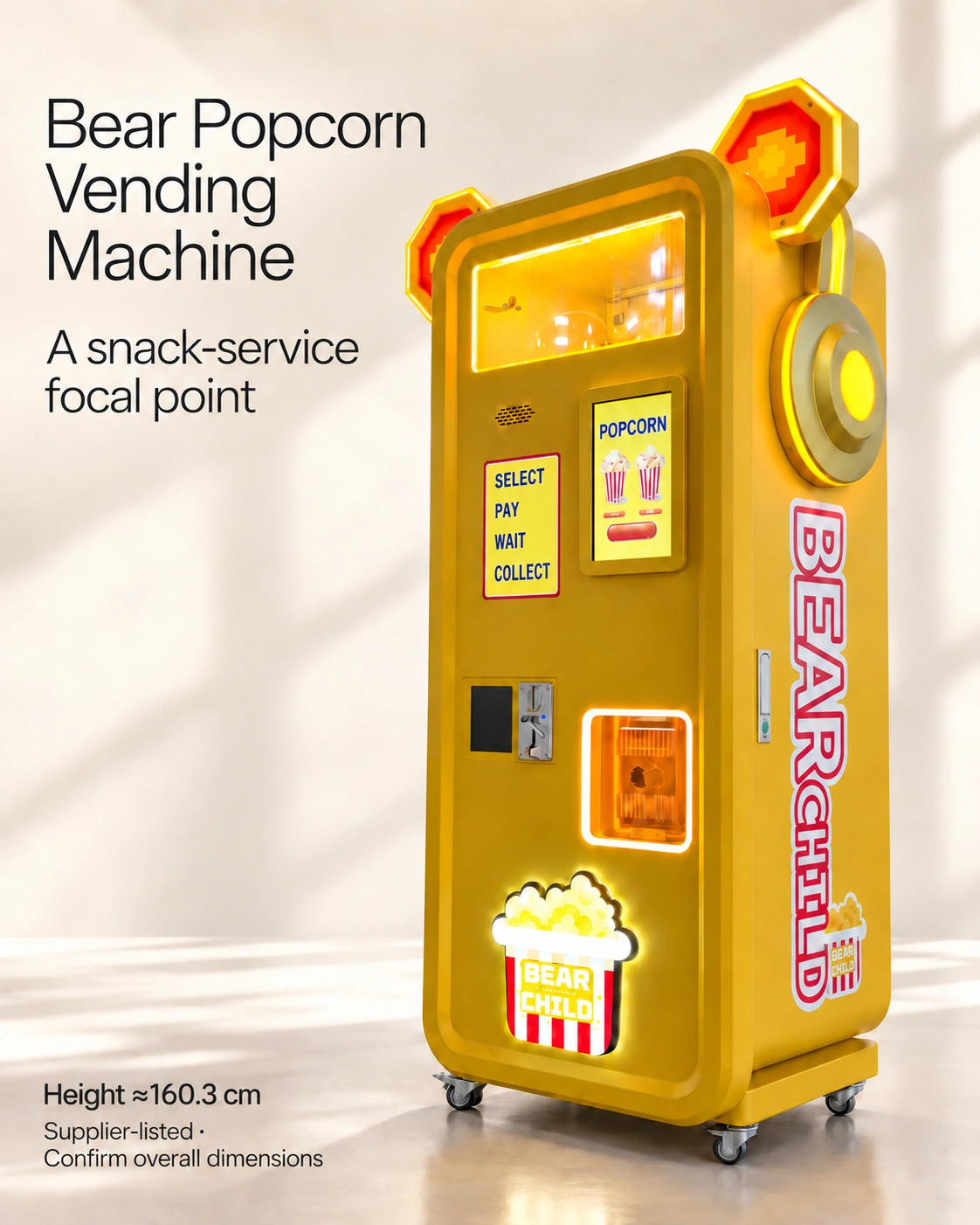
popcorn-vending
Two-Flavor Popcorn Vending Machines: Plan the Refill Workflow
Plan ingredients, flavor selection, refills and cleaning for a two-flavor popcorn vending machine before agreeing the production configuration.
Two ingredient containers are the start of the workflow
The supplied Bear Popcorn demonstration shows two ingredient containers inside the cabinet. At approximately 01:54–02:03, the presenter describes A and B ingredients and support for two flavors. This is useful configuration evidence, but it does not explain the complete recipe, selection logic or cleaning path.
Before treating a two-flavor option as ready for your location, follow each flavor through storage, selection, preparation and delivery. Confirm that the proposed configuration is the same version as the demonstration. The video is not a capacity specification or a complete unattended vending test.
Define what A and B mean in the actual recipe
Ask the supplier to identify the approved ingredients, their format, storage requirements and the recipe for each selection. The presence of two containers does not establish whether they hold different kernels, coatings, mixtures or another prepared ingredient. Do not assume that every popcorn recipe will work in this machine.
Request the permitted consumable specification and an explanation of any preparation required before filling. If sourcing ingredients locally is important, submit samples for a documented compatibility test. The purchasing question is whether your repeatable supply can be used, not merely whether the cabinet has two containers.
Walk through a complete selection and refill test
Swipe across to compare all columns.
| Stage | Supplier demonstration | Record for the operator |
|---|---|---|
| Load | Show the approved ingredient and its assigned container | Ingredient specification, fill procedure and confirmed usable capacity |
| Select | Show the customer selection and the corresponding ingredient path | Which choice uses A or B and how selections are labeled |
| Vend | Show a complete cycle ending with a usable serving | Observed result and the agreed serving specification |
| Refill | Show how an operator recognizes and replenishes a low supply | Refill access, tools and the actual operator task |
| Change or clean | Show the documented procedure for the ingredient path | Required disassembly, cleaning method and return-to-service check |
Keep flavor availability separate from cup availability
The same demonstration shows a vertical cup stack and an automatic cup dispensing assembly. Ingredients and cups are separate consumables, so a refill plan needs to check both. A full ingredient container does not establish that the machine can keep serving if the cups are exhausted.
Confirm how the machine responds when either supply is low or unavailable. Ask whether a selection is disabled, an alert is shown, a payment is prevented or another response applies. None of those controls is established by the walkthrough. Make the actual behavior part of the acceptance demonstration.
Build a service route from observed consumption
For a pilot, record starting stock, replenishment, remaining stock and incomplete vends for each flavor. Record cup use separately. These observations tell you which flavor runs down first and whether cup stock or ingredients determine the next visit.
Set visit frequency from the site’s measured consumption and the supplier’s storage and cleaning instructions. The clip provides no verified hopper capacity, servings per refill or cleaning interval, so there is no sound basis for promising a particular number of unattended hours.
Ask about shared food paths before changing recipes
Have the supplier identify which components are shared by the two selections and provide the documented cleaning method. If ingredient separation or allergen control matters to your operation, obtain the relevant material and process information for the supplied configuration. Two containers do not, by themselves, establish separation throughout the machine.
Use the accepted recipe and cleaning documents to train the person replenishing the cabinet. Record a recipe change as a configuration change requiring confirmation; do not treat it as a label-only update.
What to include in the RFQ
- Destination country, venue type and planned machine quantity.
- The two desired flavors and whether ingredients will be sourced locally.
- Required serving or cup specification, with samples if already selected.
- The staff visit pattern and any limits on access for refilling or cleaning.
- A request for the final ingredient, cup, cleaning and fault-response documents.
Use the pilot to resolve commercial assumptions
The configuration review establishes what the machine can be supplied to do. A pilot establishes how that configuration performs in your location. For the broader cost and site decision, use the existing buying and pilot guides linked below; this checklist focuses on the two-flavor operating workflow.
PUT THE GUIDE TO WORK
Review your two-flavor configuration
Tell us your destination country, planned quantity and the configuration you need. Include your venue or operating requirements so we can identify the details that need confirmation before a quotation.
Build my equipment brief