Food vending
Food Vending Machine Costs and Break-Even: Build a Pilot Budget
Model food vending startup, per-serving and fixed costs, calculate hypothetical break-even and replace sales assumptions with venue pilot records.
Separate startup cash, serving costs and period costs
Food vending machine costs and break-even depend on the configured equipment, recipe, site terms and service work. Build three cost blocks: one-time cash for opening, variable costs per serving and recurring costs per period. Use current quotes for purchased inputs and clearly stated scenarios for demand.
The supplied catalog does not give a current delivered price or a venue payback result. An itemized budget lets a buyer compare a small pilot with a larger order and see which missing costs need a quote.
Give each input a source and unit
Every cost row needs amount, currency, unit, date, source and status: quoted, assumed or measured. Include the owner’s labor and travel as well as payroll. Keep losses visible, using recipe consumption that accounts for unsuccessful cycles without adding the same ingredient loss twice.
Review the relevant tax, financing and accounting treatment with the appropriate advisers. SBA’s business-planning guidance is a useful starting point for distinguishing startup expenses and contribution-based break-even arithmetic.
- Startup: equipment configuration; packing/freight; destination delivery; installation/reviews; training; opening stock.
- Per serving: mix/sugar; sauce/topping; cup/stick; payment charge; variable venue share; accounted losses.
- Per period: fixed venue terms; staff/travel; connectivity; fixed software/payment charges; support; insurance.
- Pilot: paid servings; refunds; available selling hours; stock use; measured energy; task records.
Compare two hypothetical sales scenarios
Assume 5 currency units per serving and 2.40 in combined variable costs. Contribution is 2.60 per serving. At 600 hypothetical servings, contribution is 1,560; after 900 in assumed period fixed costs, the remainder is 660.
At 300 servings, contribution is 780 and the remainder after those fixed costs is negative 120. Fixed-cost break-even is 900 ÷ 2.60, rounded up to 347 servings. All figures are illustrative assumptions; the calculation excludes capital recovery, financing, depreciation, tax and costs outside the stated blocks.
Use the pilot to choose the next purchase
Set a bounded pilot budget, observation period and decision criteria based on the venue’s priorities. Record paid servings and available selling hours separately, with refunds, stockouts and service closures. This helps distinguish low demand from time when the machine could not sell.
Replace assumed recipe use, energy, labor and sales with the pilot records. Keep startup cash outstanding alongside the period result. The next decision can then be specific: revise the menu or service arrangement, gather a missing cost input, continue the pilot or proceed with another unit.
CHECK THE REFERENCES
Sources
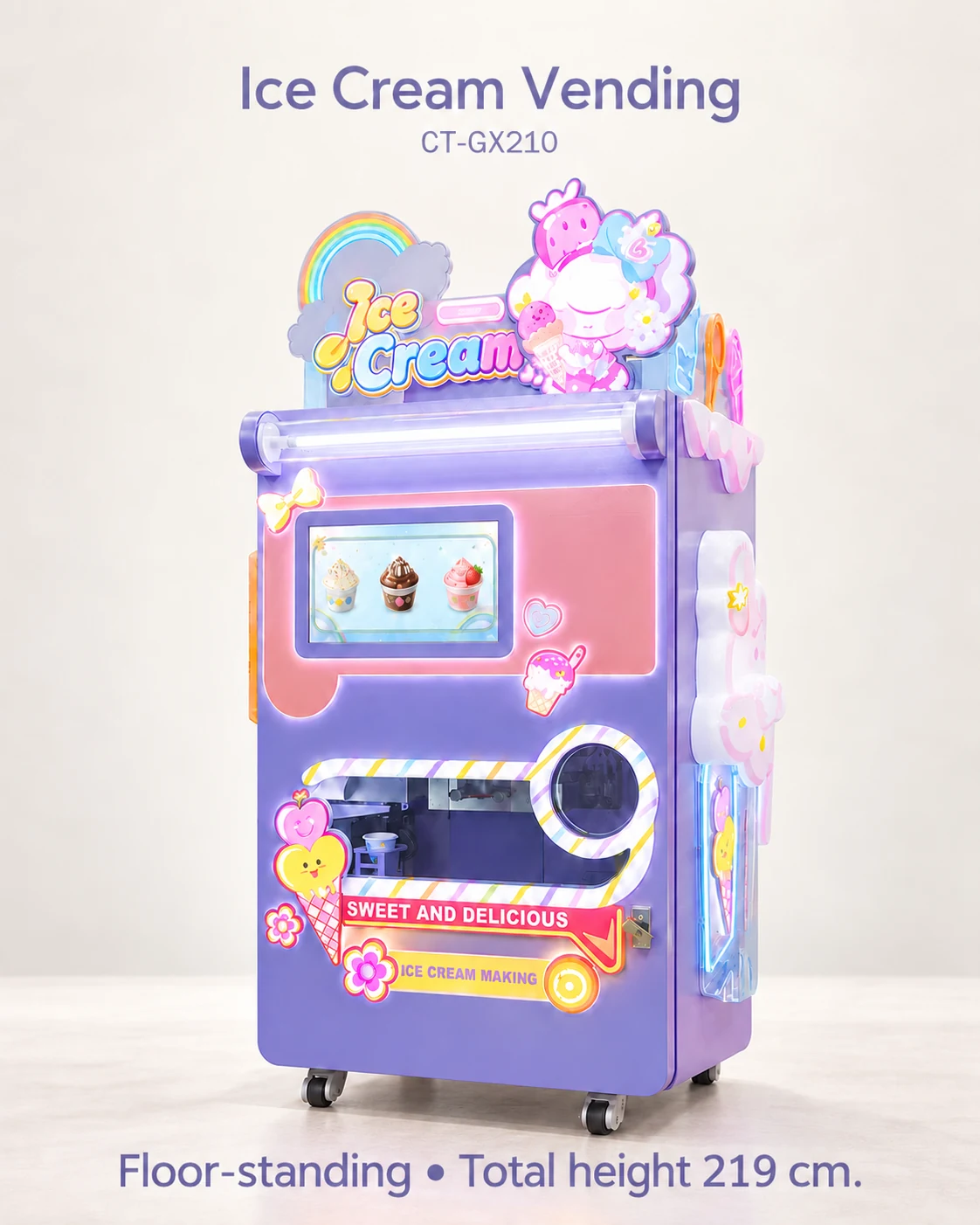
- Automatic Ice Cream Vending Machine reference configuration
Supplier-listed reference configuration for this model.
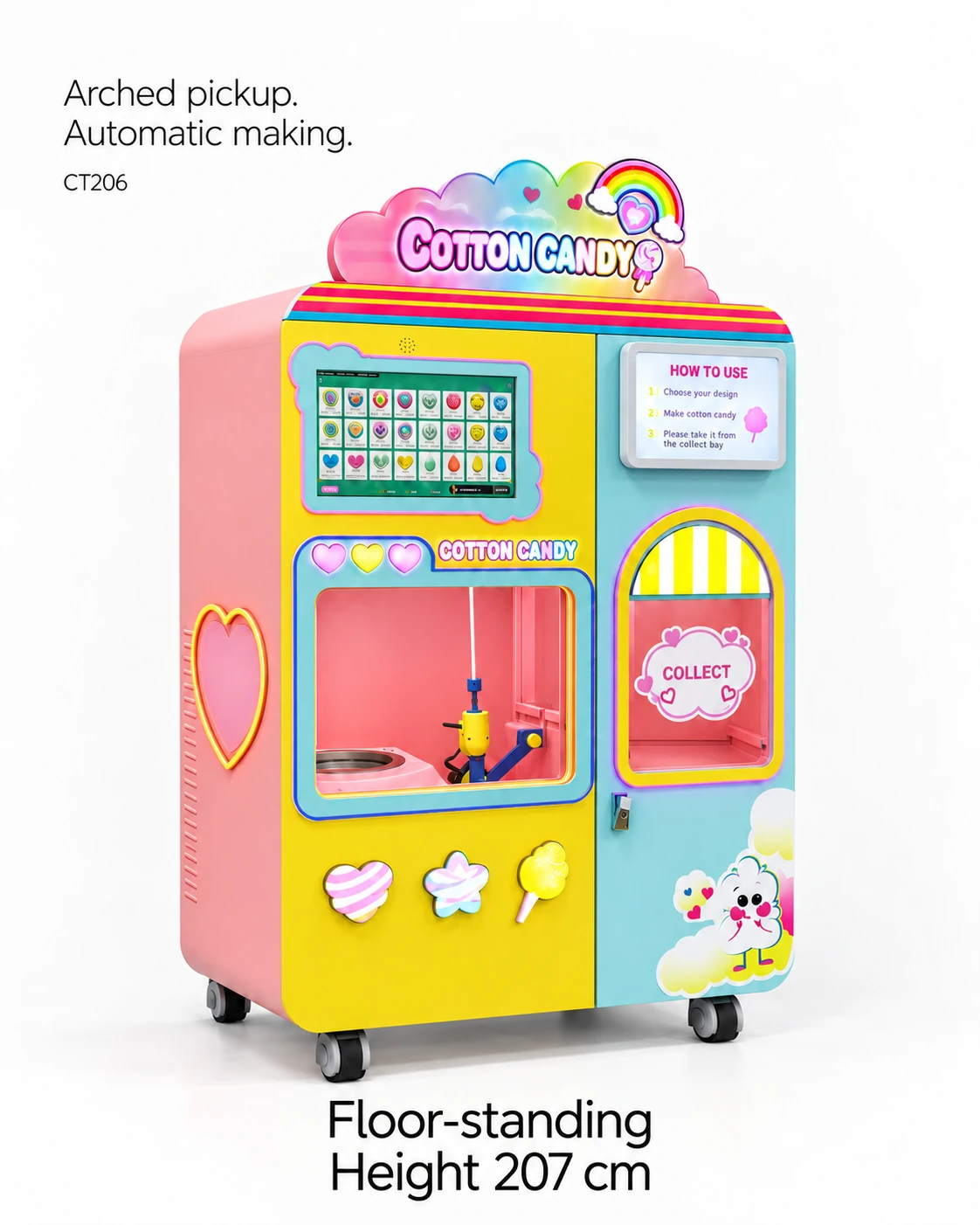
- Arched Pickup Cotton Candy Vending Machine reference configuration
Supplier-listed reference configuration for this model.
- Automatic Slush Drink Vending Machine reference configuration
Supplier-listed reference configuration for this model.
- U.S. Small Business Administration: startup costs and break-even analysis
Official business-planning and cost resources.
PUT THE GUIDE TO WORK
Request a scoped pilot quotation
Tell us the destination, shortlisted models and pilot quantity. Share known venue terms and identify the equipment, delivery or service costs still missing.
Build my equipment brief