Token equipment
Arcade Token Sizes: Specify Diameter, Thickness and Test Samples
Specify token diameter, thickness, material and lot identity, then qualify dispensing and game credit separately.
A nominal token size is only a starting point
Specify arcade token size as diameter and thickness together, alongside material, finish and production tolerances. Qualify the production sample through both the dispenser and the intended game acceptors so the same token travels, validates and gives the correct credit.
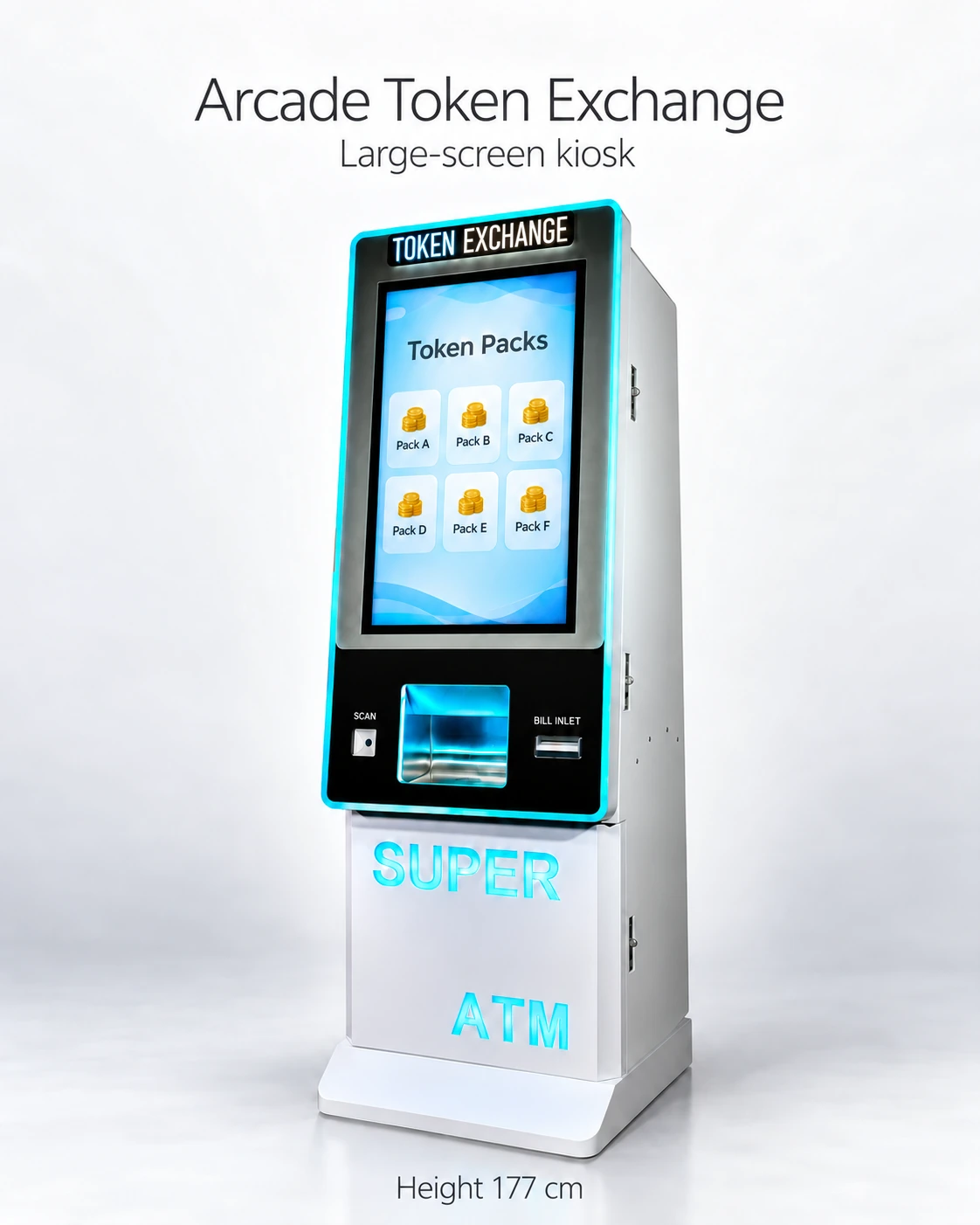
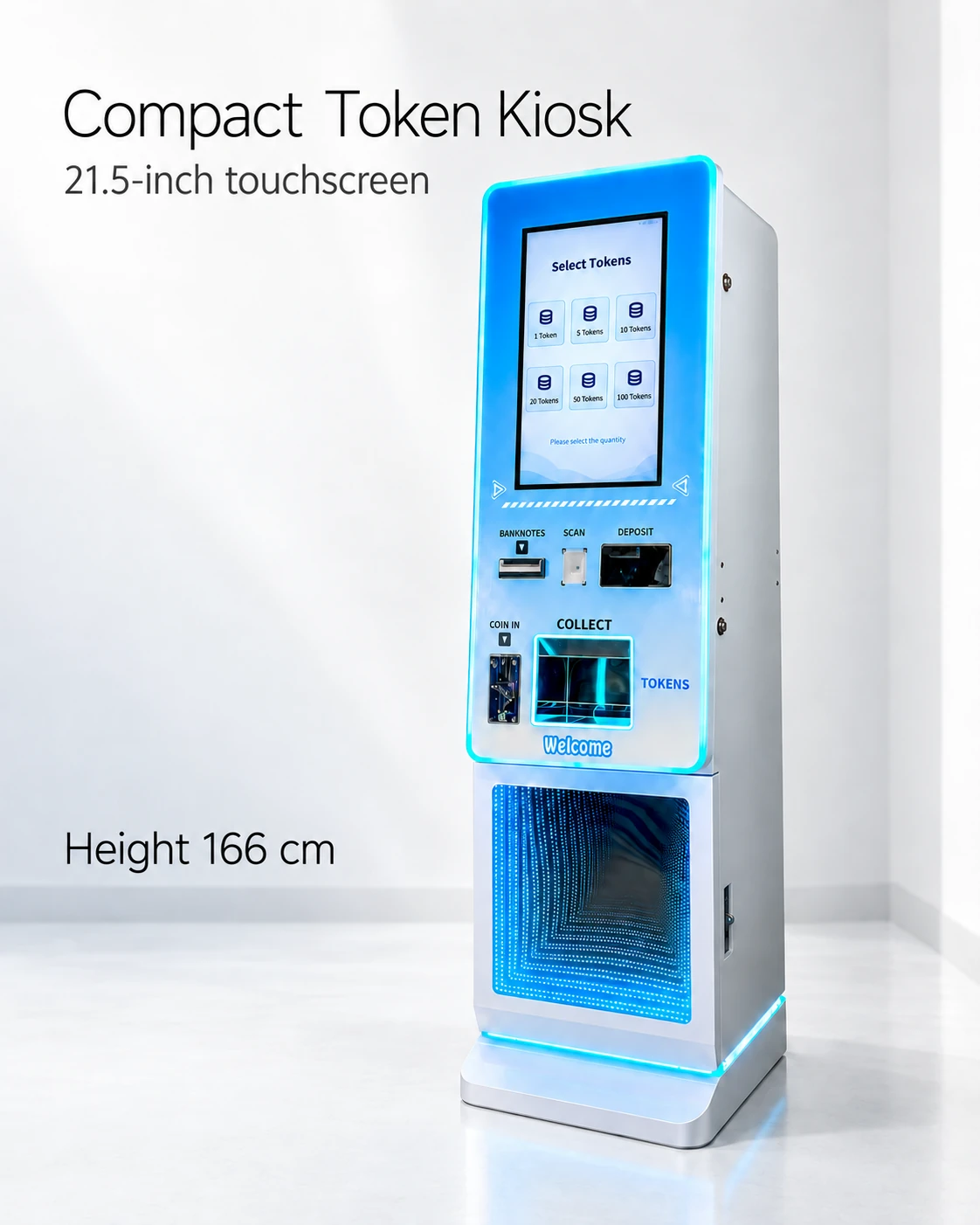
The two kiosk reference sheets do not identify token dimensions or installed hopper/validation hardware. The approved range therefore needs to come from the quoted components and sample evaluation.
Create a token sample identity sheet
Give the production sample a stable ID and photograph its faces and edge. Record artwork or finish changes that could affect handling; the physical sample and artwork approval should describe the same proposed token.
Retain the approved sample for later receiving comparisons. Its identity sheet gives the token and equipment suppliers a shared reference.
- Sample ID, token supplier, material and coating or finish.
- Nominal diameter, thickness and mass, with stated production tolerances.
- Edge form, hole or shape features and raised artwork.
- Measured sample values using the agreed method.
- Dispenser model/settings and each game acceptor model/settings.
- Production lot identification, agreed sample quantity and acceptance method.
Test dispensing and game credit separately
For the dispenser evaluation, record requested quantity, counted output and interruptions. Then use the same sample on every relevant game, recording acceptance and the credited value.
As a hypothetical sample plan, an operator labels 100 tokens and records two purchase-package quantities and one credit setting. Agree the actual sample quantity, repeats and acceptance scope with the equipment suppliers; 100 is only the example’s traceable set.
Check alternatives and rejection behavior
Define intended acceptance and rejection behavior with the acceptor supplier. Use its authorized method for evaluating alternative coins or tokens and its instructions for any settings change.
A mismatch entry should identify the batch, machine, settings, attempted task and result. If a dispensed token is rejected by a game, this record lets the token and equipment suppliers review the affected combination.
State how later token batches will be reviewed
Match later lots to the approved production specification using the agreed receiving method. Retain their lot IDs and keep a changed edge, finish or dimension separate while the affected path is reviewed.
Batch records and configuration history help show what changed between an earlier accepted sample and a later mismatch.
Lock a compatible specification for the order
Use the same sample ID and specification in the token, kiosk and game quotes. Include any acceptor configuration and the review required after a component or production change.
Send the identity sheet and game list with the enquiry. The response should identify supported token limits, actual components and the proposed sample test.
CHECK THE REFERENCES
Sources
- 32-Inch Touchscreen Token Exchange Kiosk reference configuration
Supplier reference specifications and supplied model images.
- 21.5-Inch Compact Token Vending Kiosk reference configuration
Supplier reference specifications and supplied model images.
- CPI Compact Hopper technical data sheet
Manufacturer hopper data sheet.
- Hoffman Mint amusement tokens and samples
Token manufacturer sample and specification guide.
PUT THE GUIDE TO WORK
Review your arcade token specification
Send token dimensions, material, finish and sample IDs with the game list. Request supported hardware limits and separate dispensing and credit checks.
Build my equipment brief