Claw & prize machines
Blind-Box Claw Machine Prizes: Stock and Packaging Planning
Plan blind-box prizes by tested package family, station assignment and reserves. Resolve the dual cabinet’s plush-versus-box configuration first.
Approve the box family before ordering the assortment
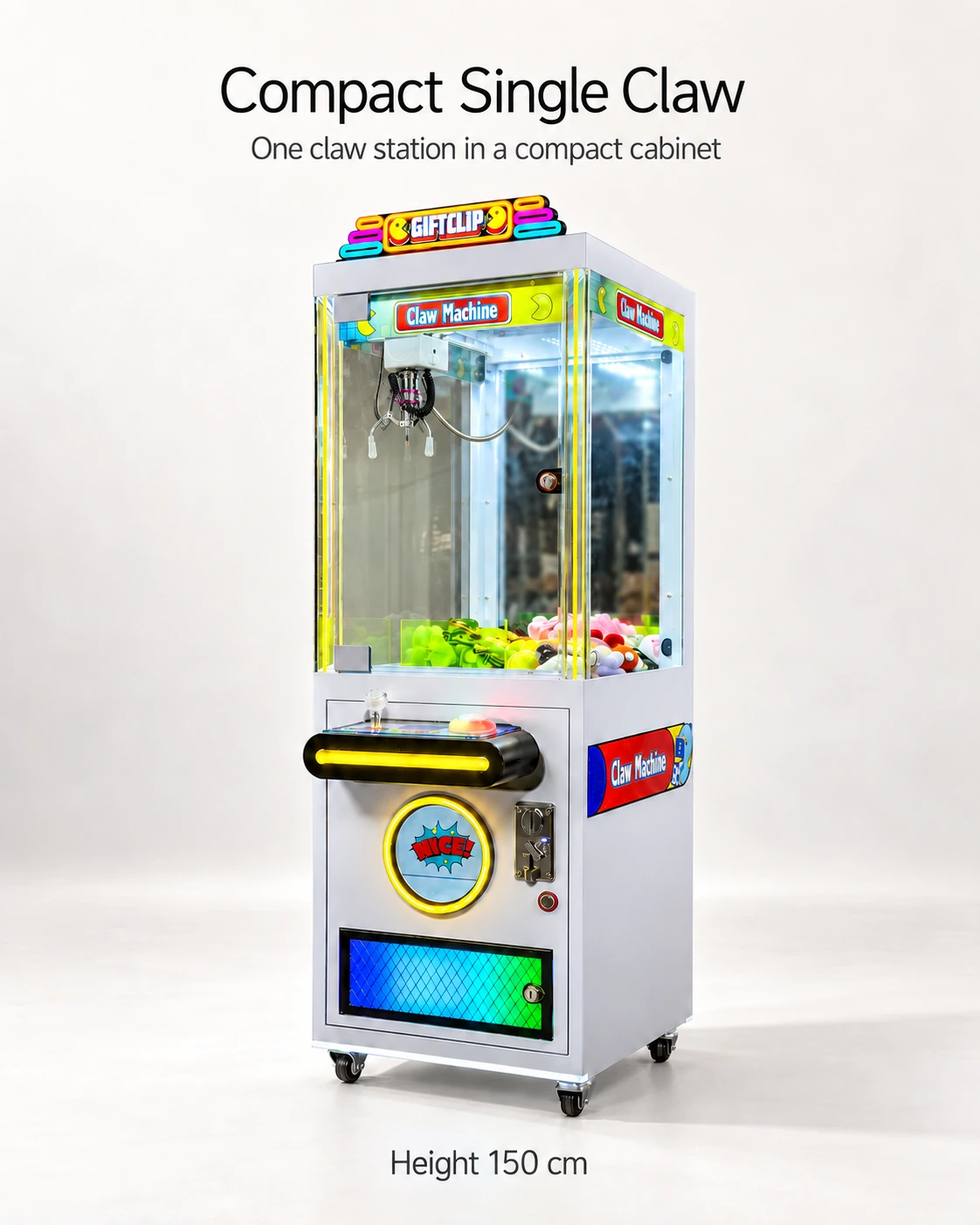
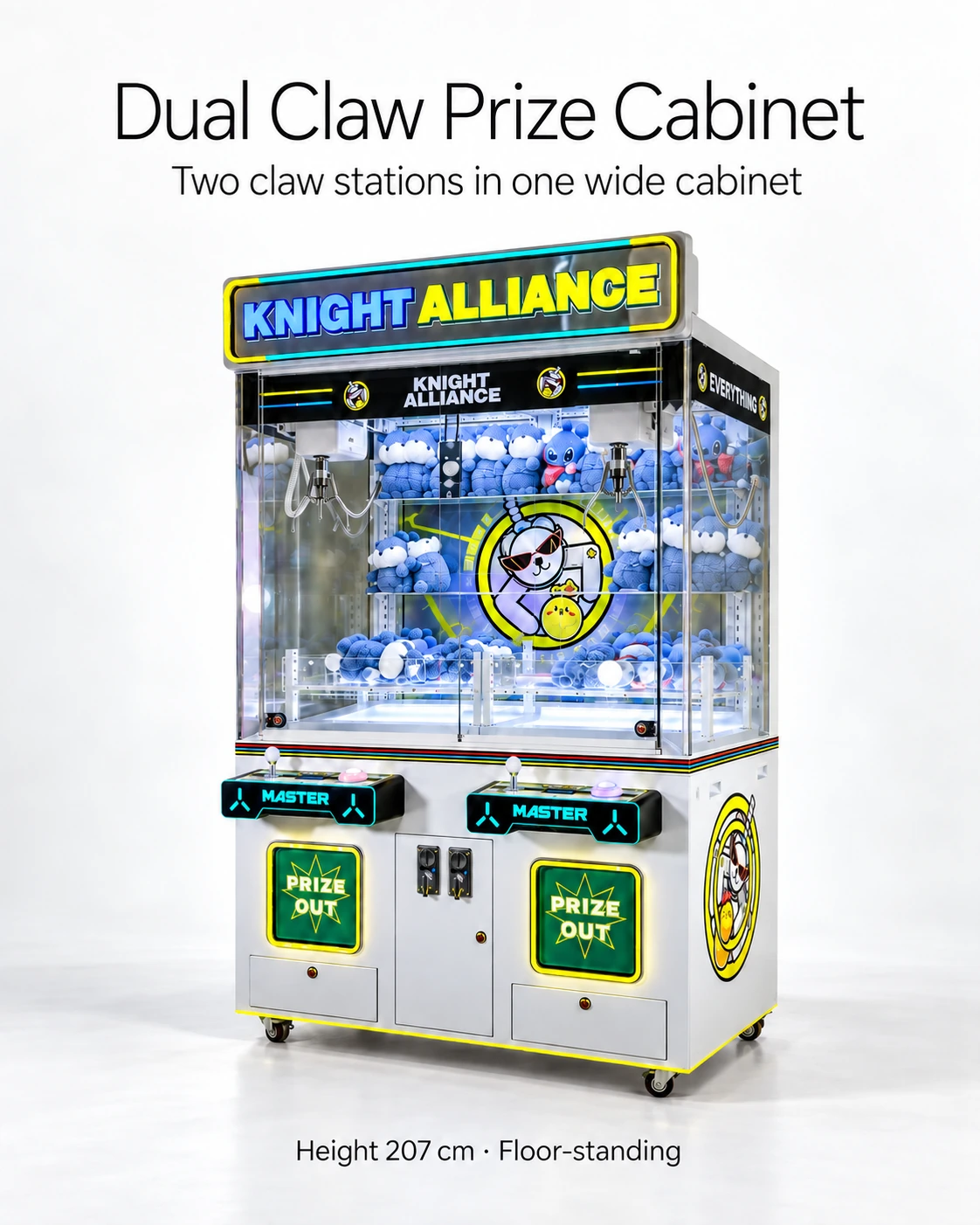
Buy blind-box claw machine prizes by approved package family and station assignment, then add theme choices and reserve quantities. First resolve the machine configuration: the Dual Claw & Blind-Box supplier sheet describes boxes, while the supplied photographs show plush and two claws. Until the intended box completes a matching demonstration, the stock plan is provisional.
The supplier lists a 130 × 89 × 207 cm cabinet with two player stations. Approved box dimensions and display quantity remain open, so add them to the loading test for each station. If a Compact Single Claw is also shortlisted, test the same box there rather than comparing cabinet size alone.
Group the assortment by physical package
Purchasing by theme alone can hide mechanical differences. Create package families with the same outside size, surface, mass range and relevant protrusions. Several designs in an identical box can share a family, while a special-edition sleeve or larger box may need its own test. Keep the product identification and consumer information visible according to destination requirements.
- Family code and outside package measurements, including any sleeve or protective film.
- Mass range and whether internal contents can shift substantially.
- Approved sample identifier and the machine station used for the test.
- Merchandise source, purchase unit and replenishment lead-time assumption.
- Packaging revision date and the trigger for a new fit test.
Give each station its own stock line
Give stations A and B separate stock lines for package family, approved arrangement, opening display quantity, review level and reserve location. Add the actual price and counter functions once demonstrated; separate front controls alone do not confirm that all settings are independent.
A clear allocation lets staff count what changed without mixing incompatible packages. If you wish to rotate themes, define a changeover checklist: remove old stock, verify the new sample approval, update customer-facing information and record the new arrangement. Do not top up a bed with a new package family solely because it shares the same artwork theme.
A hypothetical assortment sheet
Assume a planning trial has approved two box families, A and B, and has established twelve display units per station under its documented arrangement. A buyer assigns family A to the left station and family B to the right. The initial display stock is twenty-four units. If the buyer chooses an illustrative reserve of six units per family, the initial procurement quantity becomes thirty-six units before any testing or replacement allowance.
The display and reserve quantities above are hypothetical planning inputs. Replace them with the approved bed arrangement. If family B gains a larger sleeve, hold the revised package for a new fit test before using the previous twelve-unit entry.
Manage stock variation and the customer offer
A blind-box range may contain different designs inside similar packaging. Ask the merchandise supplier how assortments are packed and what product information must accompany them. Keep the purchase mix, received mix and station allocation distinct. If you do not know the contents of sealed units, do not present an exact available design or probability that you cannot substantiate.
Include the merchandise information needed for the destination's disclosure, age-suitability, product-safety and game-rule review. Keep damaged, incorrectly labelled and unapproved packages in a separate stock area so they cannot enter the machine during a busy refill.
Replenish from observed movement
Track starting count, units added, units delivered as prizes, units removed for damage or testing and ending count for each family. Investigate discrepancies before using the numbers for purchasing. The first weeks can inform reserve choices, but a small sample can be distorted by opening promotions, stockouts and theme changes. Review those conditions alongside the counts.
Attach the package-family sheet, station allocation and reserve assumptions to the equipment brief. It gives the supplier the exact boxed-prize arrangement to demonstrate and lets the stock buyer price the assortment after fit is settled.
CHECK THE REFERENCES
Sources
- Dual Claw & Blind-Box Prize Machine reference configuration
Supplier catalogue configuration reference.
- Compact Single Claw Machine reference configuration
Supplier catalogue configuration reference.
PUT THE GUIDE TO WORK
Plan a boxed-prize configuration
Share box dimensions, mass range, packaging revisions and the station assortment so the quote can identify the matching dual-claw setup and box demonstration.
Build my equipment brief