Claw & prize machines
Claw Machine Prize Size: How to Test Plush Toys and Boxes
Choose claw machine prizes by size, mass, packaging, claw engagement and chute fit. Use a traceable sample test before buying stock.
Which prize size fits a claw machine?
The right claw machine prize size depends on the claw assembly, prize bed, mass and surface of the merchandise, and the usable prize chute. Similar-looking plush toys can behave differently, and a box that can be lifted may still fail at the outlet. Record the actual packaged sample and test loading, grab, travel, release and customer retrieval before approving a prize family.
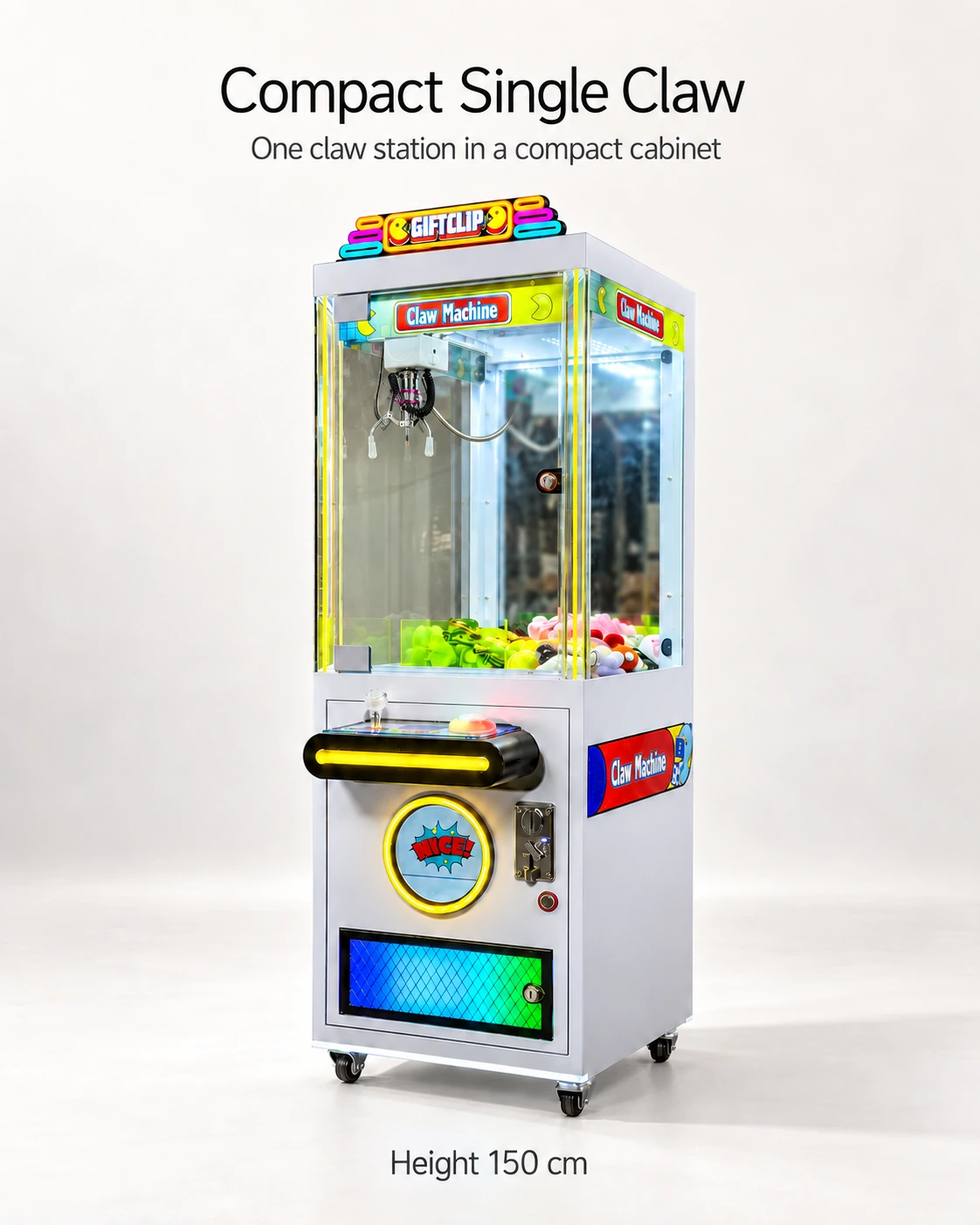
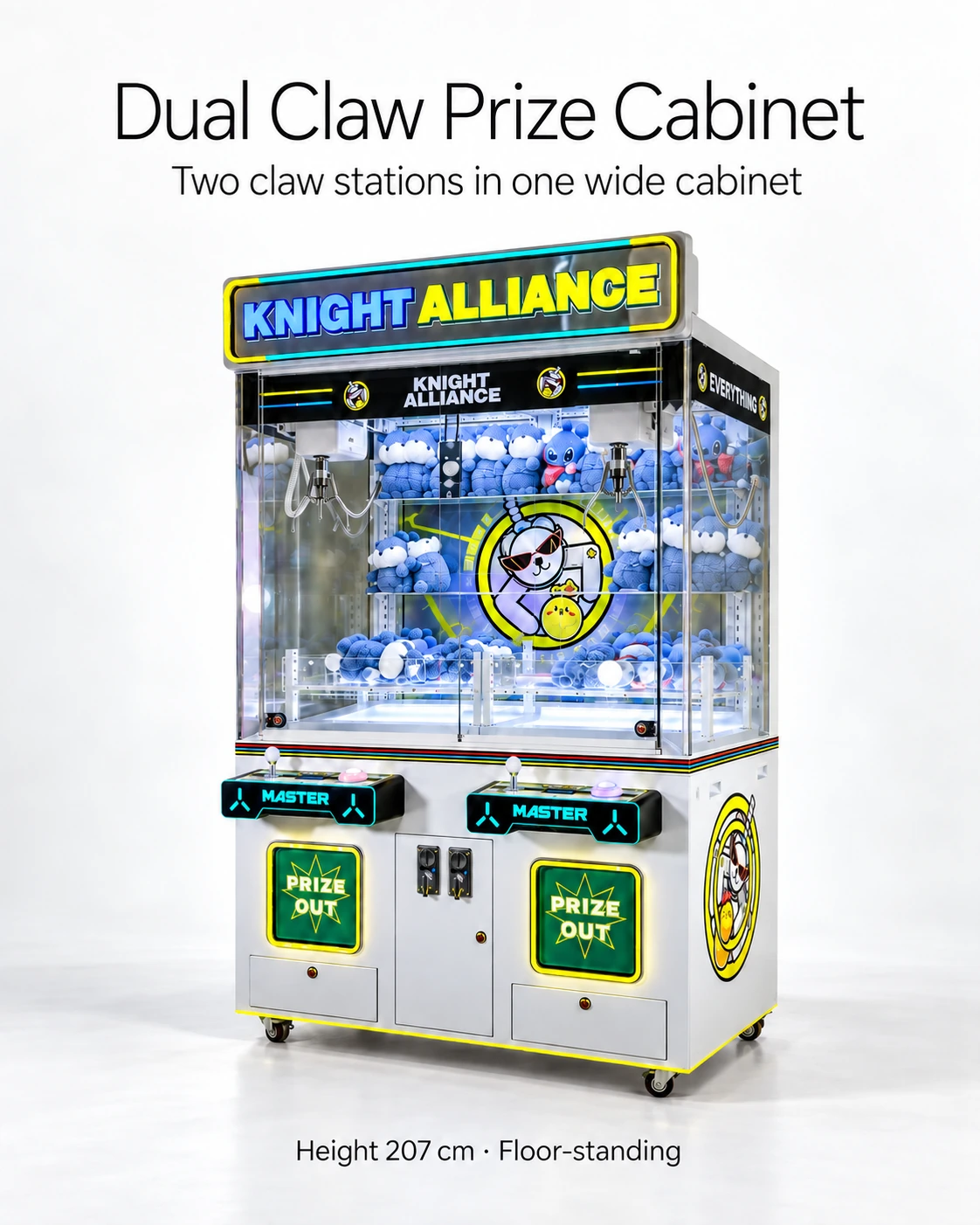
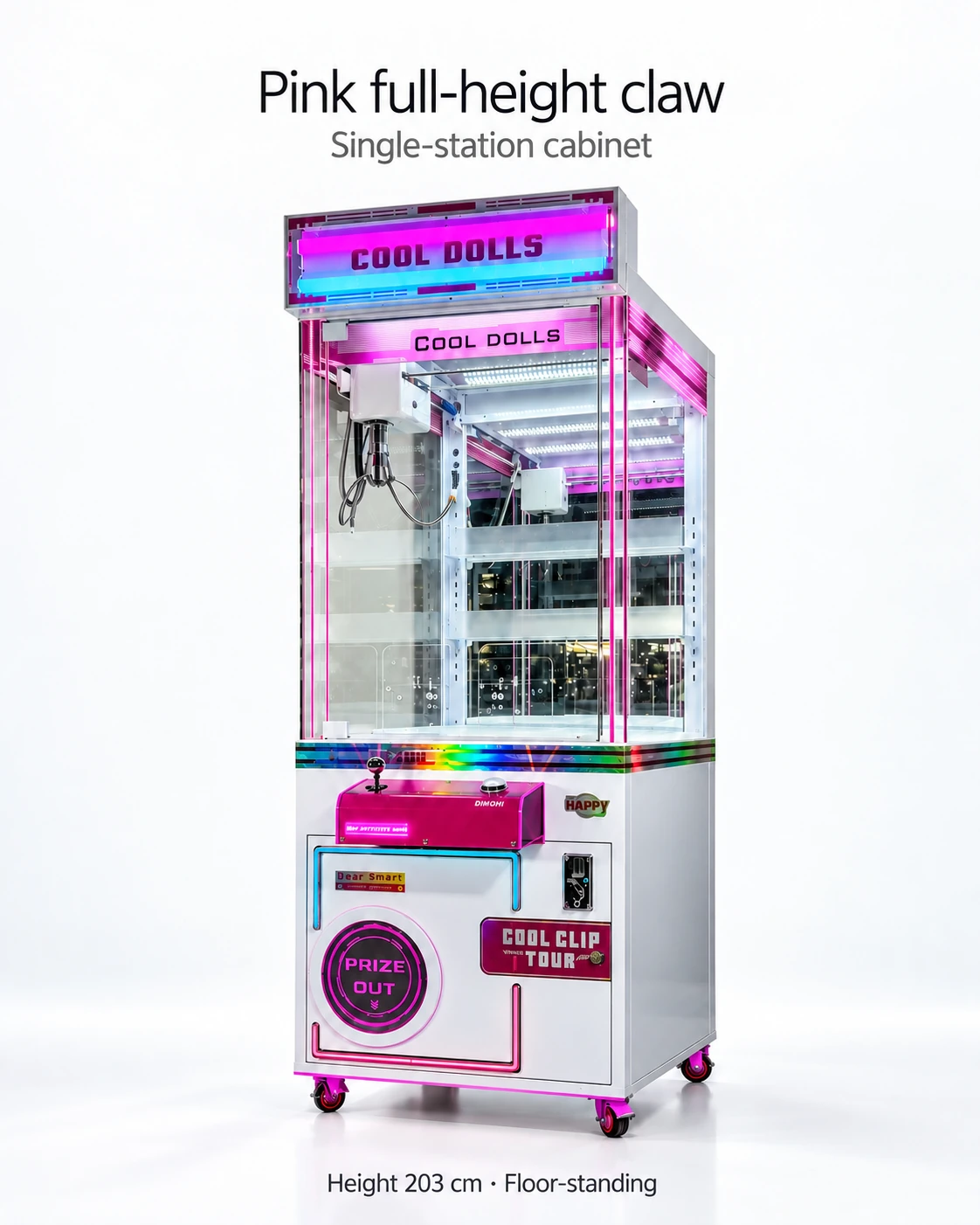
For the Compact Single Claw and Pink Full-Height Claw, the usable bed, outlet dimensions and allowable prize load still need to be supplied. The Dual Claw & Blind-Box has a specific configuration question: its sheet describes boxes while its photos show plush. Include your intended box in the matching loading-to-collection demonstration.
Prepare the sample-fit card
Write the card before the video or trial so both buyer and supplier know the required evidence. Use a separate card for each package family. A prize that changes size because of a holiday wrapper or promotional sleeve should not inherit an old approval automatically.
- Identity: sample code, supplier of the merchandise, dimensions, mass and packaging version.
- Machine: product name, serial number if available, claw assembly and controller version.
- Setup: prize-bed arrangement, stock depth, settings shown and whether the sample is loose, boxed or otherwise supported.
- Sequence: load, reach, engage, lift, travel, release and retrieve; record where an obstruction or damage occurs.
- Outcome: observed result, unresolved condition, video reference and the person who witnessed the test.
Test the whole physical path
Start with loading and placement, then follow the claw through reach, grab, lift, travel and release. Collect the prize through the normal customer outlet with staff panels closed. Note whether the package catches, needs excessive twisting or obstructs movement. That complete path is the practical fit test.
Follow the supplier's operating procedure, with technical adjustments handled by an authorised technician. Film from outside guards and keep hands clear of motion. A failed fit is useful: it tells you which package, arrangement or cabinet feature needs changing before stock is purchased.
Coast to Coast groups merchandise by claw size and cabinet family. Use the same purchasing logic in your sample card: pair the merchandise with the proposed mechanism and delivery geometry, then record the usable size limits for that cabinet.
Use contrasting sample conditions
Include the smallest and largest intended packages and a sample near the proposed mass limit once the supplier states that limit. For plush, compare a soft body with a dense or unusually shaped version from the intended assortment. For boxes, compare orientation and packaging surfaces. Keep conditions controlled enough that a changed outcome can be traced to a specific difference.
Agree a sample plan that captures each intended package family and keep a result for every cycle in that plan. Use it to decide fit under the recorded conditions. A long-run rejection or win-rate estimate would need operating records beyond this sample exercise.
A hypothetical pass and revise decision
Assume a boxed sample can be lifted and carried but stops at the outlet. That sample fails the complete delivery path even though the grab looked successful. The next action could be a smaller package, a different cabinet or an approved outlet change; each requires a new test. If a plush sample passes retrieval but its tag catches during travel, remove or change the tag only if the merchandise supplier and machine supplier approve that alteration.
Mark the hypothetical card with one of three outcomes: compatible under the recorded conditions, revise and retest, or unresolved. Use the same outcome in the quote and order appendix so staff know which package can enter the machine.
Make the approval specific enough to repeat
Keep the sample code, claw configuration, settings and stock arrangement with the order. Match the delivered claw, bed and outlet to that approved setup during arrival checks. The resulting stock specification should name the compatible package families, permitted adjustments and conditions for retesting a changed package.
CHECK THE REFERENCES
Sources
- Compact Single Claw Machine reference configuration
Supplier catalogue configuration reference.
- Pink Full-Height Claw Machine reference configuration
Supplier catalogue configuration reference.
- Dual Claw & Blind-Box Prize Machine reference configuration
Supplier catalogue configuration reference.
- Coast to Coast prize merchandise by claw size
Prize catalogue organized by claw size and cabinet family.
PUT THE GUIDE TO WORK
Review your prize-size samples
Send the smallest and largest intended prizes with dimensions, mass and packaging photos for a loading-to-collection review of the shortlisted claw configuration.
Build my equipment brief