Food vending
Cotton Candy Machine Production Speed: What a Demo Can Show
Compare complete cotton candy service cycles using recipe identity, room humidity conditions and collection delay alongside continuous cycle timing.
Time the service cycle the customer experiences
A cotton candy machine production-speed comparison needs the same start and finish points on every candidate. Use selection or payment as the agreed start, and product collection plus next-order readiness as the finish. For the Compact Semi-Automatic Cotton Candy Machine, include the manual stick insertion and removal as part of its staffed service cycle.
The supplied catalog does not provide an established production-speed figure. A continuous supplier demonstration with the intended recipe and supplies gives the buyer a useful observation to compare, while the pilot records performance in the venue.
Record the venue conditions, not just the fastest cycle
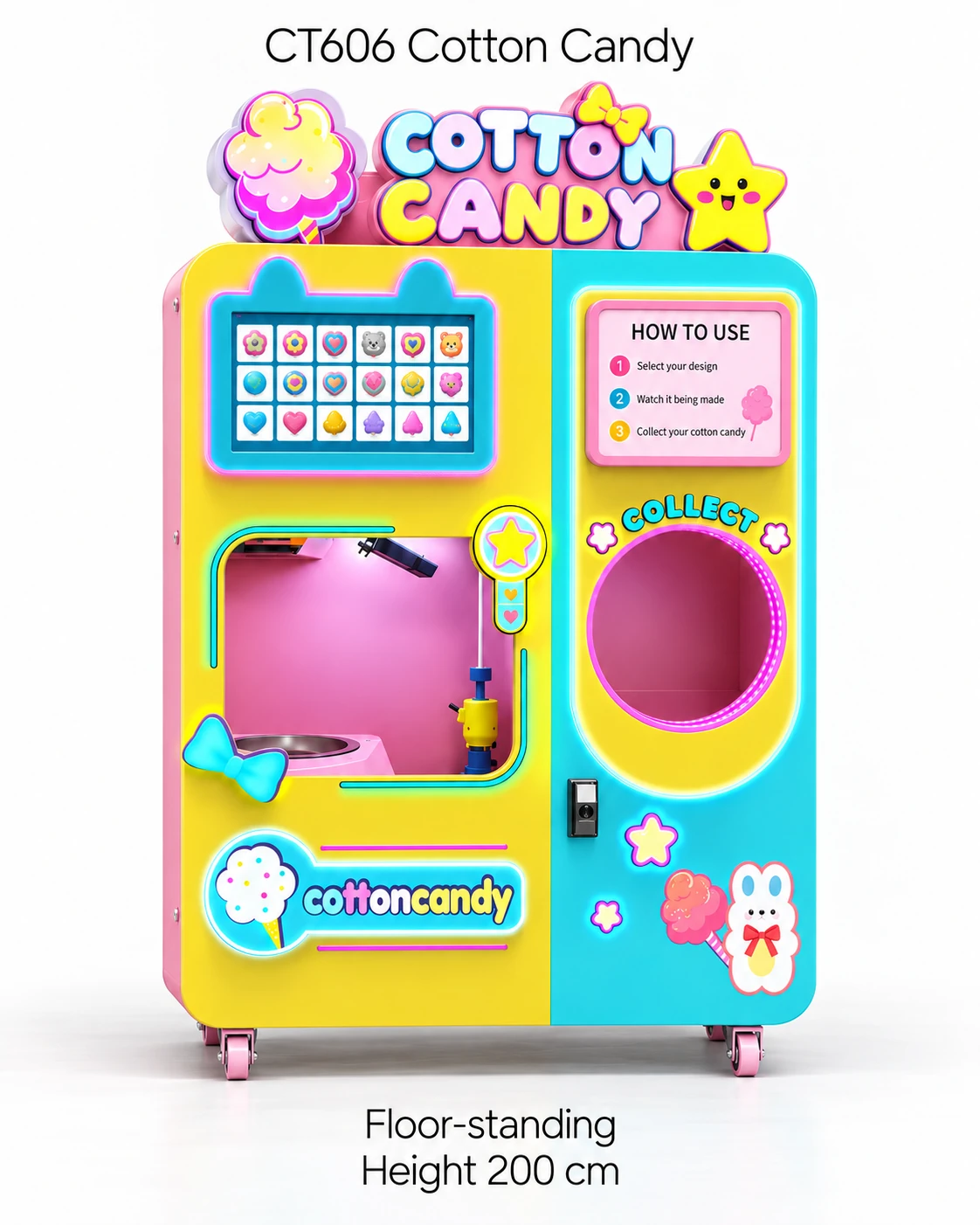
Record the room conditions and the time between making and collection alongside the recipe and observed cycle. Cotton candy can become sticky in humid air, so a demonstration in one room may not represent the proposed location. Ask the supplier which operating conditions the offered machine supports and whether the proposed site needs an environmental change. Keep any cooling or humidity-control equipment, its electrical load and ongoing work separate in the quote. No operating humidity limit has been verified for CT606.
Swipe across to compare all columns.
| Record | Buyer input or supplier response |
|---|---|
| Venue and exposure | Indoor position, room conditions and collection delay |
| Observed demonstration | Recipe, cycle boundaries and product condition at collection |
| Supplier response | Supported environment and any separately quoted site equipment |
Give each supplier the same recording brief
Record the exact model revision, software, recipe, sugar product, stick sample and starting stock. Include preparation before the first order, then keep the run continuous so collection, resets and staff work remain visible.
Agree the number of cycles and permitted demonstration conditions with the supplier. Use a cycle log beside the video; it helps the buyer compare individual cycles with the elapsed run and ask specific questions about a change or interruption.
- Start: selection confirmed, payment accepted or another agreed event.
- Stages: stick ready; making begins; making ends; collection enabled.
- Finish: product collected; cabinet ready for the next order.
- Exception: failed payment; rejected serving; intervention; stock refill; setting or supply change.
- Run summary: elapsed window; completed acceptable products; interruptions; preparation state.
Catalog reference specifications
Compare the supplier-stated feeding mechanisms and consumable magazines to evaluate how each cabinet manages continuous orders during peak hours.
Swipe across to compare all columns.
| Model | Production workflow | Consumable capacity |
|---|---|---|
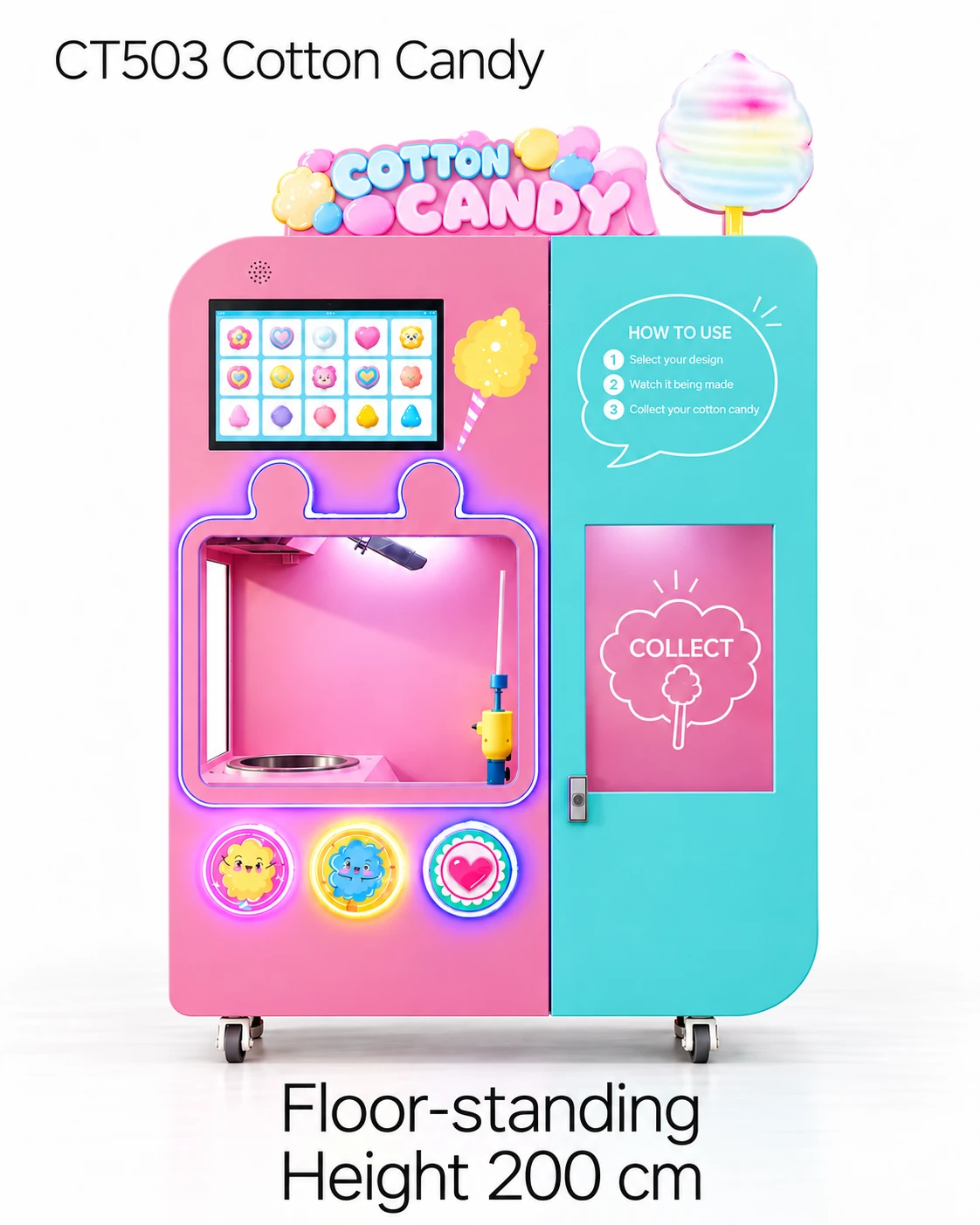
| Pastel Automatic Cotton Candy Vending Machine | Production method (supplier-described): Automatic paper-stick feeding and candy making | Paper-stick magazine (supplier-listed): Up to 200 sticks; stick dimensions to confirm |
| Colorful Automatic Cotton Candy Vending Machine | Production method (supplier-described): Automatic paper-stick feeding and candy making | Paper-stick magazine (supplier-listed): Up to 300 sticks |
| Compact Semi-Automatic Cotton Candy Machine | Workflow (supplier-described): Manual paper-stick insertion; automatic candy making; manual removal | Sugar containers (supplier-listed): 4 containers; 4 kg total |
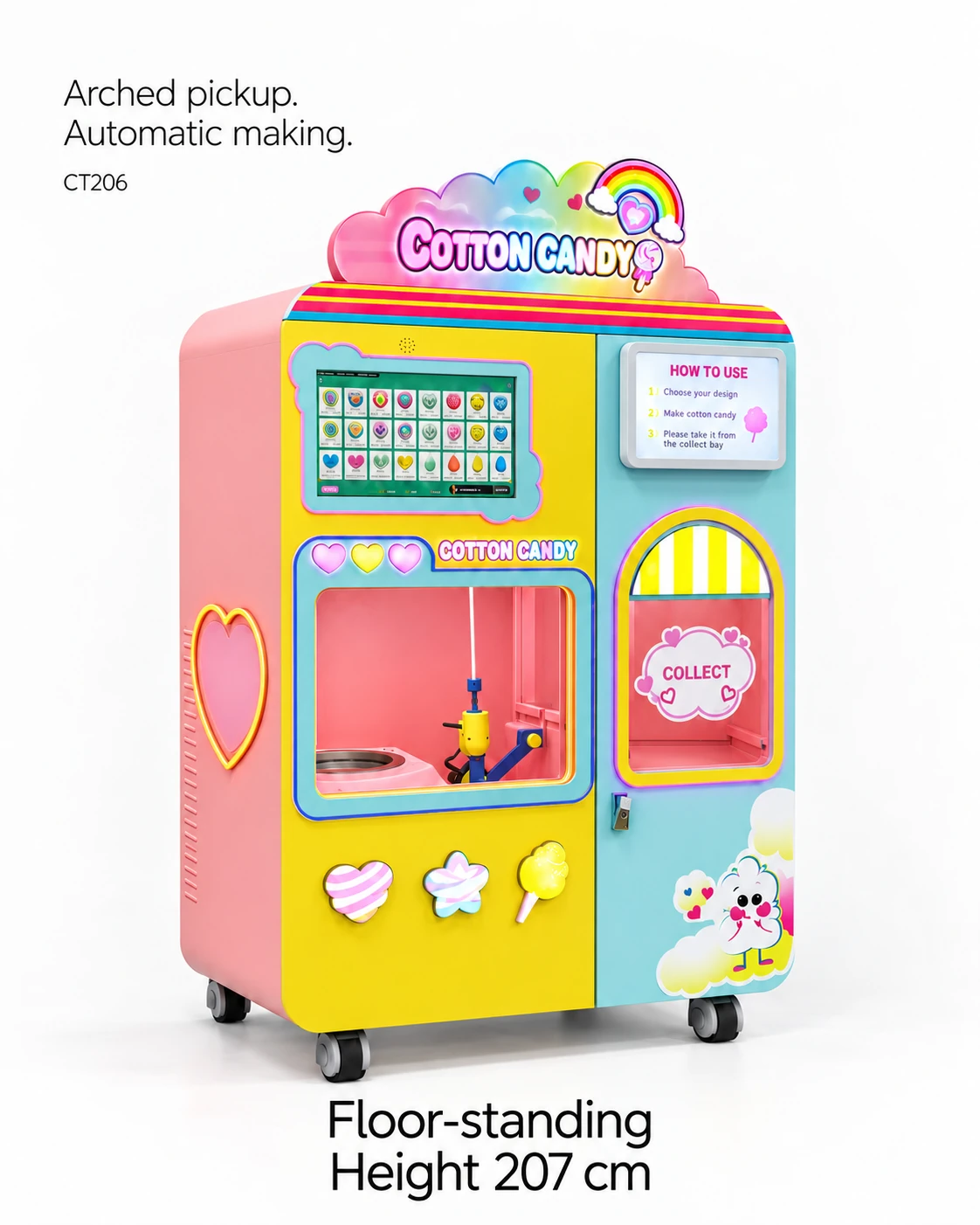
| Arched Pickup Cotton Candy Vending Machine | Production method (supplier-described): Automatic paper-stick feeding and candy making | Paper-stick magazine (supplier-listed): Up to 300 sticks |
Separate timing questions
First-cycle preparation, repeated-cycle equipment time and customer hesitation are different observations. A video starting at the making mechanism cannot be compared directly with one starting at payment. Request the same boundary for both, and report any preparation outside the recorded window.
Report the observed cycle range and completed products across the actual run. Dividing an hour by the fastest cycle omits collection, service work and interruptions. An observed elapsed window gives a more useful basis for deciding what the venue pilot should measure.
Use the result in the order and pilot
List the opening recipes and stages the supplier will demonstrate, then retain the continuous video and log with the configuration schedule. Unexplained resets, a changed stick sample or hidden preparation become concrete follow-up questions.
For a written speed commitment, identify the conditions and contractual scope in the quote. For the pilot, record customer waiting, completed servings, unavailable time and attendant work separately. Those records show whether the selected format fits the intended queue and staffing arrangement.
CHECK THE REFERENCES
Sources
- Pastel Automatic Cotton Candy Vending Machine reference configuration
Supplier-listed reference configuration for this model.
- Arched Pickup Cotton Candy Vending Machine reference configuration
Supplier-listed reference configuration for this model.
- Colorful Automatic Cotton Candy Vending Machine reference configuration
Supplier-listed reference configuration for this model.
- Compact Semi-Automatic Cotton Candy Machine reference configuration
Supplier-listed reference configuration for this model.
- Sweet Robo: Cotton Candy Robot
Manufacturer description of its Cotton Candy Robot.
- Gold Medal Products: Cotton Candy Category
Industry discussion of humidity impact on cotton candy texture and operational handling.
PUT THE GUIDE TO WORK
Request a full-cycle cotton candy demo
Send your selected model, destination and the completed decision record so we can confirm the offered configuration and quotation scope.
Build my equipment brief