Claw & prize machines
Claw and Prize Machine Refill Routes: Stock, Time and Exceptions
Plan claw, clip and scissor refill visits by approved stock, station tasks, access windows and actual duration. Record incomplete visits and faults.
Plan the route around each mechanism’s refill task
Build a claw and prize machine refill route from model-specific stock groups, access windows and timed tasks. A claw bed, hanging clip display and scissor reset are different jobs. Separate travel and shared door work from station inspection, stocking and lock-up, then keep faults and incomplete visits visible so the route can fit the available staff time.
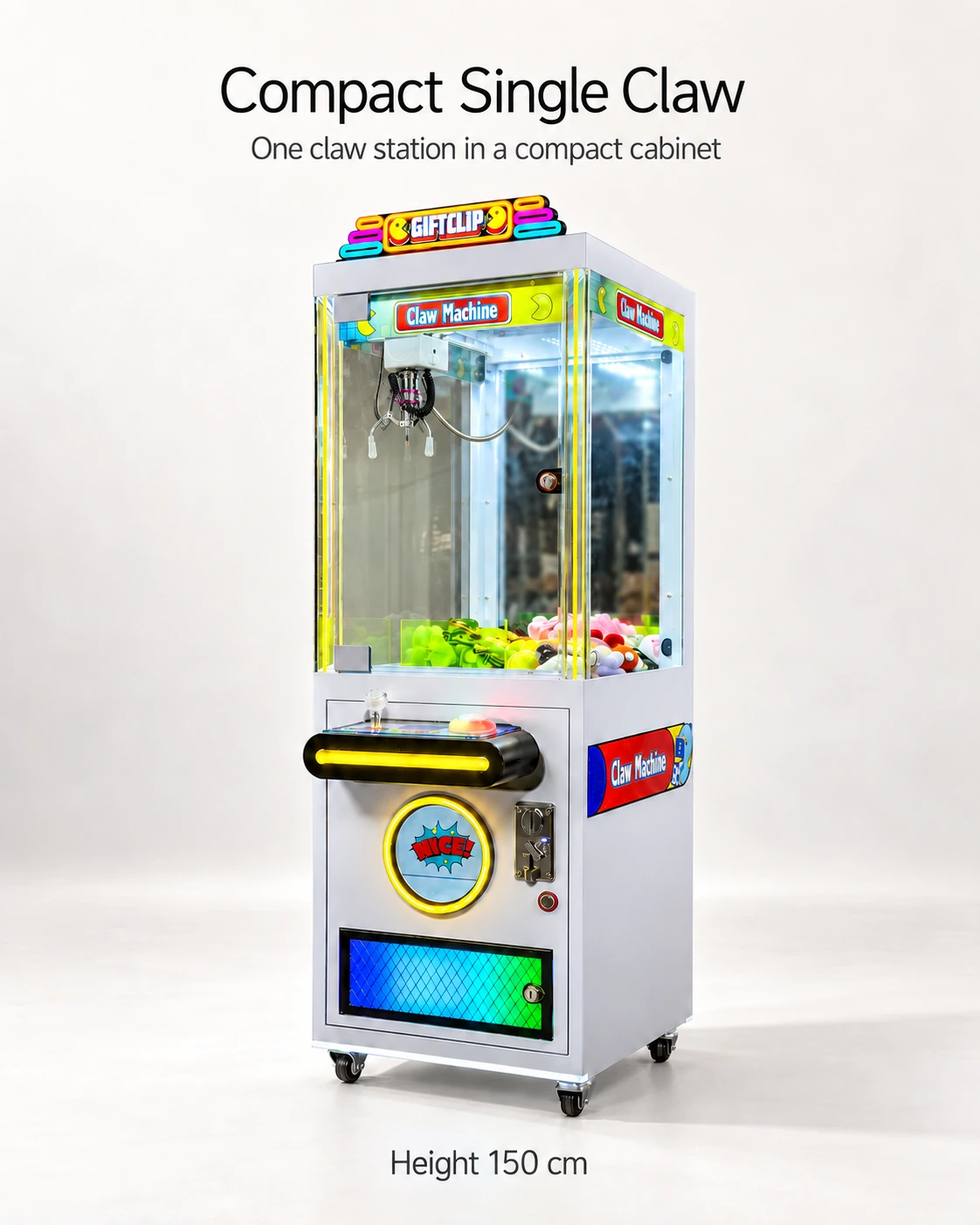
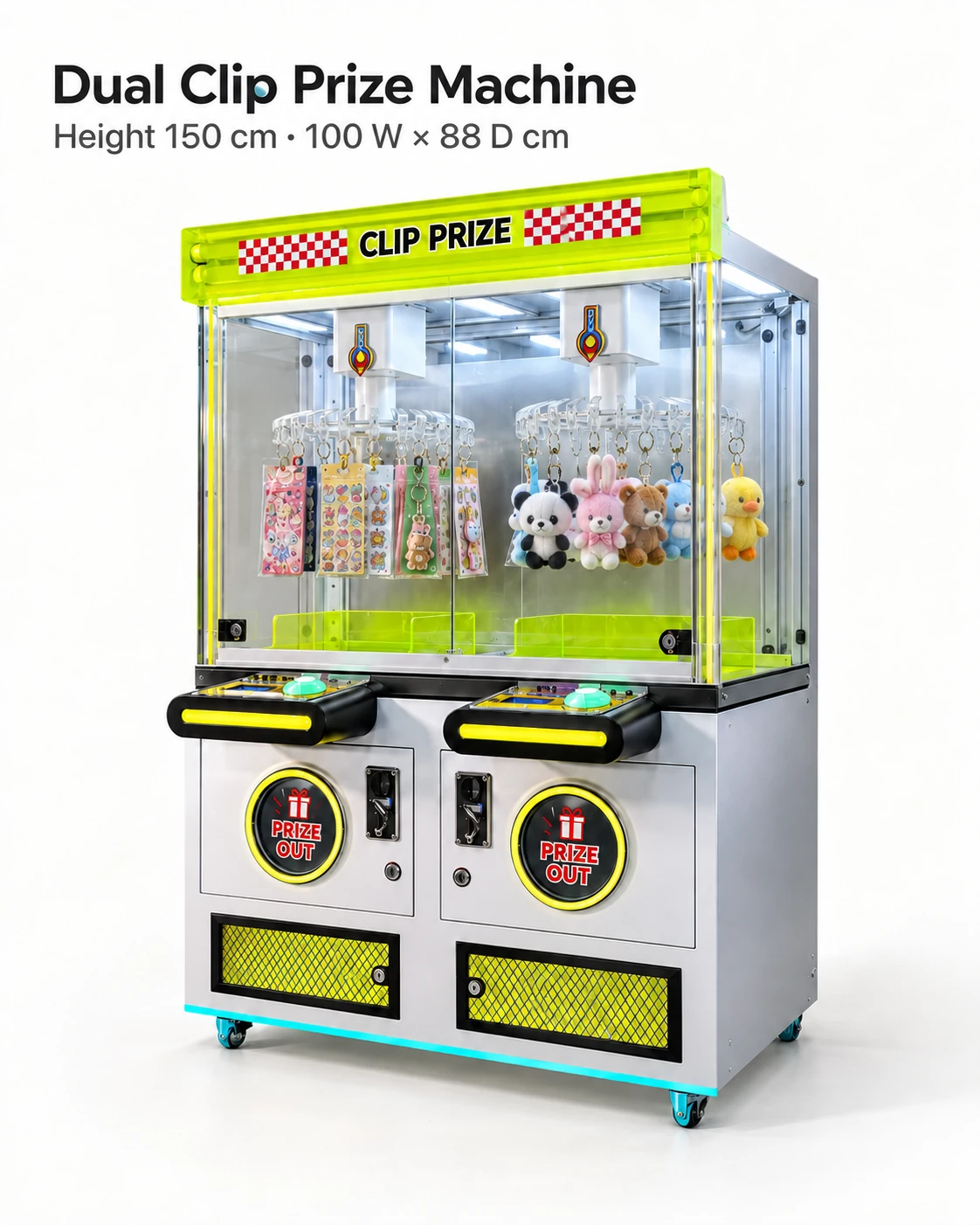
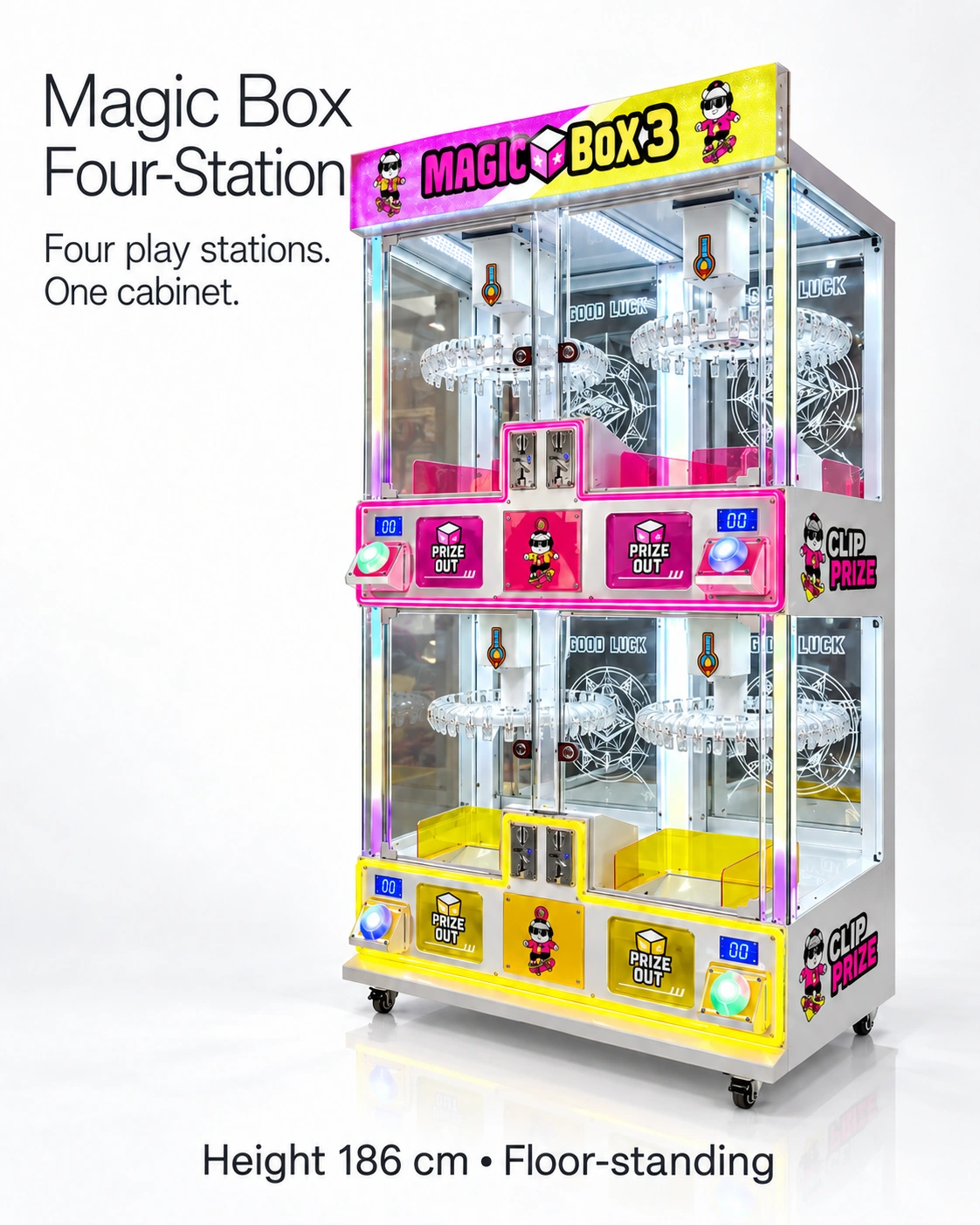
A route combining the Compact Single Claw, Dual-Station Clip, Magic Box Four-Station Clip and Lucky Cut needs a task allowance for each mechanism. Start with its documented refill or reset procedure, then add measured access and travel time from your site.
Create a time-and-task route worksheet
Use one row per machine and a subentry for each station needing a separate check. Distinguish shared access work from prize-specific work. The route should have a completion state, so a stopped visit does not look like a finished refill.
- Location, model, station labels and authorised access window.
- Approved prize or consumable family, quantity to carry and reserve destination.
- Travel and setup time, door access time, inspection time and refill or reset time.
- Closing tasks: outlet check, stock reconciliation, ready-state confirmation and lock-up.
- Exceptions: damaged stock, incomplete refill, fault evidence, required technician and next action.
Prepare stock in the order it will be used
Pack stock in visit order, labelled by station, prize family and packaging revision. Keep approved scissor consumables separate from merchandise and carry tools appropriate to the documented operator tasks. Route technical faults to service rather than adding an unplanned repair to a refill visit.
Record stock issued from the store, added to each position, removed for damage and returned unused. If staff switch prizes between stations, enter the transfer at both locations. The machine counter alone may not explain these movements, especially where it measures credits or detected events rather than physical stock.
A hypothetical route capacity calculation
Assume a planner estimates eight minutes of walking and setup, six minutes at a single claw, eight at a dual clip, twelve at a four-station clip and seven at a scissor station. The illustrative total is forty-one minutes. Add an explicitly chosen contingency for unresolved tasks, rather than quietly treating the estimate as a guaranteed service time.
Replace these hypothetical times with authorised demonstration or site records. Under the assumptions above, a thirty-minute service window is too short. Split the route, prepare stock differently or change the access window, then compare the effect before changing machine capacity.
Schedule by observed need and access
Start with the venue’s access rules and staffing plan, then adjust intervals from observed stock movement and incomplete visits. A cabinet’s clip count does not establish how often it needs refill. Identify which stations become empty, which stock families need more handling and which doors are obstructed during busy periods. Keep out-of-service time separate from an apparent lack of demand.
Have the venue review customer separation during servicing. Follow the machine procedure for stopping, securing and restoring operation. Do not leave open doors, loose cord or stock cartons in the circulation route. Technical faults should go to the approved service process, with the route log preserving the evidence and next action.
Improve the next visit from the route log
Close the visit with actual duration, completed stations, stock differences and exceptions. Update the next route using those task times. Repeated access delays may call for a layout change or a different visit window. Include the route and model mix in the procurement brief so refill instructions, access details and service supplies match the staff plan.
CHECK THE REFERENCES
Sources
- Compact Single Claw Machine reference configuration
Supplier catalogue configuration reference.
- Dual-Station Clip Prize Machine — 56 Clips reference configuration
Supplier catalogue configuration reference.
- Magic Box Four-Station Clip Prize Machine reference configuration
Supplier catalogue configuration reference.
- Lucky Cut Scissor Prize Machine reference configuration
Supplier catalogue configuration reference.
PUT THE GUIDE TO WORK
Plan a mixed-machine refill route
Send the model mix, access windows, prize families and visit schedule so the buying brief can include each machine's refill or reset procedure and service access.
Build my equipment brief