Claw & prize machines
Claw Machine Card Reader Integration: Cashless Payment Test Plan
Plan a claw machine card reader using the exact controller, payment protocol, reader, destination account and station-credit acceptance tests.
A card reader needs a matched controller and provider setup
Plan a claw machine card reader as a matched configuration: reader, controller interface, harness and supply, destination provider account and price-to-credit mapping. Pulse interfaces are used on some amusement machines; the exact cabinet and reader combination still needs compatibility review and testing.
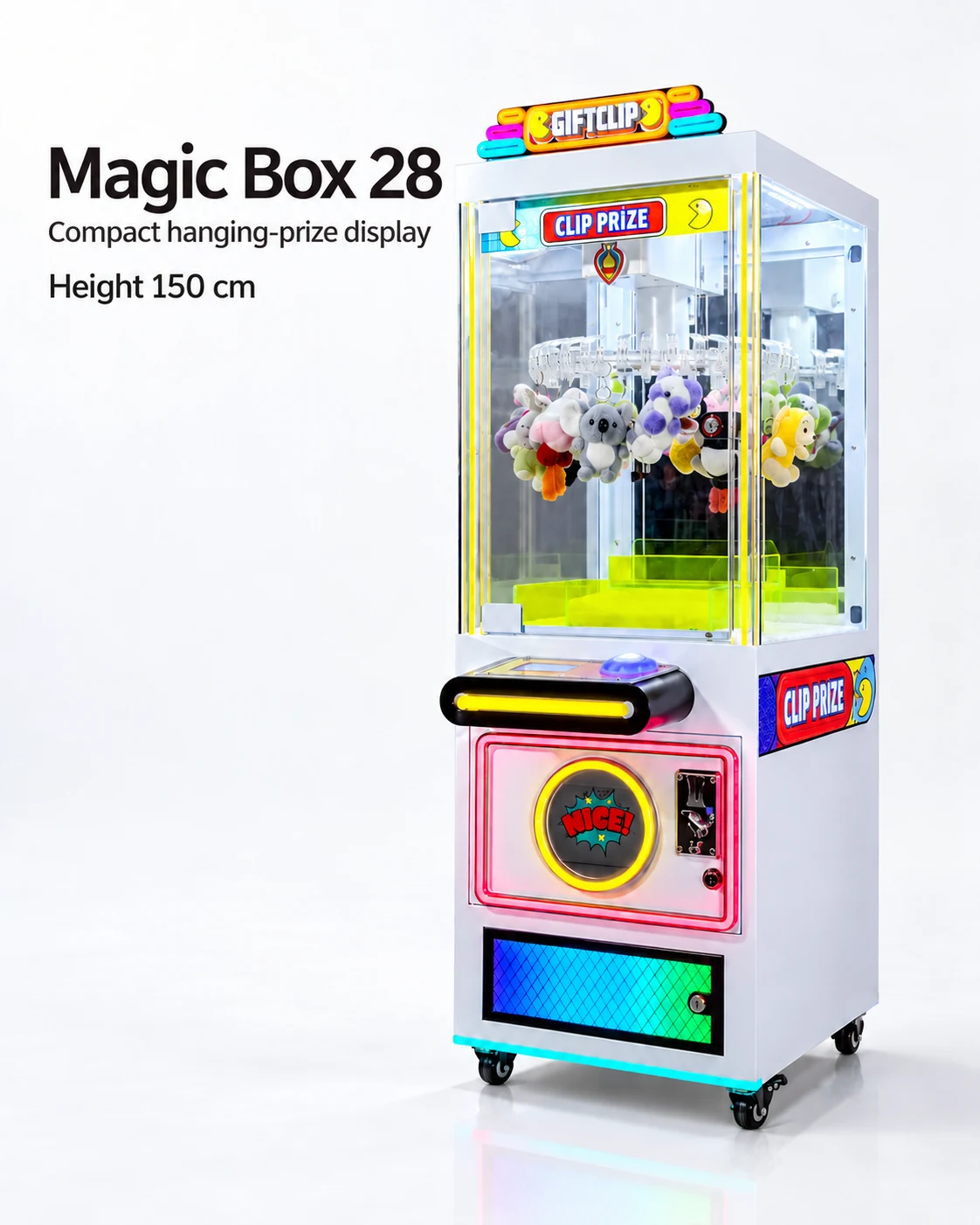
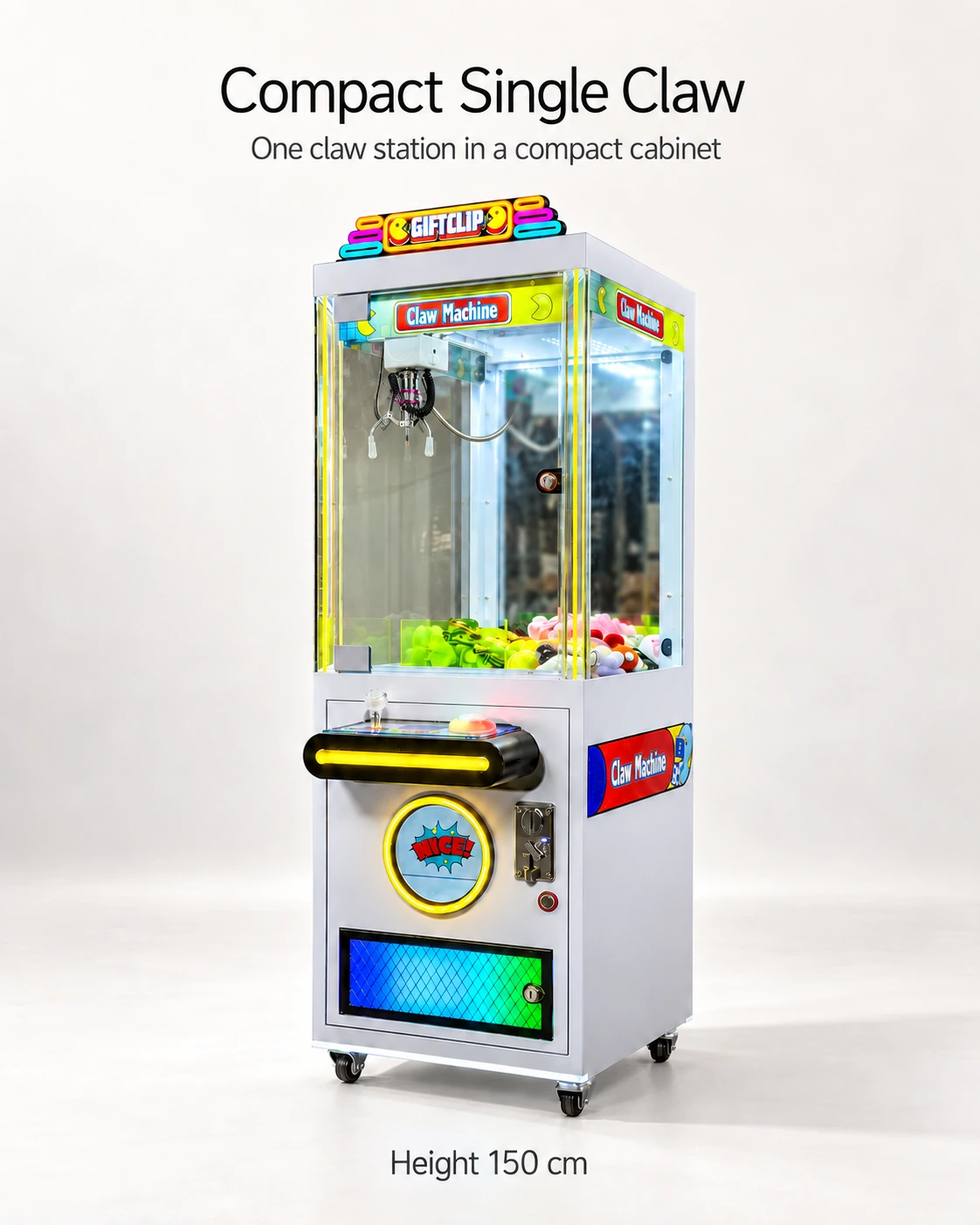
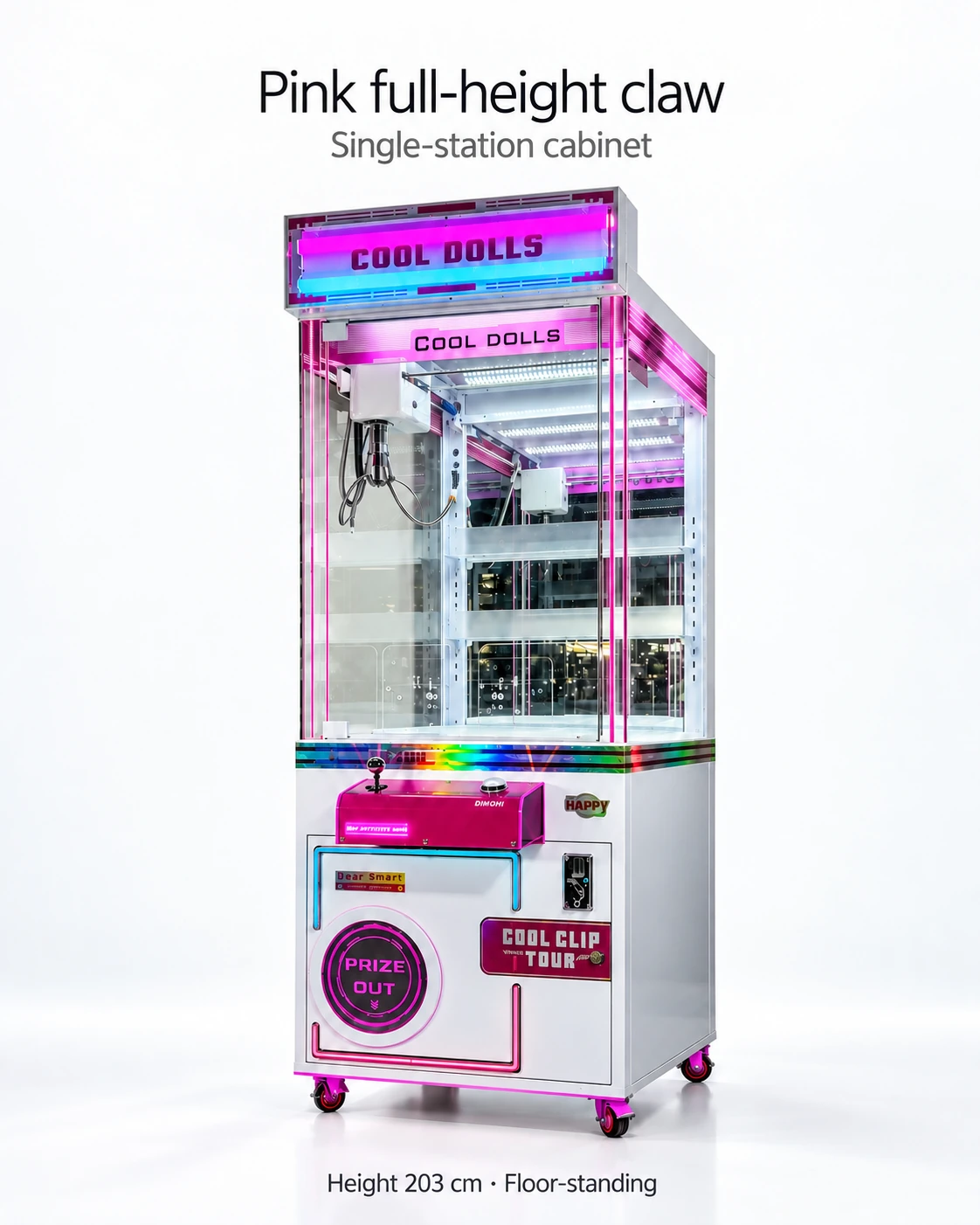
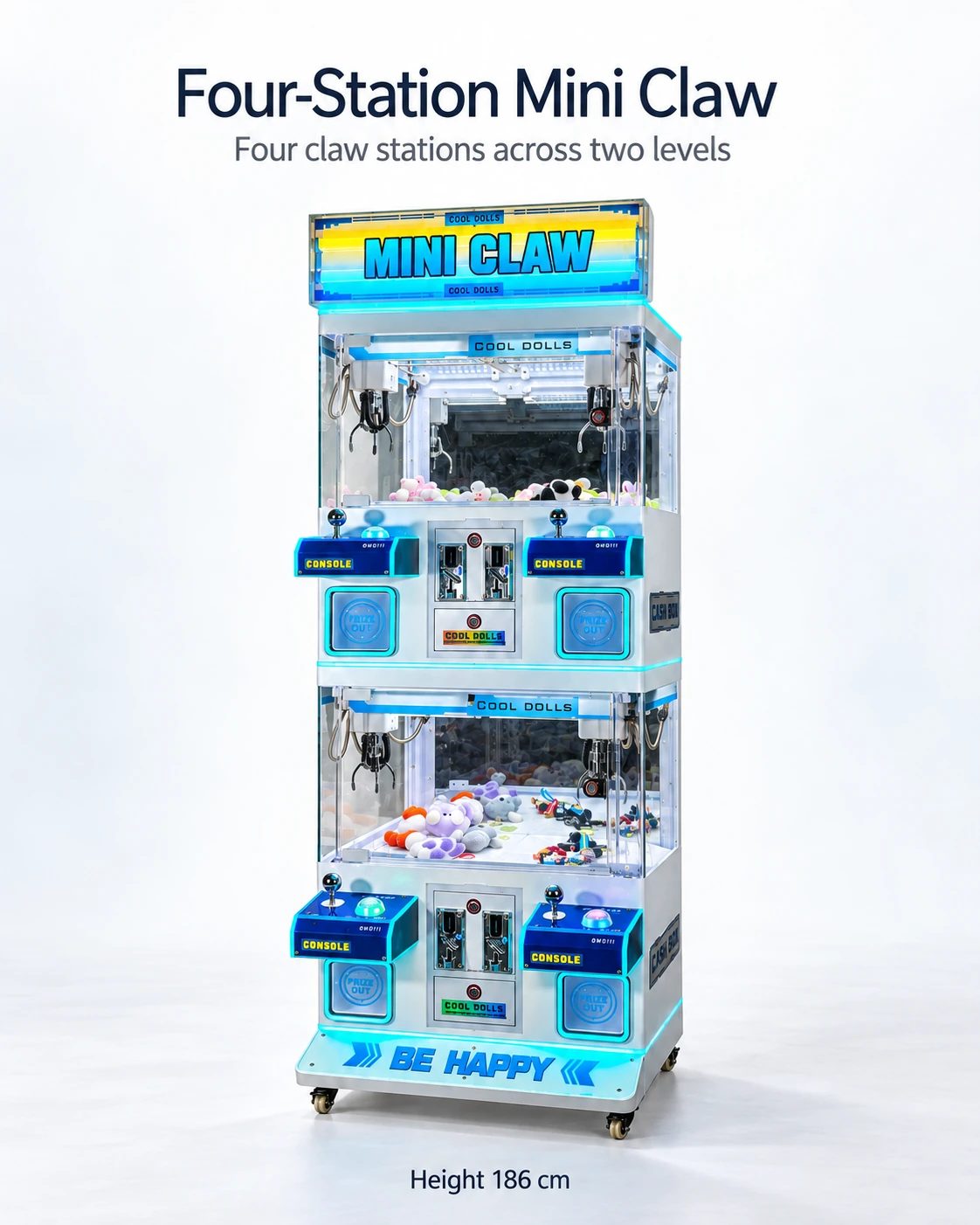
Cashless support is unconfirmed for the Compact Single Claw, Pink Full-Height Claw and Blue Four-Station Mini Claw references. Their supplier-listed 110–220 V input label concerns the machine's mains configuration. Specify the reader's internal supply and controller connection separately.
Write a payment-interface brief
Use one brief for the equipment supplier, payment provider and installer. Each can fill the fields within their scope and identify a dependency on another party. Keep the destination service, physical connection and customer credit behaviour on the same record.
- Destination, currency, provider account and payment methods required at the venue.
- Reader model, local version, connectivity plan and ongoing charges to be quoted.
- Machine controller identity, supported protocol, signal requirements and documented harness.
- Price-to-credit mapping, station mapping and handling of an occupied or out-of-service station.
- Mounting position, cable route, reader power source and authorised installer.
- Responsibility for configuration, acceptance testing, refund handling and later support.
Use provider documentation without assuming equivalence
Nayax's Pulse installation guide treats mounting, power, machine connection and provider configuration as separate tasks, including an inhibit connection for machine availability. That makes a useful project checklist. Map the actual controller signals and availability behaviour before specifying an interface for your cabinet.
The qualified installer needs current documents for the exact controller and reader, including pin assignments, harness and power requirements. Agree those with the equipment supplier and provider before scheduling the acceptance test.
Make a credit and failure-state test matrix
For every test, record the payment-provider result, machine credit change, available play and final customer-facing state. Begin with an approved successful transaction, then use provider-authorised test methods for declined, interrupted or unavailable conditions. Do not create real unexplained charges just to test a fault.
- Accepted payment: the intended price results in the correct station credit and a usable play.
- Declined or cancelled payment: expected provider status and no unintended machine credit.
- Machine unavailable: reader behaviour and customer message follow the agreed inhibit or service procedure.
- Communication interruption: documented outcome, duplicate-credit prevention and permitted recovery.
- Restart: retained or cleared credit follows the agreed specification, with transaction reconciliation.
- Refund or failed-play report: operator can connect the customer issue to the relevant transaction and machine event.
A hypothetical mapping error
In a hypothetical four-station test, a successful payment adds credit to A while the customer selected B. Mark the station mapping for correction, then repeat the affected tests after the installer updates the configuration. Record the provider transaction and machine credit together.
Keep reader version, cabinet serial, harness, software settings and destination account with the accepted matrix. A changed controller or replacement reader triggers a review of the affected rows.
Compare the ongoing operating cost
Compare hardware, installation, activation, connectivity, transaction, subscription and support charges using the provider's destination offer. Include staff reconciliation and the agreed refund route. Carry account approval and local payment or amusement requirements in the project review.
Attach the brief and test matrix to the machine request. The proposal should name the interface, responsible installer, testing scope and recurring costs. Keep cashless capability conditional until the exact hardware and destination service are accepted.
CHECK THE REFERENCES
Sources
- Compact Single Claw Machine reference configuration
Supplier catalogue configuration reference.
- Pink Full-Height Claw Machine reference configuration
Supplier catalogue configuration reference.
- Blue Four-Station Mini Claw Machine reference configuration
Supplier catalogue configuration reference.
- Nayax Pulse Hardware Installation
Nayax guide to pulse-reader mounting, power, machine connection and configuration.
- Nayax amusement payment interfaces
Official provider overview of cashless payment for amusement equipment.
PUT THE GUIDE TO WORK
Plan your card-reader configuration
Name the destination, currency, provider and reader model, then describe pricing and station behaviour for an interface proposal and payment test scope.
Build my equipment brief