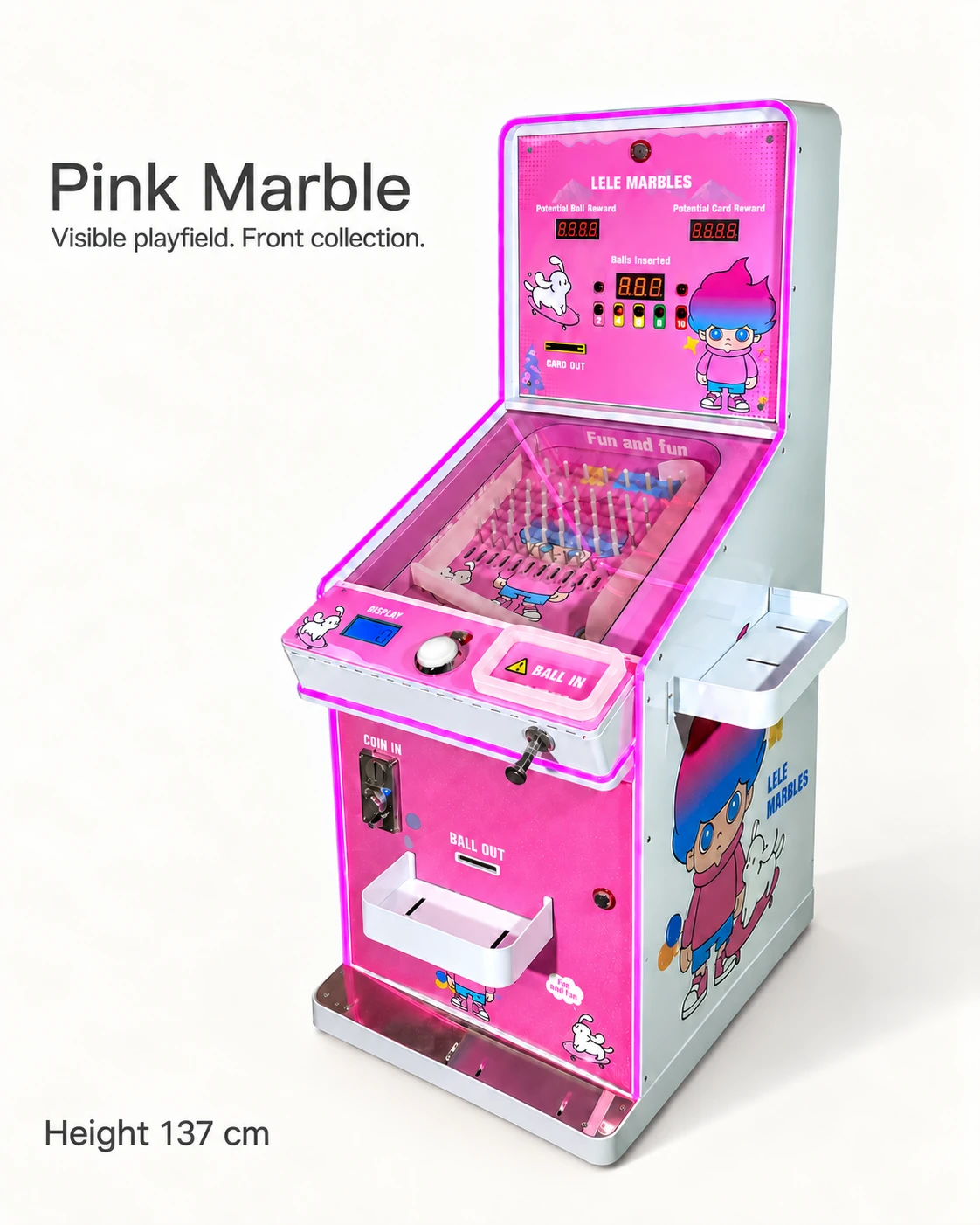
Redemption equipment procurement
Redemption Game Controls: Acceptance and Spare Parts
Compare buttons, impact controls, ropes and keys before buying redemption games. Define diagnostics, replacement identity, software and support acceptance.
Specify the input path, not a generic electronic spare kit
Redemption games that look simple from the player side can depend on very different input systems. One cabinet reads a button press, another a controlled strike, another a moving rope, and another a sequence of keys. A spare kit described only as switches and sensors is incomplete until it matches the installed control and the approved diagnostic method.
Identify the control families in the proposed order: timing buttons, prompted physical actions, moving targets, rope inputs, illuminated panels or oversized keys. Ask how each action is sensed and how it reaches the game controller. The test method and replacement part must match the selected mechanism; do not infer interchangeable components from similar controls.
Break every control into observable stages
For each player action, ask the supplier to show the physical movement, diagnostic input, game response and final score or ticket effect. If a control lights up but the input is not registered, the illumination alone has not passed the control test. Equally, an input visible in a diagnostic screen does not prove the game applies the intended rule during play.
Create a location map with a unique identifier for each button, key, target or handle. Use the same identifiers in photographs, the manual and the spare list. This is especially helpful on a large illuminated panel or a multi-action cabinet, where a report saying the left button failed may refer to several different assemblies.
Compare service needs by control family
The best first spare is often the component whose failure stops the intended player interaction and whose replacement can be performed correctly at the venue. Make that decision from the actual parts and support information. Do not infer endurance from a larger button, heavier handle or a claim that the game is built for busy locations.
Ask the supplier to fill in the proposed matrix below. The listed observations are acceptance tasks, not instructions to dismantle or alter powered equipment.
Swipe across to compare all columns.
| Control family | Acceptance question | Replacement identity to request |
|---|---|---|
| Timed push button | Does the intended press register once and reset? | Button assembly, switch, harness and software applicability |
| Impact or force control | Does the approved input produce the documented response? | Striking surface, sensing assembly and calibration procedure |
| Pop-up target or moving mechanism | Do motion, target state and accepted hit agree? | Target, actuator and related input components |
| Rope or rotating control | Does travel track the game action without unexplained loss? | Rope/control assembly, sensing parts and adjustment instructions |
| Large illuminated keys or panels | Does every position register the correct identity? | Key/panel assembly, sensor revision and connector mapping |
For force controls, use the supplier-approved test method. Do not invent a universal force limit or calibration tolerance.
Test cues and rules together with the hardware
A reaction game can be mechanically sound and still be unsuitable for its intended audience if the instructions are not understood. Review audio language, visual cues, volume settings and the information visible at normal playing distance. For a memory sequence or colored target, test the intended progression and the response to an incorrect action, not only the first successful input.
Record the software version, approved language and rule configuration. For a rhythm or music format, request the content and commercial-use scope associated with the quoted build. Changing cabinet graphics does not establish permission to copy another game's characters, audio or software. Keep approved artwork and the actual software identity together in the order record.
Check access, isolation and the repair demonstration
Ask the supplier to demonstrate a representative replacement using the model-specific procedure and appropriate power isolation. Record the access panels, tools, connector identification and any setup needed afterward. A spare part delivered without a usable procedure may leave the machine unavailable while staff wait for instructions.
Separate routine operator checks from technician work. A venue can inspect externally accessible controls and report symptoms, while internal adjustments may require training and supplier guidance. Preserve guards and warning labels. For tall cabinets or wide reaction panels, service reach and player movement belong in the floor plan as well as the machine outline.
Approve the support package by consequence
Classify each proposed component by the service it restores. A critical input can make the entire game unusable; a cosmetic light may leave play available; a shared controller may affect several stations. Ask about current availability, revision changes, minimum order quantities and the information needed to obtain remote support. Confirm costs and responsibility rather than assuming warranty includes labor, travel and international freight.
A distributor should retain serial numbers and installed component revisions by unit. When a supplier changes a board or harness during production, request a compatibility decision and updated parts schedule before accepting the change. Keep the approved baseline with repeat orders instead of relying on a trade name that can remain unchanged while internal assemblies evolve.
Brand and function customization is typically available for orders of around 10–20 machines. Describe the artwork, control behavior or operator-workflow changes you need, with the quantity for each selected model. We will confirm the supported changes, cost and production schedule in the quotation. Test an approved function change against its revised control map; the typical project quantity does not replace a model-specific quotation.
Frequently asked procurement questions
Can the same spare button work in several games? Only after the electrical, mechanical and software compatibility has been confirmed for each model. A matching appearance is not enough.
How many spare sensors should I buy? Start with identified components, service consequences and confirmed replenishment information. There is no defensible universal percentage without your installed fleet and maintenance history.
What should I send for a useful quote? Include the formats being considered, quantity, destination, intended audience and staffing capability. Request a control map, model-specific diagnostic demonstration and itemized spare kit. The linked general spare-parts guide can organize the mixed order; this control test determines whether its contents are usable.
PUT THE GUIDE TO WORK
Request a configuration-specific equipment brief
Share your destination, space, intended payment or ticket system and quantity for each selected model. Include branding files, required function changes and the acceptance checks in this guide. The quotation should identify the supported configuration, customization cost, integration and delivery scope.
Build my equipment brief