Marble & skill games
Arcade Skill Game Control Height and Playfield Visibility
Assess payment, play and retrieval reach separately, using interface measurements and the intended viewing positions.
Measure the player task instead of relying on cabinet height
Evaluate arcade skill game reach through the whole player task: payment, start control, playfield view and retrieval. A dimensioned interface drawing and a supervised sample or mock-up show where a user needs to reposition or ask for help.
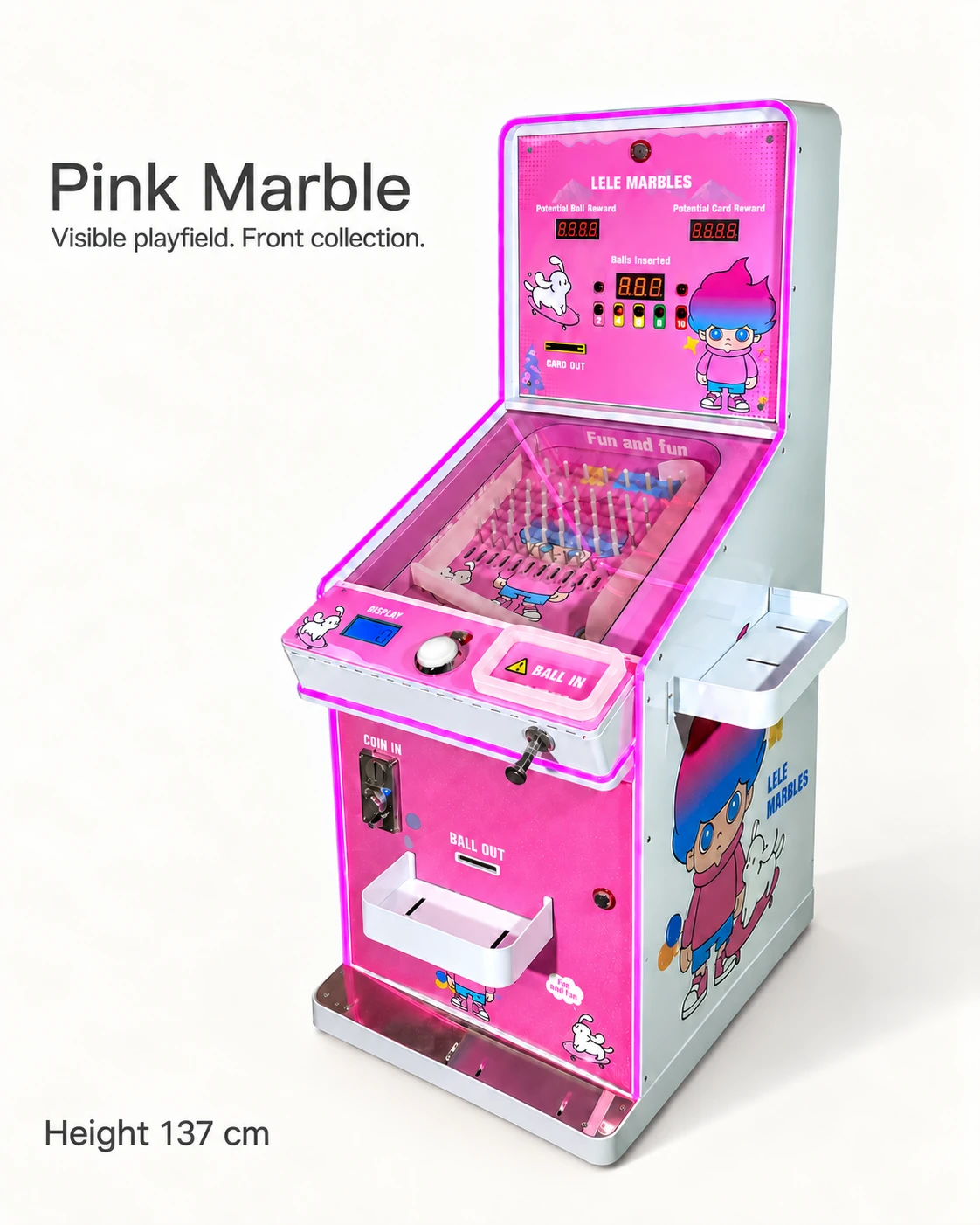
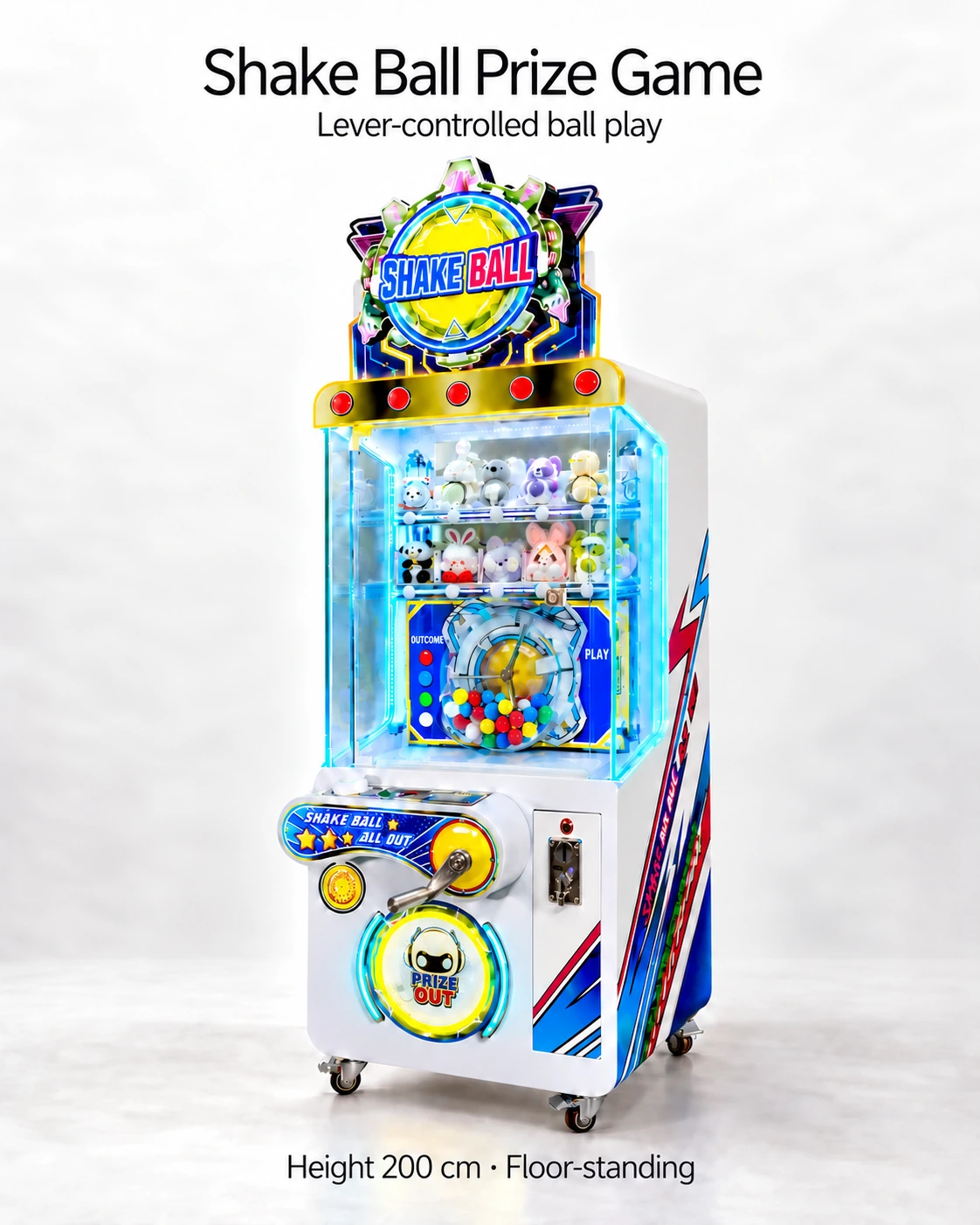
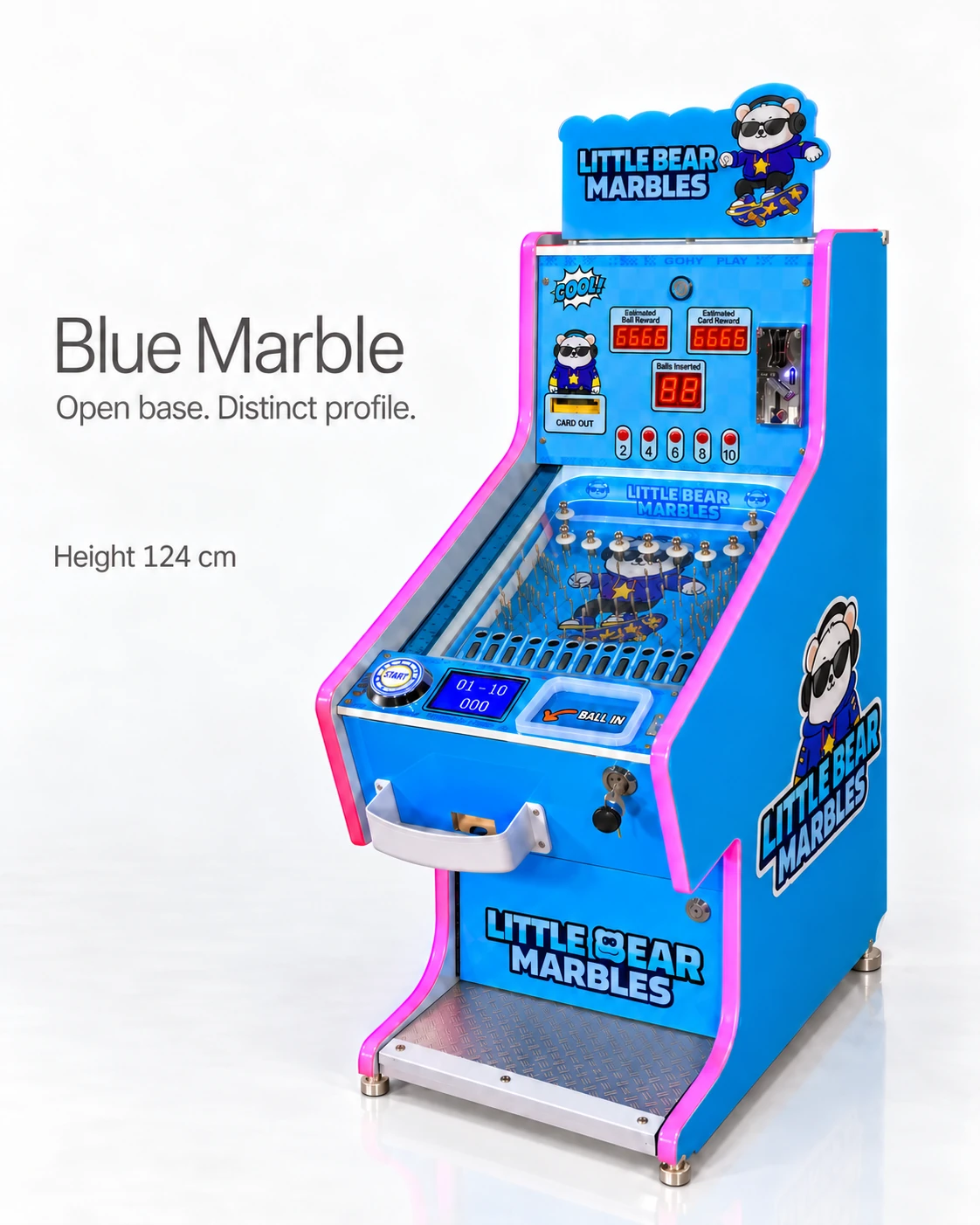
The supplier-listed overall heights are 137 cm for Pink Marble, 124 cm for Blue Marble and 200 cm for Shake Ball. Control and collection heights need separate measurements; overall height alone is not an accessibility assessment.
Create a measurement and observation sheet
Locate the payment interface, controls, collection point and relevant display relative to the finished floor. Use ordinary operation with the intended users, recording the stance and sightline at each task. A cardboard mock-up can review reach; the sample cabinet is needed for control force and reflections.
Keep the sheet with the destination venue’s accessibility and installation review so physical observations and local requirements inform the same layout.
- Participant group relevant to your venue, with no unnecessary personal details.
- Control and interface height, horizontal reach and obstruction noted on the drawing.
- Task attempted: pay, start, adjust, see outcome or retrieve output.
- Observed stance: comfortable, repositioned, assistance needed or task not completed.
- Sightline: full relevant field, partial obstruction, glare or unreadable display.
- Environment: adjacent cabinet, lighting, floor condition and intended queue position.
- Payment and retrieval observations recorded separately from the main play control.
Observe the decision moment
Focus on the moment that guides a player’s action. From the normal control stance, can the user see the ball position, pins, outcome color or counter that matters at that point?
In a hypothetical trial, a player reaches the lever but steps sideways to read the result. Note the obscured feature, change the orientation if appropriate, and repeat the task. The before-and-after observations explain whether the layout adjustment helped.
Evaluate the placement as part of the test
Draw the observed movements inside the operating area. A player stepping into circulation suggests that cabinet orientation or adjacent equipment needs review.
Review glare at the intended lighting conditions and whether the instructions can be read before payment. Record the evidence type beside the finding: drawing, mock-up or actual cabinet observation.
Use observations to request a configuration response
Group findings into measurements to supply, placement changes to trial and configuration questions. Send the annotated drawing and the specific tasks requiring assistance.
The supplier’s response should identify available control or signage changes and their effect on the quoted version. Keep the final drawing and relevant destination review together for installation.
CHECK THE REFERENCES
Sources
- Pink Marble Skill Game reference configuration
Supplier reference specifications and supplied model images.
- Blue Marble Skill Game reference configuration
Supplier reference specifications and supplied model images.
- Shake Ball Prize Game reference configuration
Supplier reference specifications and supplied model images.
PUT THE GUIDE TO WORK
Request control and sightline measurements
Send the intended user tasks and layout. Request interface positions and a sample-review scope for payment, playfield view and retrieval.
Build my equipment brief