Marble & skill games
Arcade Game Pilot Evaluation: Play Completion and Staff Workload
Define starts, replays, completion and staff workload before a pilot so the continuation decision uses traceable observations.
Decide what a pilot can answer
An arcade game pilot evaluation should answer two practical questions: do customers complete the intended play loop, and can the venue support the resulting workload? Record credited starts, completed sessions, replays, staff minutes and unavailable time under consistent definitions.
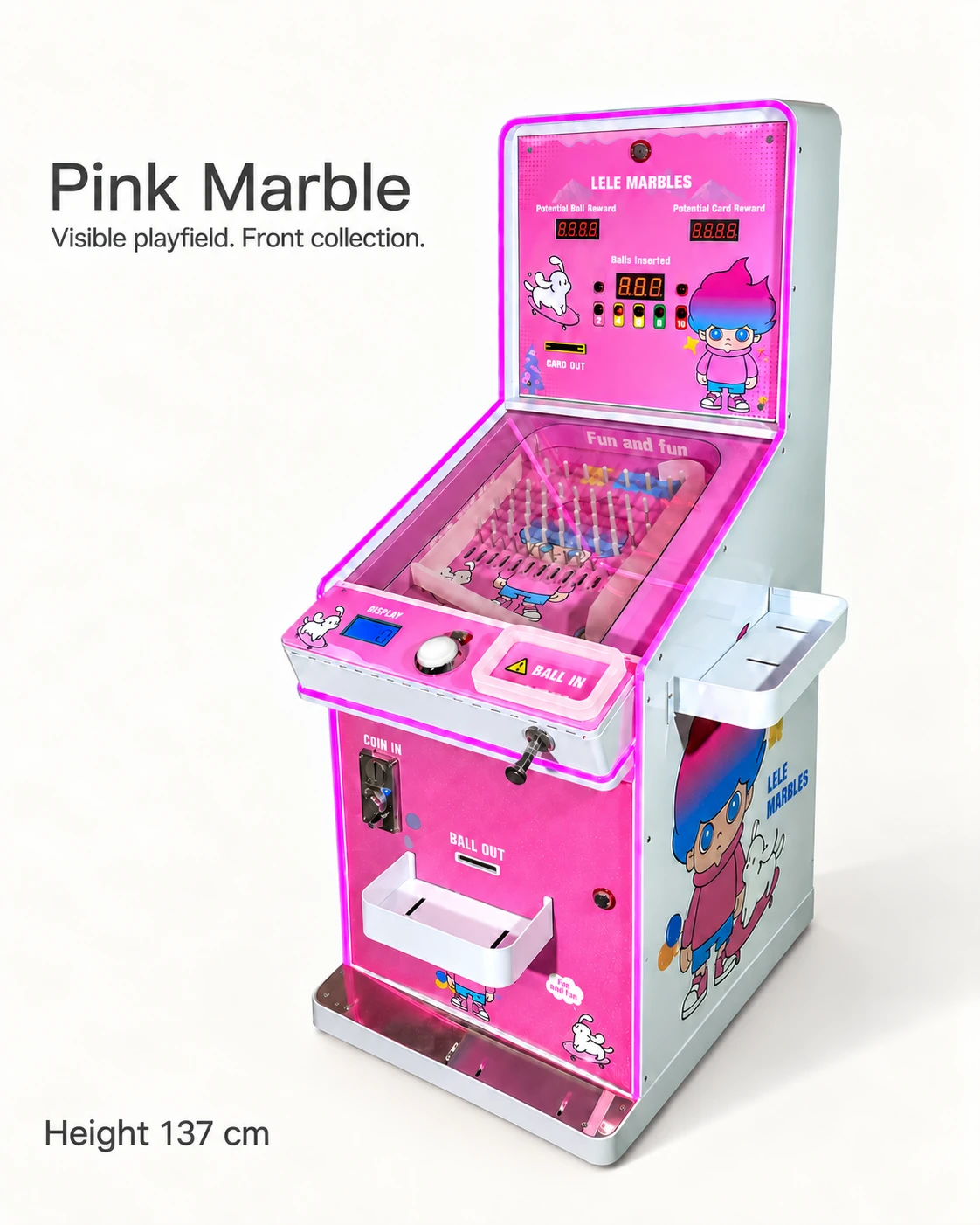
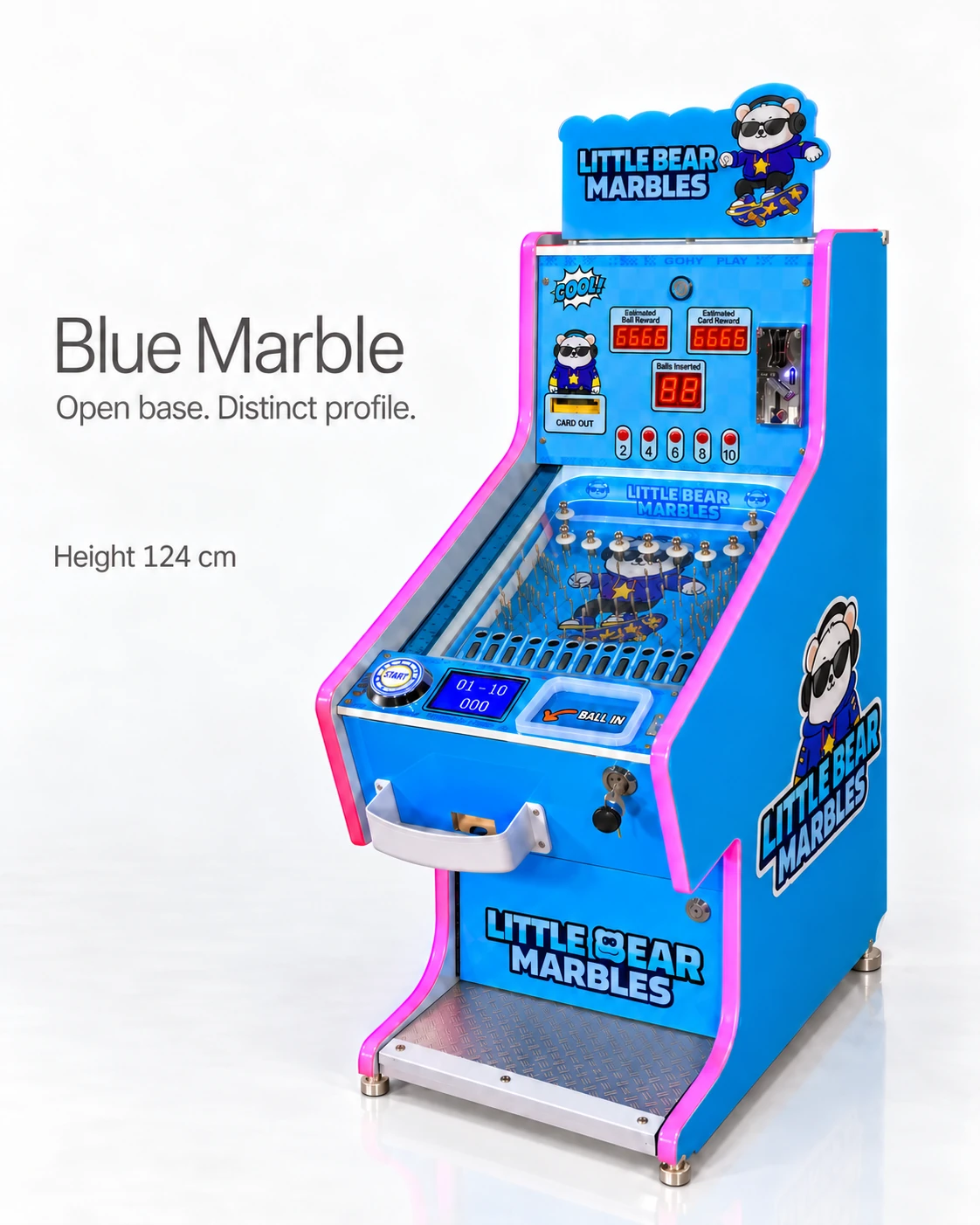
Use the worksheet to collect your venue’s observations. The example figures below are hypothetical planning inputs, not results for the Pink Marble, Blue Marble or Shake Ball models.
Use definitions that prevent double counting
Separate a person looking at the cabinet, a payment event and a credited session start. One purchase may cover several attempts; a replay may create another session without another purchase.
Define the fields before the pilot and use a consistent clock and cabinet identity. The definitions make the counts useful to another person reviewing the purchase.
- Credited start: the cabinet accepts the start of one session.
- Completed session: the agreed outcome and ready state are observed.
- Replay: a further attempt without a separate paid purchase, if the rules allow it.
- Staff intervention: assistance needed beyond the normal customer instruction.
- Service interruption: start time, end time, cause observed and action taken.
- Available time: scheduled observation time minus defined unavailable periods.
- Resource use: balls, prizes, tokens and other items counted under stated rules.
Use arithmetic that matches the question
Assume a two-hour observation records 40 credited starts, 36 completed sessions and 4 sessions needing staff help. The completion fraction is 36 ÷ 40 = 90% for that hypothetical observation. State whether replay starts are included.
Record instruction, refill and recovery minutes separately. If the cabinet is unavailable for 20 of the 120 scheduled minutes, available time is 100 minutes under this definition. Completion and available time answer different operating questions.
Keep context next to the numbers
Keep location, time window, price/package, configuration, prize samples, signage and staffing beside the figures. Note events such as a group visit or a neighboring game being unavailable when interpreting a change.
Use specific symptom descriptions. An unchanged counter, a ball not returning and a customer question about the rules need different follow-up actions.
Record reasons for incomplete observation
Use a reason for a missing field: observer occupied, screen obscured or cabinet unavailable. That prevents missing observations from becoming apparent zeros.
Link any revenue/cost worksheet to the same period and configuration. When payment value is unavailable, use the pilot for completion and workload decisions while collecting the missing commercial inputs separately.
Set the continuation decision before scaling
Before scaling, identify issues that need a configuration change, another observation period or a different operating plan. Include equipment, prizes, payment fees, staffing, space and downtime in the commercial assessment.
Send the pilot definitions and proposed configuration with a sample enquiry. Keep the raw worksheet, exact rules, manuals and support conditions together so the purchase discussion can refer to the same observed period.
CHECK THE REFERENCES
Sources
- Pink Marble Skill Game reference configuration
Supplier reference specifications and supplied model images.
- Blue Marble Skill Game reference configuration
Supplier reference specifications and supplied model images.
- Shake Ball Prize Game reference configuration
Supplier reference specifications and supplied model images.
PUT THE GUIDE TO WORK
Scope a venue pilot configuration
Send the session definitions, staffing and continuation decision. Request a sample configuration with the rules, parts and support needed to collect observations.
Build my equipment brief