Food vending
Food Vending Ingredients and Labels: Build a Traceable Menu Record
Link each food vending ingredient to its product code, machine position, recipe and reviewed customer information; track lots and substitutions.
Link the menu to actual ingredient products
A food vending ingredient and label record links each product code to its supplier documents, machine position, recipe and customer-facing information. Give sugar, base mixes, sauces and toppings separate rows, including products sold under the same flavor name.
The supplier configuration references help organize those rows. Each machine layout determines how many base mixes, sauces or dry toppings require separate tracking. Cotton candy uses the enabled recipe and sugar configuration for the ordered version.
Swipe across to compare all columns.
| Model | Supplier-listed recipe configuration |
|---|---|
| Automatic Ice Cream Vending Machine | Recipe configuration (supplier-listed): 1 base mix, 3 sauce positions and 3 topping positions |
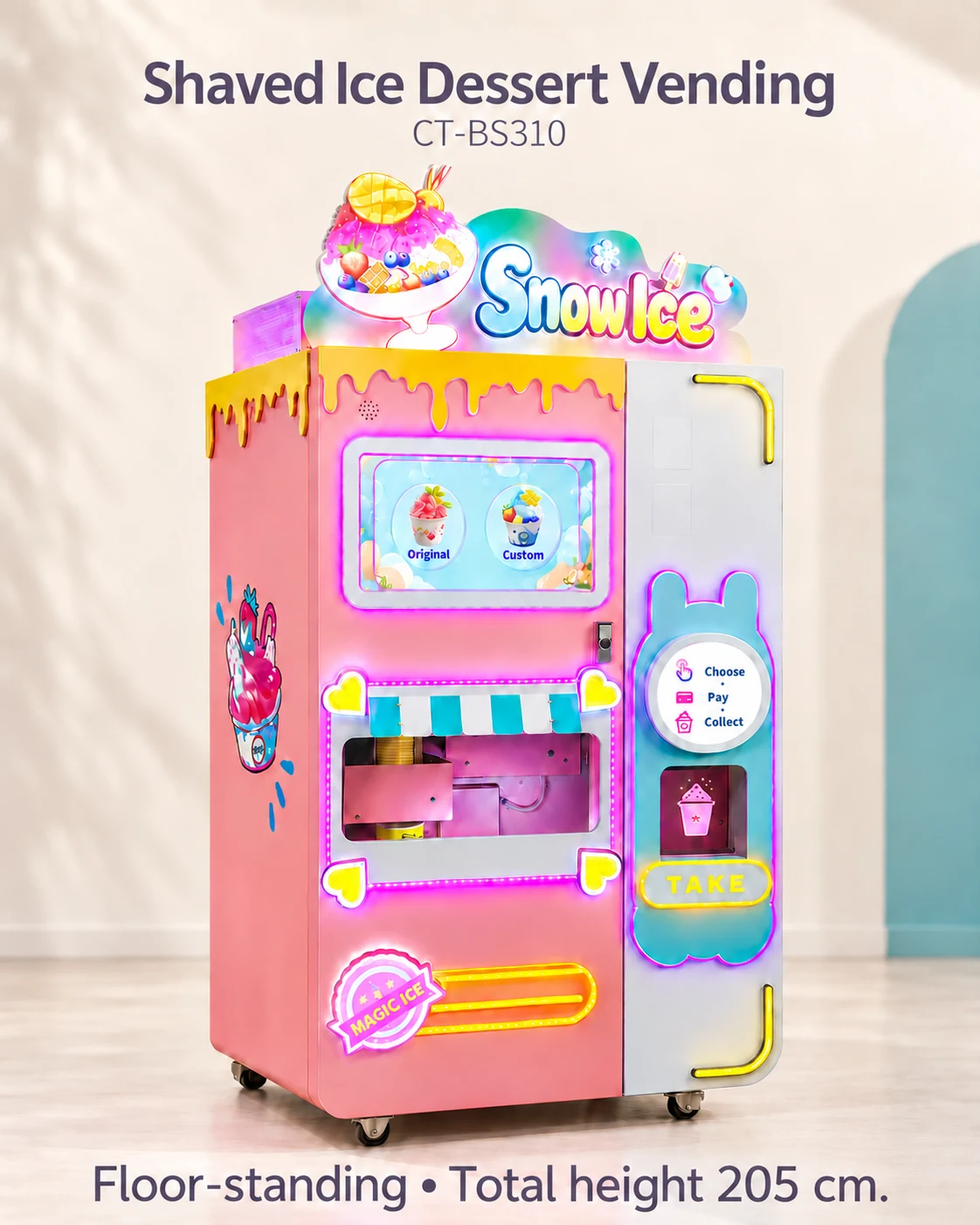
| Automatic Shaved Ice Dessert Vending Machine | Recipe configuration (supplier-listed): 1 base mix, 2 sauce positions and 2 topping positions |
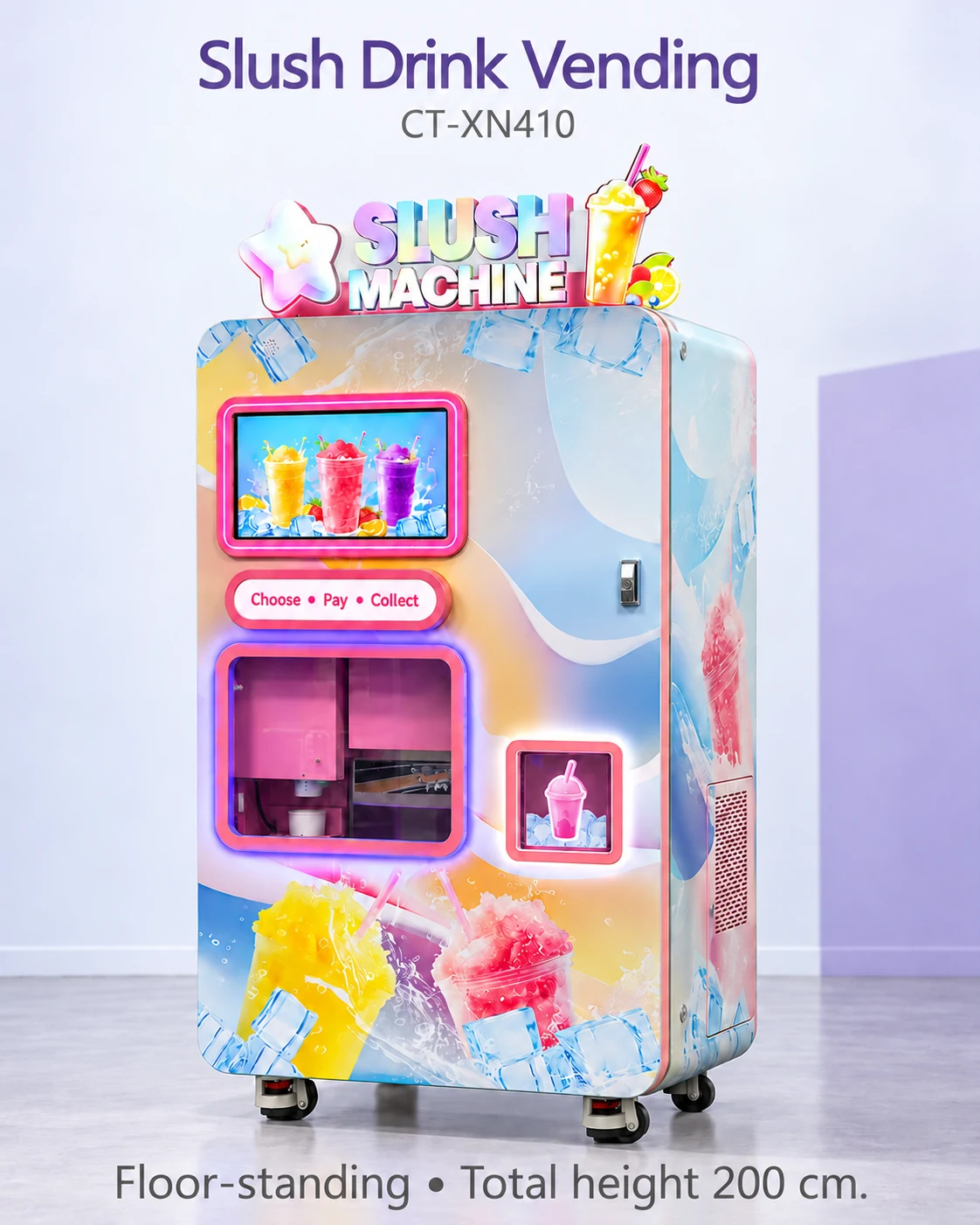
| Automatic Slush Drink Vending Machine | Recipe configuration (supplier-listed): 2 base mixes and 3 topping positions |
Quoted from supplier reference specifications. Actual enabled recipes, dispense doses and topping positions depend on the ordered configuration.
Use one row per ingredient identity
A unique ingredient identifier connects receiving, loading, menu use and changes. Keep the original specification and declaration revisions with the supplier’s product code, then record which machine positions and recipes use it.
The responsible destination reviewer identifies required documents, translations and customer information for the ingredients and sales model. For a U.S. project, FDA’s vending calorie-labeling rule has an operator-size threshold and exemptions; review its scope separately from local food-operation permissions.
- Identity: supplier; manufacturer where known; product code; purchasing unit.
- Use: machine revision; position; enabled recipes.
- Documents: original specification/declarations; revision; required review status.
- Handling: matching storage/preparation/refill instructions; owner.
- Public information: menu name; language; reviewed disclosures; menu version.
- Traceability: received lot; loading event; affected menu items; substitution history.
Assign the information owners
The equipment supplier owns compatible inputs and equipment instructions. The ingredient supplier provides product composition and supply records. The destination reviewer determines the required operating and disclosure information. Keep the next needed file and owner beside each row.
Use received, under review and accepted for the stated purpose as distinct statuses. A record for a different product code stays attached to that product, even when the package color or flavor name resembles another ingredient.
Update only what a substitution affects
In a hypothetical mixed menu, a topping name appears on both ice cream and slush, but the machines use different approved products. Two matrix rows preserve that difference. If one product changes, the record identifies the affected recipes, handling documents and public information.
Assign a continuing owner for source changes and document revisions. Keep the load record and menu version together under the approved operating plan, using the machine’s record functions only for information they actually support. The matrix then remains useful after the opening order.
Test the lot-to-machine recall record before opening
A document matrix identifies an ingredient; a recall record must also locate where the affected lot went. Before agreeing the opening supply and service scope, ask the ingredient supplier and local food-operation reviewer to confirm how a notice is matched to the exact ingredient code, lot or date mark, machine identity, ingredient position, loading event and affected recipes or menu versions. Use the food operator’s agreed recall plan and responsible destination review to identify affected stock; do not infer that the machine can automatically block a lot or contact customers.
FSANZ food-recall guidance identifies product and batch information, responsible contacts and a record of distributed and unaccounted-for food as elements of recall planning. Use that guidance as a reason to test the proposed record, while the responsible destination reviewer determines the applicable duties and instructions. It does not certify these machines or establish worldwide legal requirements.
Agree the unit and evidence used for the reconciliation. Stock loaded, product sold, documented waste or service use, food recovered and an unexplained balance are different entries. Do not convert a mix quantity into exact servings without the accepted recipe and observed consumption basis. Where a lot is mixed, topped up or its loading time is unknown, keep the affected scope and quantity uncertainty visible for the authorized food reviewer. A machine stock estimate is not proof that all affected food has been recovered.
Swipe across to compare all columns.
| Record to resolve | Supplier or operator answer | Evidence and applicable build | Status, owner and next decision |
|---|---|---|---|
| Notice and ingredient identity | [Fill: notice reference; ingredient product code; lot/date mark; affected supply scope] | [Fill: original notice and supplier trace record; revision/date] | [Fill: Open / Hold / Resolved / Unknown / Not applicable; reason; reviewer; next action/date] |
| Machine and load linkage | [Fill: site and unique machine ID; ingredient position; loading date/time; amount/unit; ingredient and menu version] | [Fill: receiving/loading record; ordered model and build/quote revision; actual cabinet match when available] | [Fill: Open / Hold / Resolved / Unknown / Not applicable; reason; assigned operator and reviewer] |
| Affected output and unrecovered quantity | [Fill: distribution or sales period; loaded/sold/used/recovered quantities; unresolved balance; measurement unit and uncertainty] | [Fill: stock counts; documented sales or waste/service records; calculation basis; missing records] | [Fill: Open / Hold / Resolved / Unknown / Not applicable; reason; reconciliation owner and decision date] |
| Responsible contacts and approved actions | [Fill: recall coordinator; ingredient supplier; venue/operator contact; responsible destination reviewer and escalation route] | [Fill: agreed plan/contact record; approved instructions and applicable revision; notification or hold-action evidence when required] | [Fill: Open / Hold / Resolved / Unknown / Not applicable; reason; decision owner; authorization and next review] |
Blank procurement template, not a completed recall or an operating instruction. All answers may be Unknown, Not available or Not applicable with a written reason and named reviewer. Identify the quoted model/build and response date for each record, using a linked shared header if needed. Hold approval only for unresolved information material to the agreed operation; the responsible food reviewer decides the applicable recall, notification, stock-disposition and release procedure. Confirm which records the actual software can export and which need a documented supplemental process; no automatic traceability feature is established.
CHECK THE REFERENCES
Sources
- Automatic Ice Cream Vending Machine reference configuration
Supplier-listed reference configuration for this model.
- Automatic Shaved Ice Dessert Vending Machine reference configuration
Supplier-listed reference configuration for this model.
- Automatic Slush Drink Vending Machine reference configuration
Supplier-listed reference configuration for this model.
- Arched Pickup Cotton Candy Vending Machine reference configuration
Supplier-listed reference configuration for this model.
- FDA: Vending machine labeling requirements
Official U.S. vending machine labeling rules and guidance.
- Food Standards Australia New Zealand: food recalls requirements
Official food-recall planning guidance, contact responsibilities and unaccounted stock principles.
PUT THE GUIDE TO WORK
Review ingredient document coverage
Share the equipment and proposed menu inputs. List known ingredient codes, local supply plans and the supplier records your destination reviewer needs.
Build my equipment brief