Food vending
Food Vending Machine Maintenance and Staffing: Plan Service Coverage
Assign refill, cleaning, customer-support and fault tasks, then separate hands-on time from travel and scheduling in the food vending staffing plan.
Schedule service as well as sales
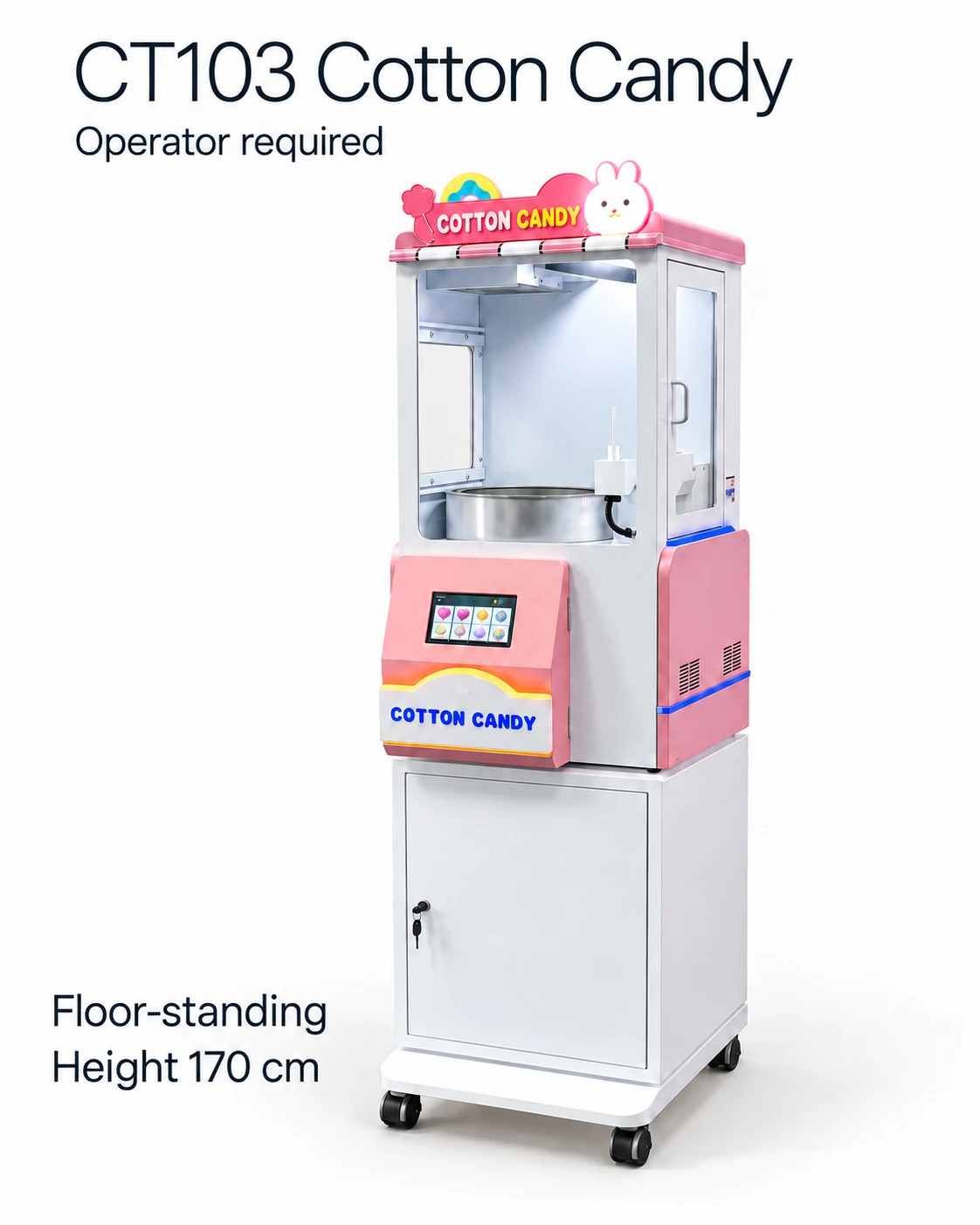
Food vending machine maintenance and staffing cover replenishment, cleaning, customer support and technical escalation. Give each task a trained owner and backup. CT103 additionally has supplier-described manual stick insertion and removal on each serving, so its attendant coverage belongs in the selling schedule.
For an automatic cabinet, plan the normal customer purchase separately from the service route. Stock access, cleaning facilities, venue entry windows and fault response determine what that route needs. Use the supplier’s task boundaries and the relevant destination review to assign permitted work.
Give every task a clear owner
Group stock work, documented cleaning and qualified technical work in separate rows. Customer collection and payment issues also need a contact during selling hours. Add the task trigger, instruction reference, primary owner, backup and closure record.
The venue’s employee or service contractor needs the agreed role and training for the assigned actions. Technical work stays with the appropriate service personnel; the stock role should be clear about when to escalate.
- Stock: receiving; accepted ingredient/cup/stick loading; physical counts; replenishment.
- Cleaning: matching procedure; facilities; trained owner; required release record.
- Customer support: collection/payment issue; transaction record; response contact.
- Technical support: observed fault; approved operation control; qualified service contact.
- Coordination: venue access; supplier channel; backup and after-hours arrangement.
Measure work and travel separately
Use supplier demonstrations to understand tasks, then record pilot work with operator experience, machine state and interruptions. Separate hands-on work from travel, parking and access waiting. Include receiving, purchasing and scheduling outside the site visit.
For a hypothetical route, 15 minutes of stock work, 20 minutes of a documented service task and 25 minutes of travel/access total 60 minutes before fault work. These are illustrative inputs. The breakdown shows which part can change through route design or task training.
Put coverage into the operating budget
Retain owner-performed hours in the cost sheet even when no payroll payment occurs. Compare venue access windows with the required visits, and pair any supported remote alert with a person who can attend the machine.
The supplier offer should identify response channels, parts information and included versus excluded work. Add local qualified service arrangements where needed. Pilot task records then update the schedule when recipes, stock routes or equipment change.
CHECK THE REFERENCES
Sources
- Automatic Ice Cream Vending Machine reference configuration
Supplier-listed reference configuration for this model.
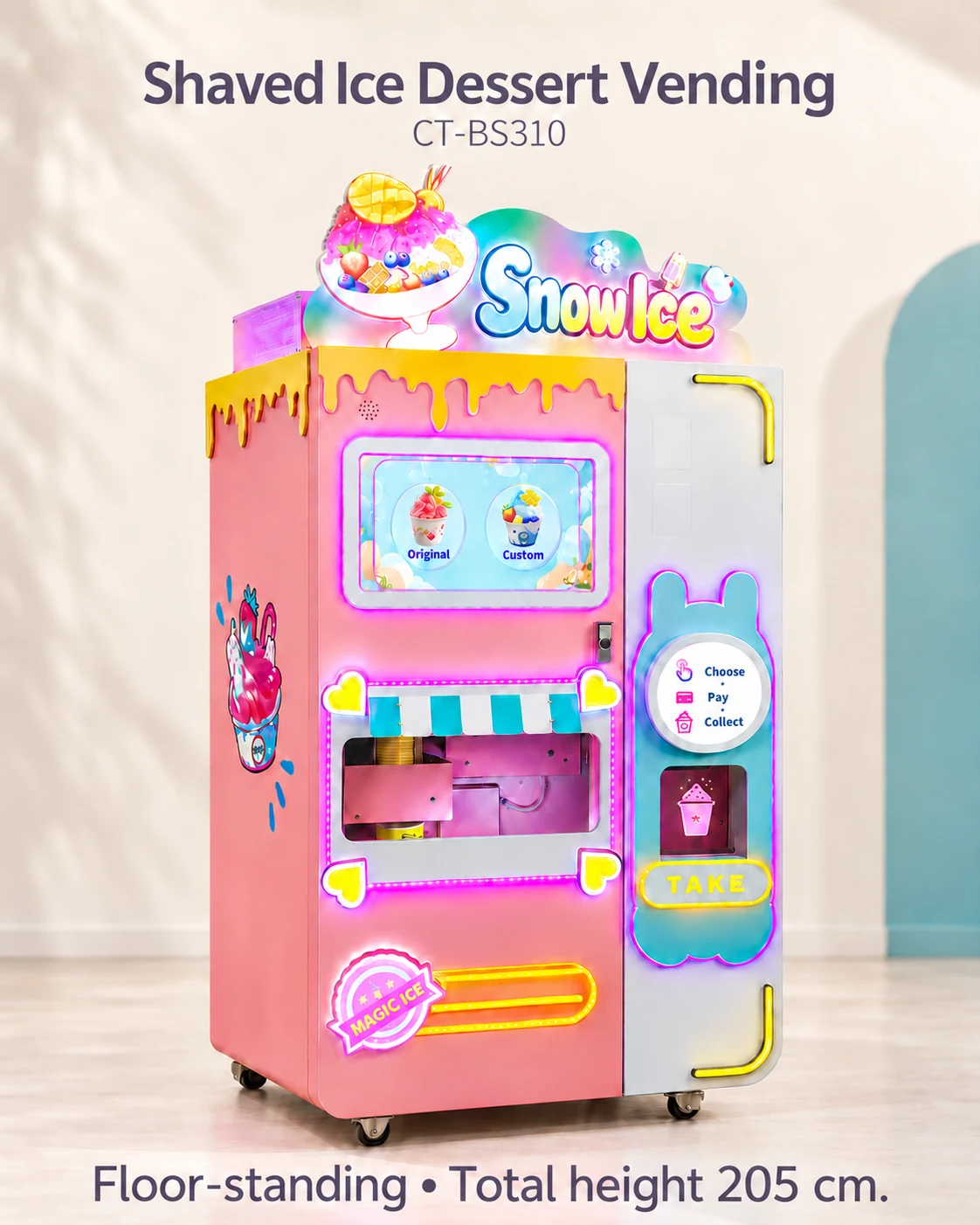
- Automatic Shaved Ice Dessert Vending Machine reference configuration
Supplier-listed reference configuration for this model.
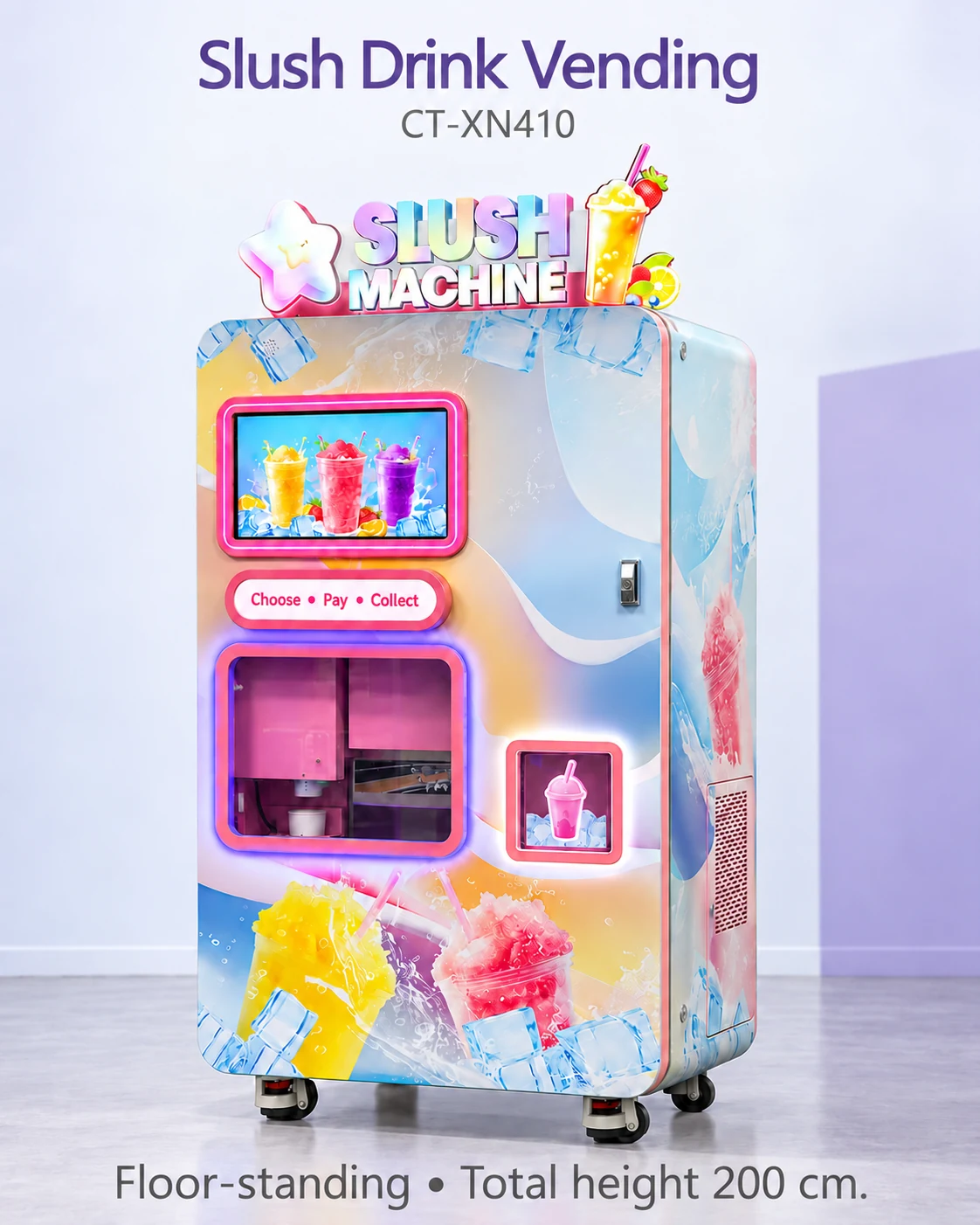
- Automatic Slush Drink Vending Machine reference configuration
Supplier-listed reference configuration for this model.
- Pastel Automatic Cotton Candy Vending Machine reference configuration
Supplier-listed reference configuration for this model.
- CT103 staffed semi-automatic reference workflow
Supplier-listed reference configuration for this model.
PUT THE GUIDE TO WORK
Plan local service coverage
Tell us the venue, equipment mix and available staff. Add the refill, cleaning, customer-support or technical coverage questions you need answered.
Build my equipment brief