Claw & prize machines
Claw Machine Delivery Access: Doorways, Turns and Lift Dimensions
Check claw machine delivery access from unloading to final placement. Compare packed dimensions, clear openings, turns, lift limits and responsibilities.
Use packed dimensions to approve the whole delivery route
Approve claw machine delivery access against the packed envelope and the contractor’s handling method, not just the cabinet width at the entrance. Check every doorway, turn, lift and overhead obstruction from unloading to final placement. For a tall cabinet, a removable sign or alternate orientation is a solution only when the supplier documents the reduced dimensions and authorised handling procedure.
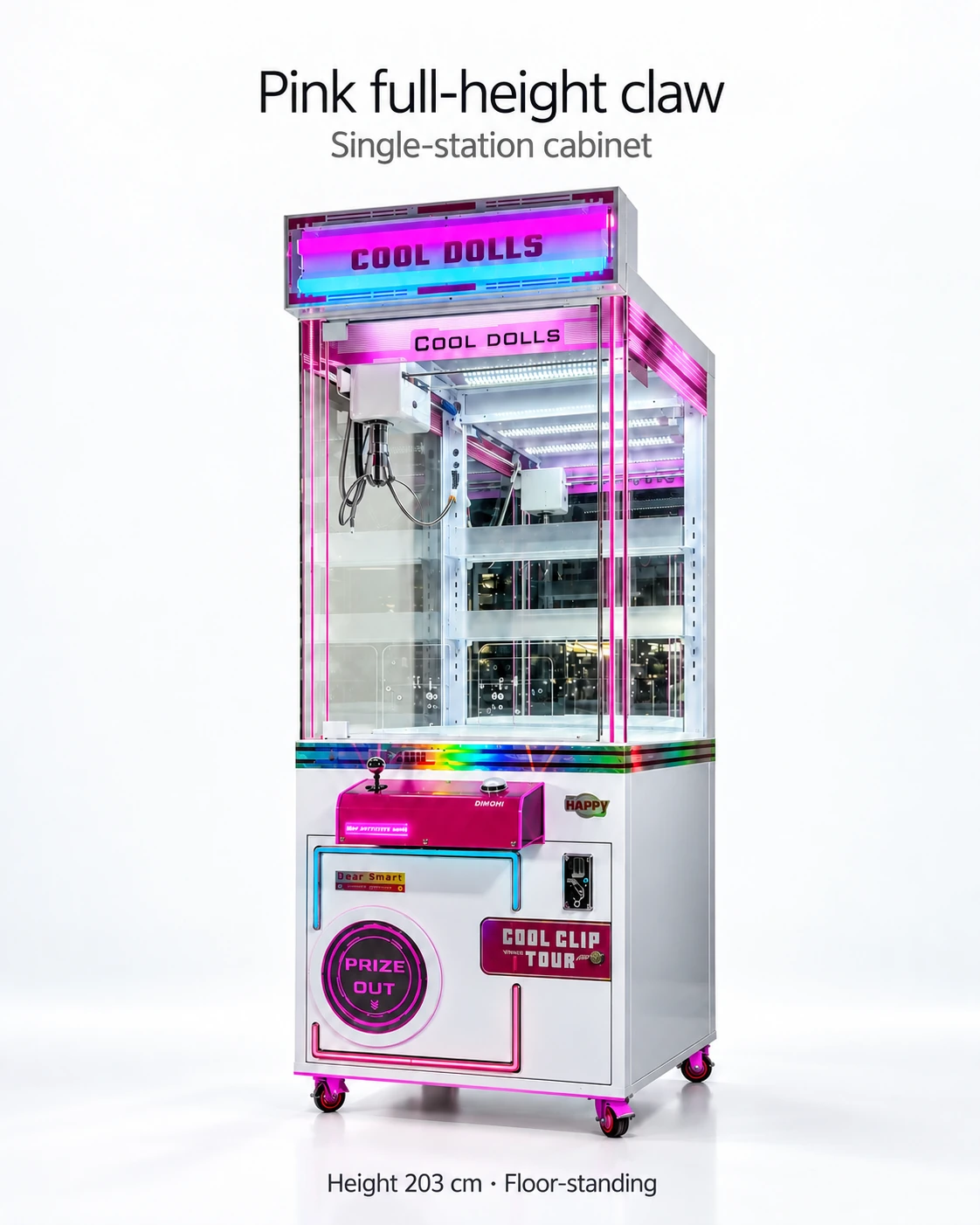
The supplier lists 49 × 77 × 203 cm and 100 kg machine weight for the Pink Full-Height Claw, and 50 × 61 × 150 cm and 50 kg for the Compact Single Claw. Confirm front orientation and obtain the packed dimensions and gross weight before approving the route. Handling-equipment ratings come from the delivery contractor.
Complete a route measurement worksheet
Give every route segment an identifier and photograph it with the relevant opening visible. Measure clear usable openings rather than a door frame’s external dimensions. Include handles, closers, thresholds, overhead signs and any fixtures that reduce space. Let the delivery contractor determine the handling method from the complete route.
- Segment, location, clear width, clear height and measured obstruction.
- Turning space before and after the opening, corridor width and corner geometry.
- Lift entrance and internal usable dimensions, stated load rating and building access rules.
- Level changes, slopes, floor protection needs and unloading restrictions.
- Required machine orientation, packaging state and handling equipment, to be confirmed by the responsible contractor.
Add the packed delivery envelope
The packing schedule needs external length, width and height, gross weight, construction and permitted handling points. For a removable sign or control assembly, add the reduced dimensions, authorised removal and reassembly method, and any support conditions. Wheels visible on a cabinet do not settle whether it can be tilted.
Keep two separate records in the delivery brief: installed dimensions for the venue and order-specific packed dimensions for the contractor. A cabinet specification is not a substitute for the shipping envelope. Attach the packing list to the route worksheet.
A hypothetical doorway decision
In a hypothetical route, a doorway has 200 cm clear height and the selected cabinet is listed at 203 cm. Upright entry fails that comparison before packaging is added. A reduced-height arrangement becomes an option only after the supplier provides its actual envelope and handling procedure.
Compare a different entrance, a documented reduced-height configuration or another model. Carry each option through the turns, lift and final position using its complete handling envelope. This resolves the route before a contractor and packed machine arrive at the door.
Include the final operating position
Check the final ceiling, overhead signage, lighting and any sprinkler or building-service constraints with the venue. Record the machine’s full installed height and supplier ventilation requirements. Confirm where the power lead exits and how the cabinet will be positioned and secured under the installation instructions. Player space and refill access remain necessary after the delivery route is solved.
Assign unloading, carrying, unpacking, positioning and approved reassembly to named parties. Include lift appointments and access charges in their scope. An entrance delivery and final placement are different services, so price the one the venue needs.
Use a go, revise or unresolved result
Mark each segment workable under the handling plan, needing a documented change or unresolved. Keep packing data and contractor comments beside the measurements. Send the completed route, quantity and destination with the quotation brief so access requirements and placement costs are part of the plan.
Carry the full-height model’s prize and control checks into handover
After the delivery route is resolved, keep a configuration record for the Pink Full-Height Claw. Its supplier images show a single suspended claw and an unloaded prize chamber; they do not establish an approved prize size or weight. Request the supplied claw, usable bed and collection-opening measurements, using the intended packaged sample.
Ask for a complete supplier-led sample demonstration before shipment and an agreed receiving check after authorised positioning and reassembly. Follow credit entry, joystick movement, pickup attempt, travel, release, collection and the next ready state. Keep the controller, acceptor and settings version with the sample record so the delivered configuration can be compared with the approved one.
Specify destination payment and electrical requirements, front and rear service access, transit securing instructions and the parts or tools needed for approved reassembly. Record who resolves a damaged part, failed payment check or incomplete collection before the cabinet is put into service. The listed machine weight remains separate from the shipment’s gross weight; successful doorway access does not complete these operating checks.
PUT THE GUIDE TO WORK
Plan the machine's delivery route
Attach clear doorway and lift dimensions, route photos, destination and shortlisted model so the proposal can include packed size, gross weight and any approved reduced-height arrangement.
Build my equipment brief