Claw & prize machines
Cut-the-String Prize Machine Setup: Loading, Cord and Reset
Set up a scissor or string-cutting prize machine with approved cord, suspended load, loading instructions and a complete cut-to-retrieval test.
Start with the approved cord and suspension
A cut-the-string prize machine needs a matched cord, suspended load, attachment and reset method. Demonstrate them through loading, cutting and customer collection on the exact version. Scissor prize machine and string cutter describe this mechanism, but the approved load and consumables come from its supplier.
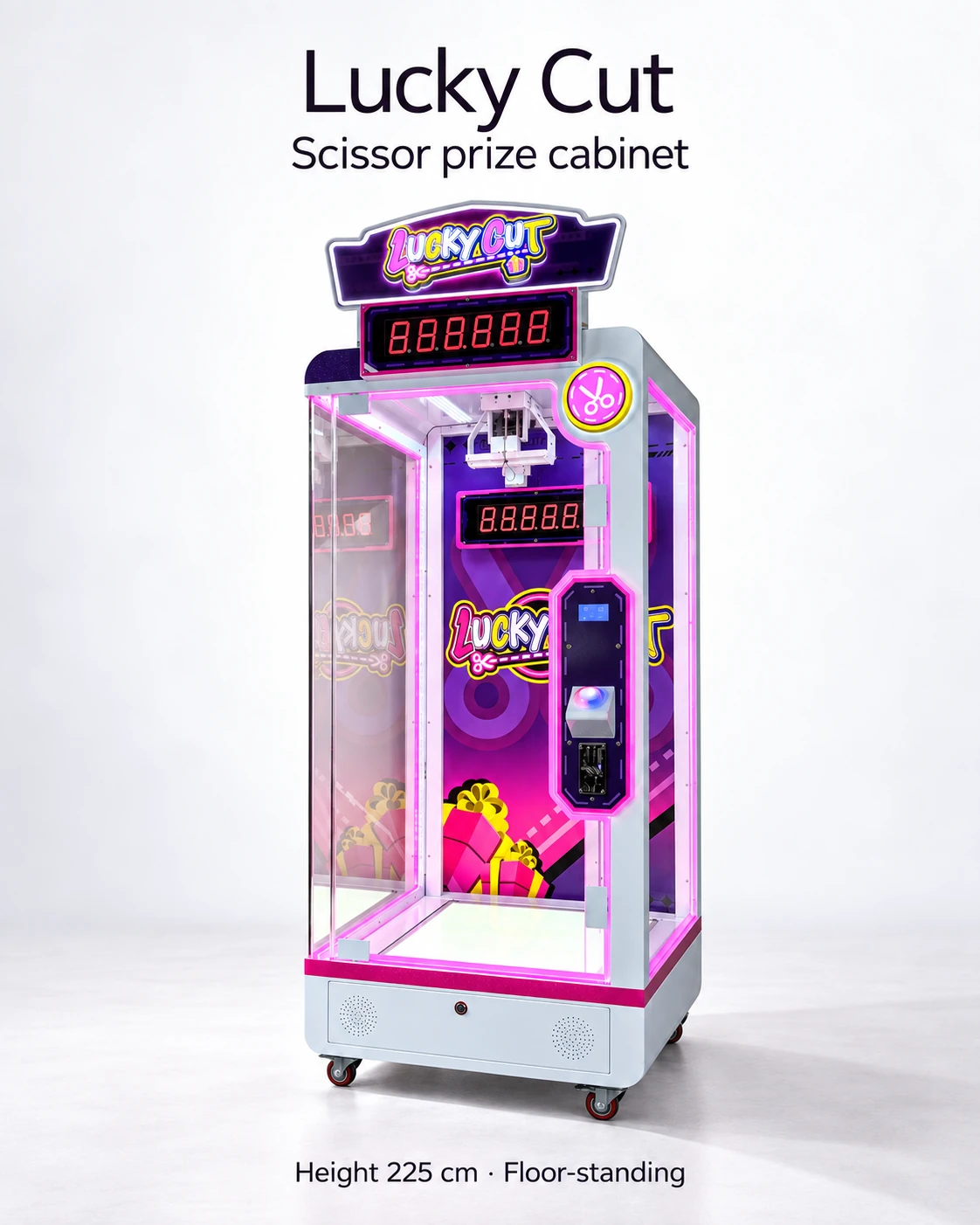
The supplier lists Lucky Cut as a scissor prize game with an 85 × 83 × 225 cm cabinet and 180 kg machine weight. Its layout places the cutting mechanism above the prize chamber and collection opening. Cord specification, suspension load and the intended prize's collection path remain to be agreed.
Record the suspension and cutting setup
The card should connect the physical setup with the cycle footage so the buyer can repeat the test conditions. Identify consumables precisely rather than calling every string interchangeable. Request the supplier’s approved replacement specification and a process for rejecting worn or incorrect consumables.
- Prize sample: outside size, mass, packaging and attachment revision.
- Cord: supplier-approved material, diameter, identification and permitted installation method.
- Suspension: attachment points, loading procedure and any maximum or minimum conditions stated by the supplier.
- Cycle: controls used, permitted settings, cutting motion, release and complete retrieval.
- Reset: authorised staff steps, tool requirements, consumables replaced and final ready-state check.
Observe the complete sequence safely
Begin the demonstration with the machine stopped in the state required by its manual. Show the approved loading arrangement, then close and secure access before the cycle. Film the prize before release, the cutting action and the path to the customer’s retrieval compartment. Continue until collection is complete. Document any cord fragments, packaging damage or obstruction using the supplier’s inspection procedure.
Keep hands and tools outside the active mechanism, with guards closed. Blade work and technical adjustment belong to authorised personnel following the model's instructions. Staff handover should cover their permitted loading, inspection and reset steps.
Distinguish a string cutter from other prize delivery
Smart Industries' Mega Prize links a string-cutting action to an automatic prize door. Use that example to identify the collection step in a quote: does the cut release the item directly, activate a door or start another action? Record the exact sequence and release detection for the proposed Lucky Cut configuration.
The cycle record should show whether the customer collects the suspended item or a separate package, then how staff reset the machine. Demonstrate the actual merchandise through the normal collection opening so display size and delivered package are clear.
Turn the test into an order requirement
Attach the accepted prize and cord identifiers, cycle record and reset method to the order. Add the model-specific maintenance instructions, replacement cutting components and support owner. Compare the supplier-listed 225 cm height with the delivery and overhead limits, and include game rules, prize value and required documents in the destination review.
CHECK THE REFERENCES
Sources
- Lucky Cut Scissor Prize Machine reference configuration
Supplier catalogue configuration reference.
- Smart Industries self-merchandiser mechanisms
Manufacturer descriptions of Ker Plop clip release and Mega Prize string-cutting delivery.
PUT THE GUIDE TO WORK
Define your suspended-prize setup
Send prize size, mass, packaging and hanging method, with cord and reset questions, to define the Lucky Cut configuration and complete cutting-cycle demonstration.
Build my equipment brief