Token equipment
Arcade Token Dispenser Comparison: 32-Inch vs 21.5-Inch Kiosks
Compare two token dispenser configurations by usable stock, operating space, payment scope and refill requirements.
Match the dispenser to the refill interval and site
Choose an arcade token dispenser by the stock and transaction flow your venue needs between refills. The 32-inch kiosk has larger supplier-listed dimensions and nominal capacity; the 21.5-inch kiosk offers a smaller listed envelope. Screen diagonal describes the interface, while usable stock and service space determine the operating fit.
Compare both options with the same token sample, payment requirements and reporting fields. Overseas payment/currency support remains to be specified; these are token purchase/exchange kiosks, and image lettering does not imply banking or cash withdrawal.
Read the reference specification side by side
The following supplier reference figures retain the sheet’s L × W × H labels. Front-width orientation and door access need a drawing. Capacities are approximate, with the token-size basis unspecified.
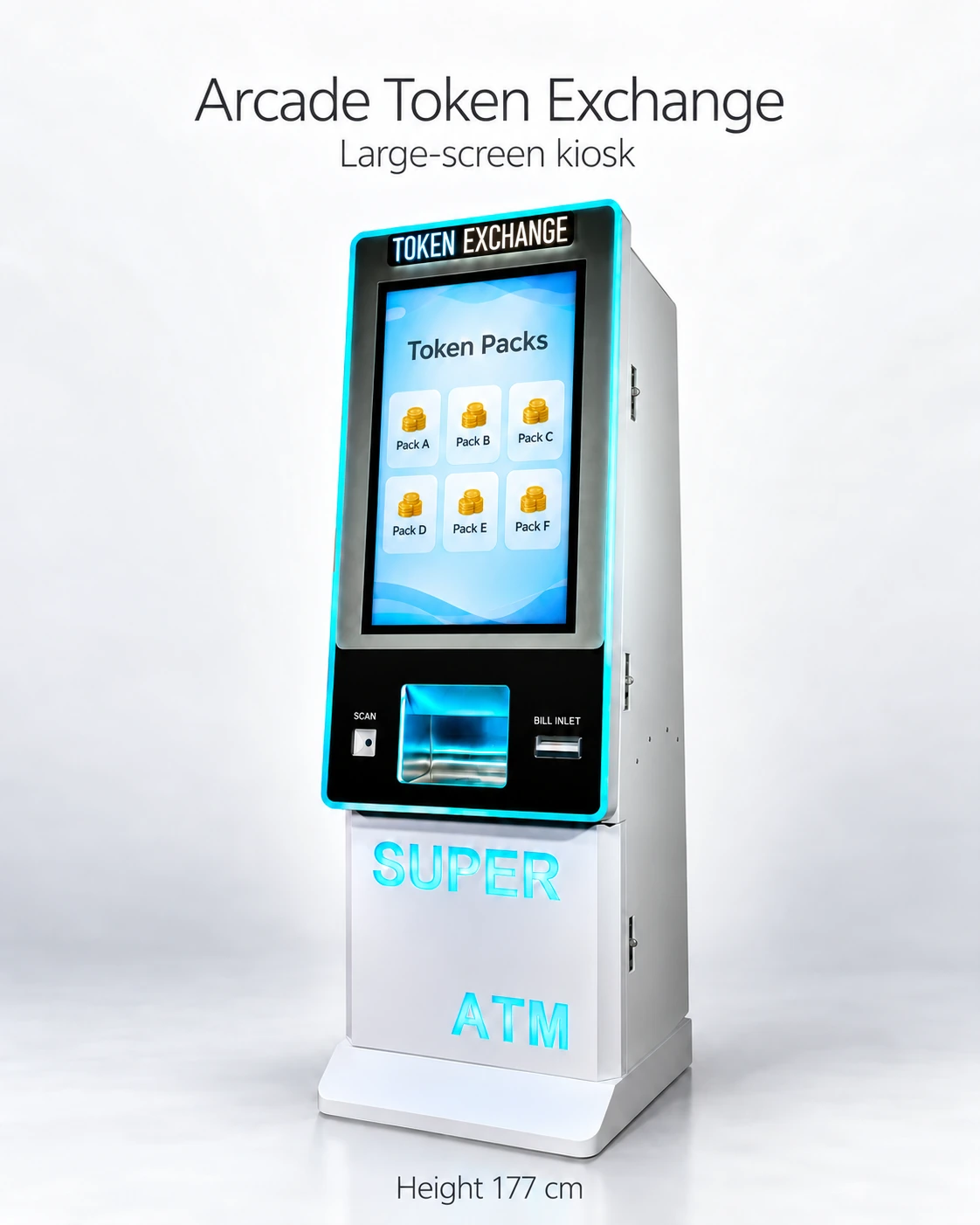
- 32-inch Touchscreen Token Exchange Kiosk: 58 × 63 × 177 cm; approx. 30,000 tokens.
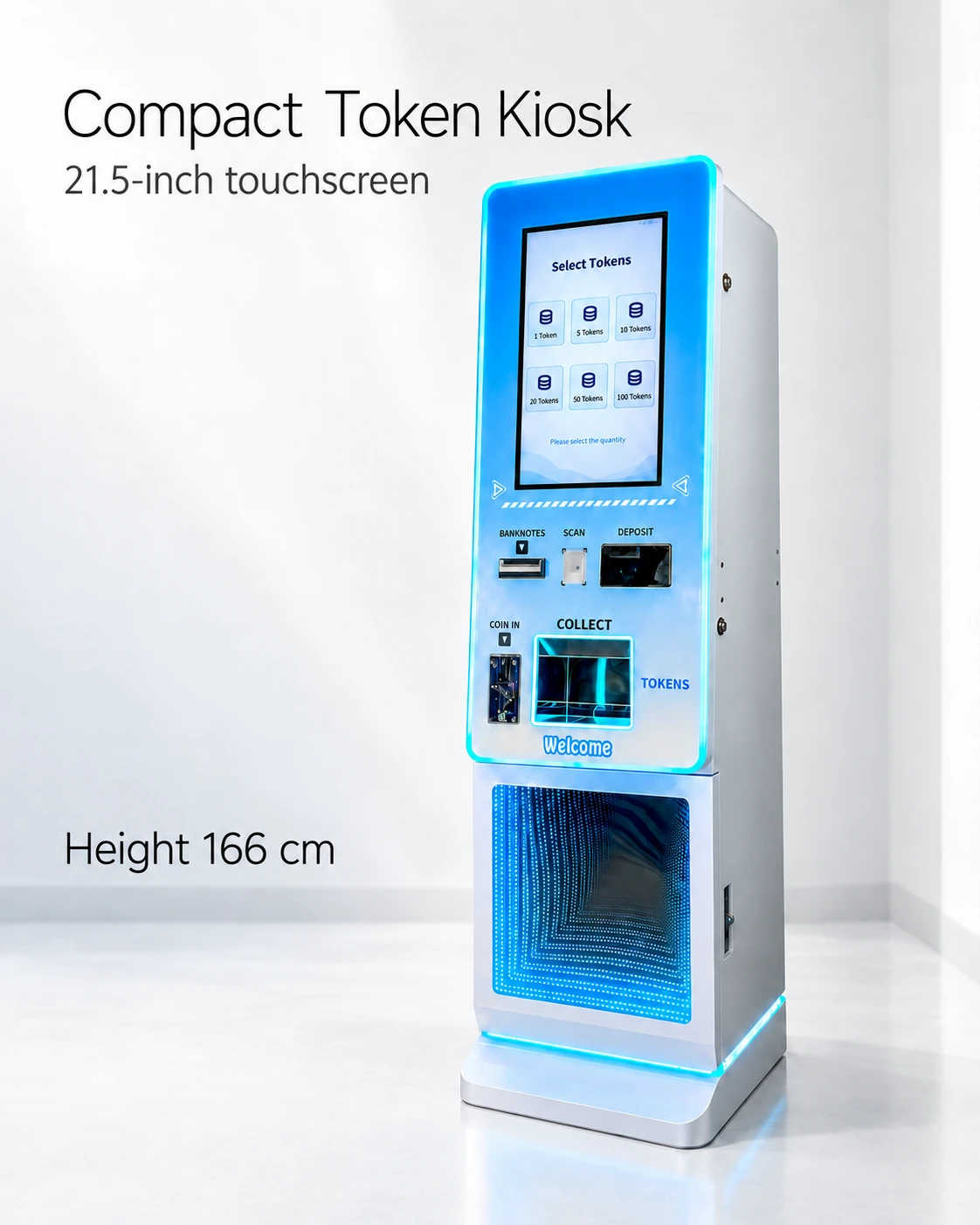
- 21.5-inch Compact Token Vending Kiosk: 45 × 45 × 166 cm; approx. 10,000 tokens.
- Both source sheets list 90 W and 110–220 V. Actual input, frequency, plug and rating basis remain unconfirmed.
- Quote-level details: hopper, banknote validator, destination payment integration and available audit reports.
Compare capacity with the same token
Demonstrate usable stock with one agreed token diameter, thickness, material and sample lot. This makes the two capacities comparable and connects the result to the token you will actually buy.
For a hypothetical planning case, 1,600 tokens per hour across a four-hour refill gap requires 6,400 tokens before the chosen reserve. Compare that requirement with demonstrated working stock, then allow for the staff response delay.
Observe the customer and refill tasks
Review the actual-language purchase sequence from package selection to payment, counted output and collection. Draw where the buyer stands, companions wait and the next customer approaches.
A staff refill demonstration supplies the second half of the layout: doors, container movement and the storage route. More working stock can extend the refill window while increasing handling and inventory held; both belong in the comparison.
Send a decision brief for comparable quotations
Choose the compact option when its demonstrated stock, interface and access meet the venue requirement within the planned layout. Choose the larger option when its extra working stock or interface resolves a specific need.
Give both quotations the same token specification, service interval, languages, payment methods and report fields. Itemized hardware, software work, manuals, parts and packing make the final prices comparable.
Define what each kiosk accepts before comparing the price
The 32-inch reference includes supplier claims for selectable token packages and source-market voucher redemption. List the required package rules, currency, payment provider and any voucher connection separately. Ask the supplier to demonstrate each requested route on the quoted software; a local payment logo or a touchscreen does not establish overseas settlement or account integration.
The 21.5-inch reference photo also labels a deposit or coin inlet. Confirm whether the offered unit only sells tokens, accepts tokens back, counts deposits or credits an account, and identify the hardware and software required for each requested function. Do not assume that the pictured opening establishes any of these behaviours or that the larger kiosk has the same function.
Accept a paid transaction and a partial-output exception
Using the accepted token lot, observe a complete purchase from package selection and confirmed payment to counted output and collection. Then ask the supplier to demonstrate its authorised response to an empty hopper, jam or partial dispense. Keep the original order reference, paid amount, requested count, actual delivered count and remaining obligation together.
Agree who checks the payment state, who may clear the fault and how the customer receives the remaining tokens or another agreed remedy without a duplicate charge. Ask which records the quoted version can provide; if a report or recovery function is unavailable, price the required development or define an operator procedure. Include refill access, approved spare parts, software charges and support responsibilities in both comparable quotations.
PUT THE GUIDE TO WORK
Compare two token-dispenser configurations
Send the token sample, venue plan, service interval and payment requirements. Request itemized options for both body sizes on the same scope.
Build my equipment brief